

Search Results
Back to JTS Torah Online's Main page
Holy Frustration
May 1, 2026 By Yitz Landes | Commentary | Emor
Like much of Leviticus, Parashat Emor opens with yet more of these rules. But now the Torah needs to acknowledge that even when everything is in the right place, there is still death. What’s a priest to do when tragedy strikes? “Speak [Emor] to the priests, the sons of Aaron,” God tells Moses, “and say to them: None shall defile himself for any [dead] person among his kin, except for the relatives that are closest to him” (Lev. 21:1). In order to stay pure, priests are limited in terms of when they can come near a dead body; even though they may mourn the death of another, the Torah says that they can only be near the corpse of a close relative. After a few terse verses about mourning practices, the Torah enumerates further rules that are meant to keep the priests and High Priest pure, with the upshot being that a priest is “holy to their God” (21:7).
Read More
How to Be Holy
Apr 24, 2026 By Raymond Scheindlin | Commentary | Aharei Mot | Kedoshim
This week, we read two parashiyot from Leviticus: Aharei Mot and Kedoshim. Taken together, they cover five clearly defined topics. Aharei Mot deals with the rituals of the high priest on Yom Kippur; regulations governing the slaughter of animals for food and sacrifice; and the prohibition of various sexual relations, especially incest. This last subject is resumed at the end of Kedoshim. Between the two discussions of sexual relations is the famous Chapter 19, which opens Kedoshim. This chapter stands out from the rest of our double parashah—in fact, from the rest of the book of Leviticus. It is a reprieve from the seemingly endless ritual instructions, most of which are no longer applicable, that make up the bulk of the book; and, though Chapter 19 does include some important ritual instructions, it is mostly devoted to the kind of rules for life that should govern every well-organized society, rules that people of most cultures and religions have tried to inculcate for everyone’s benefit.
Read More
Gender Inside and Outside the Camp
Apr 17, 2026 By Joy Ladin | Commentary | Metzora | Shabbat Rosh Hodesh | Tazria
Most benei mitzvah would do anything to avoid having to talk about Parashat Tazria-Metzora, a section of the Torah that focuses communal attention on intimate changes in human bodies. In Leviticus 13, God orders Israelites to notice and monitor intimate changes in one another’s bodies—menstruation, discharges, eruptions, inflammations, hair growth, “swelling, rash, discoloration,” and so on. For example, Leviticus 13:2 commands:
Read More
The Deathly Power of the Holy
Apr 10, 2026 By Marcus Mordecai Schwartz | Commentary | Shemini
Finding the right words after loss is hard, but Moses’s comments to Aaron in this week’s parashah are unusually difficult. At the moment that God fills Aaron’s hands with abundance, appointing him as high-priest and his descendants as an eternal priesthood, his two eldest die when they attempt to offer incense with a flame brought from outside the newly dedicated sanctuary—a strange, uncommanded offering. “And fire came forth from the LORD and consumed them . . .”
Read More
Freedom through Torah
Apr 3, 2026 By David Hoffman | Commentary | Pesah
Freedom in biblical and rabbinic Judaism is a highly complex idea. Consider the mishnah above. At first glance one might think the law, the Ten Commandments carved on the two tablets, would be limiting, constraining human freedom. Counterintuitively, the Sages argue that true freedom only comes from an engagement with Torah! How might “laboring in Torah” and living a life according to the demands of the Torah induce freedom?
Read More
Elijah—and Santa Claus?!
Mar 27, 2026 By Robert Harris | Commentary | Shabbat Hagadol
I am certain that I am not the first to point out the similarities between the figures of Elijah the Prophet and Santa Claus…at least in the way those figures have been popularly imagined. Put simply, folklore posits that each of these figures visits individual homes on a religious holiday (Elijah—that old shikkur!—sneaks in to […]
Read More
A Covenant of Salt
Mar 20, 2026 By Tim Daniel Bernard | Commentary | Vayikra
Covenant is a central concept in Judaism. The Torah and later tradition make clear that the people Israel have a special relationship with God, and Jews have acquired the epithet “the chosen people” (though Jewish particularism need not preclude other peoples having their own unique relationships with God). Rabbi David Hartman, z”l, titled his exposition of Jewish theology A Living Covenant. Rabbi David Wolpe, in a speech at JTS, proposed highlighting the mainstream ideological approach of Conservative Judaism by rebranding it as “Covenantal Judaism.”
Read More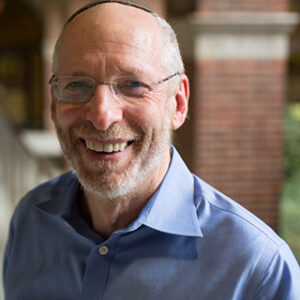
The Give and Take of Strength
Mar 13, 2026 By Eliezer B. Diamond z”l | Commentary | Pekudei | Shabbat Hahodesh | Vayak-hel
Rituals of closure are common in both the secular and religious realms. An example of the first is the sounding of retreat and the lowering of the flag marking the end of the official duty day on military installations. An instance of the second is the siyyum, a liturgical ritual and festive meal that is occasioned by the completion of the study of a Talmudic tractate. Closure rituals relate not only to the past but to the future as well. On the one hand, the temporal demarcation of a past event facilitates the emergence of its distinct identity, internal coherence, and significance, thereby providing insight, understanding, and, at times, a sense of accomplishment. At the same time, by declaring an end, a closure ritual creates space in which one can—and must—begin anew; the past is to be neither prison nor refuge.
Read More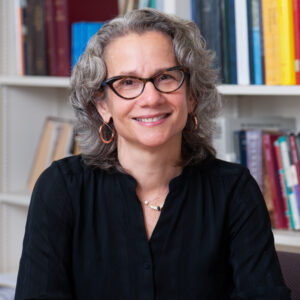
Kept By Shabbat
Mar 6, 2026 By Amy Kalmanofsky | Commentary | Ki Tissa
Ahad Ha’am famously said: “More than Jews have kept Shabbat, Shabbat has kept the Jews.” Pretty remarkable coming from the founder of cultural Zionism!
Parashat Ki Tissa either supports or challenges Ha’am’s words. This week’s parashah relates one of the lowest moments in Israel’s story—the sin of the golden calf—in which Israel dances before a god of their own making. Coming down Mount Sinai with the stone tablets inscribed by God’s finger (Exod. 31:18), Moses sees Israel’s frenzy and smashes the tablets. Moses spends the rest of the parashah picking up the pieces and working to restore Israel’s relationship with God. The parashah ends with God giving a new set of tablets to Moses. The holy covenant between God and Israel is restored.
Read More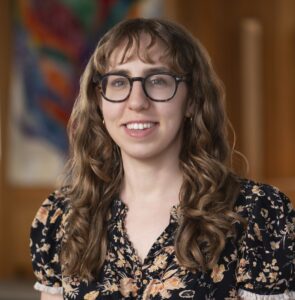
Zakhor in a Fractured Age
Feb 27, 2026 By Sandra Fox | Commentary | Shabbat Zakhor | Tetzavveh
“Could you have chosen a more loaded week?” said my husband with a face that can only be described as both bemused and pitying when I told him that I had agreed to write my first JTS Torah Commentary on Shabbat Zakhor. As the heaviness of the reading sank in, with its commandment to recall Amalek’s unprovoked attack on the Israelites and to “blot out” Amalek’s memory, I became apprehensive.
Read More
A Symbol of Peace
Feb 20, 2026 By Daniel Nevins | Commentary | Terumah
The Arch of Titus in Rome is simultaneously one of the saddest and most exciting places for a Jew to stand. It is but a short distance from the Colosseum, the stadium made famous by its cruel sports, built with money plundered from the Jerusalem Temple in 70 CE. Titus’s Arch celebrates the destruction of our Temple, a building designated by Isaiah to be a house of prayer for all nations. A bas-relief sculpture on the arch’s inner walls depicts a sickening scene: the triumphant display of the Temple’s sacred objects, the Menorah most prominent among them, along with a pathetic procession of enslaved Jews.
Read More
Wade Melnick – Senior Sermon (RS ’26)
Feb 19, 2026 By JTS Senior Sermon | Commentary | Senior Sermon | Terumah
Wade Melnick-Terumah
Read More
Before Them, Before Us: Law as Master, Law as Servant
Feb 13, 2026 By Gordon Tucker | Commentary | Mishpatim | Shabbat Shekalim
וְאֵלֶּה הַמִּשְׁפָּטִים אֲשֶׁר תָּשִׂים לִפְנֵיהֶם These are the rules that you shall place before them. (Exodus 21:1) So begins this week’s parashah, Mishpatim. It is here that the Jewish legal tradition begins, where Torah (i.e. “Instruction”) becomes Nomos or Law. Immediately after that opening sentence, the text continues with rules concerning masters and servants. […]
Read More
Eitan Bloostein – Senior Sermon (RS ’26)
Feb 11, 2026 By JTS Senior Sermon | Commentary | Senior Sermon | Mishpatim
Mishpatim All Class of 2026 Senior Sermons
Read More
On Moses’ “Saying” and “Telling”
Feb 6, 2026 By Alan Cooper | Commentary | Yitro
The highlight of Parashat Yitro is undoubtedly the spectacular son et lumière at Sinai, accompanying the uniquely unmediated revelation of God’s “words” (the 10 Commandments) directly to the people. The gravity of the occasion demanded special preparation, and most of Exodus 19 is devoted to that preparation…
Read More
Noam Blauer – Senior Sermon (RS ’26)
Feb 6, 2026 By JTS Senior Sermon | Commentary | Senior Sermon | Yitro
Yitro All Class of 2026 Senior Sermons
Read More
When Prayer is Not Enough
Jan 30, 2026 By Cantor Rabbi Shoshi Levin Goldberg | Commentary | Beshallah
You may know this joke: a man is drowning in the ocean and several people with boats come to rescue him. He responds to each of them, “No, thank you. I’ve been praying, and God will save me.” When the man arrives in heaven, angry with God, God asks him, “Why didn’t you get on the boats I sent?”
Prayer is rarely enough. Jewish leaders are acutely aware of this reality today. Cantors, in particular, know that there is far more to our jobs than leading prayer.
Read More
Marc Hersch – Senior Sermon (RS ’26)
Jan 29, 2026 By JTS Senior Sermon | Commentary | Senior Sermon | Beshallah
Beshallah All Class of 2026 Senior Sermons
Read More
Where We Stand is What We Learn
Jan 23, 2026 By Luciana Pajecki Lederman | Commentary | Bo
As a Talmud teacher, I am constantly aware of the dynamic web of relationships in which learning takes place—between me, the students, and the text we explore together—each quietly and continually shaping the relationship between the others. But as Director of the Beit Midrash, I am especially attuned to the role of the surrounding environment: how the space itself can either nurture or inhibit those relationships.
Read More
Words Fail Me
Jan 16, 2026 By Jan Uhrbach | Commentary | Va'era
That is the way the Zohar (the foundational text of Kabbalah, Jewish mysticism) understands our exile in Egypt: as the exile of speech, a failure of words. In this reading, the breakdown of speech is both cause and effect of our enslavement, while healing and redeeming speech—finding our voice—is both the process and hallmark of redemption.
Read More


SUBSCRIBE TO TORAH FROM JTS
Our regular commentaries and videos are a great way to stay intellectually and spiritually engaged with Jewish thought and wisdom.