

Search Results
Back to JTS Torah Online's Main page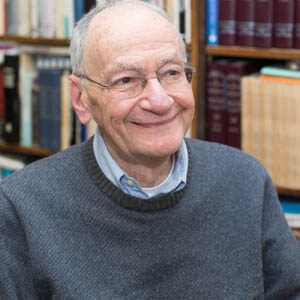
A Life of Self-Restraint
Mar 8, 2003 By Ismar Schorsch | Commentary | Pekudei
Midrash is the art of keeping an ancient sacred text alive. The Rabbis were masters of drawing water from stone, of transforming the most mundane passages of Torah into luminous nuggets of spirituality. Our parashah offers a provocative example of their creative touch.
Read More
After the Revelation
Mar 8, 2003 By Lewis Warshauer | Commentary | Pekudei
The Book of Exodus begins with God hidden. Not until the children of Israel are enslaved for some time, and cry out in their suffering, does God hear them. Only then does God’s presence become increasingly manifest as the plagues of Egypt come to their fatal conclusion and afterwards God drowns the Egyptian army in the Sea of Reeds. The Israelites receive their most intense experience of God on Sinai, where, as the Torah relates, they see and hear God. To paraphrase Heschel, what they see and hear is not clear; that they see and hear something, is.
Read More
Gleanings Today
Mar 5, 2003 By Lewis Warshauer | Commentary | Kedoshim
During a recent visit to Kansas City, I was talking to friends at my former congregation about their recent trip to the New York area. They had been to a wedding reception and marveled at the prodigious sushi bar. I smiled when they admitted to making the classic mistake of those not familiar with New York folkways: filling up on appetizers in the mistaken notion that they are the main meal.
Read More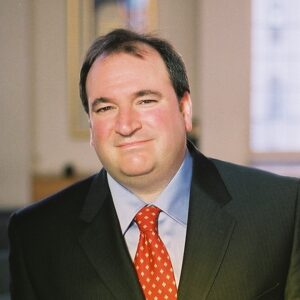
The Language of Names
Mar 1, 2003 By Charles Savenor | Commentary | Vayak-hel
In 1989, during the flight to my Junior Year Abroad experience in Israel, I chatted with the El Al flight attendants at the rear of the airplane. When asked my name, I made the conscious decision to introduce myself using my Hebrew name, Simcha. As these women of sephardic descent heard my name, they roared out in laughter. “Simcha, you cannot be Simcha. Simcha is a girl’s name.” They explained that in modern Israeli society, especially in sephardic circles, only girls went by the name Simcha.
Read More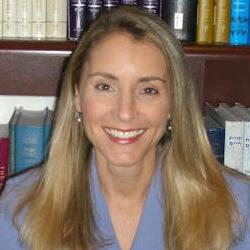
Bodies in Mirrors
Mar 1, 2003 By Lauren Eichler Berkun | Commentary | Ki Tissa
In the midst of an elaborate description of Bezalel’s artistic crafting of the Tabernacle, we read an unusual detail: “He made the laver of copper and its stand of copper, from the mirrors of the women who performed tasks at the entrance of the Tent of Meeting” (Ex. 38:8). This copper laver served as a basin for cleansing waters so that the priests could enter the Tabernacle in a state of ritual purity. Why would Bezalel craft such an important vessel from women’s mirrors? Why does the Torah mention this specific detail?
Read More
The Spirituality of Kafka’s Doll
Feb 22, 2003 By Ismar Schorsch | Commentary | Ki Tissa
The story is told about Franz Kafka that the last time he visited Berlin, he chanced upon a little girl in a park awash in tears. When he inquired as to the reason for her distress, she sobbed that she had lost her doll. Compassionately, Kafka countered that not to be the case. The doll had merely gone on a trip and, in fact, Kafka met her as she was about to leave. He promised that if the little girl would return to the park the next day, he would bring her a letter from her doll. And so Kafka did for several weeks, arriving each morning at the park with a letter for his new friend.
Read More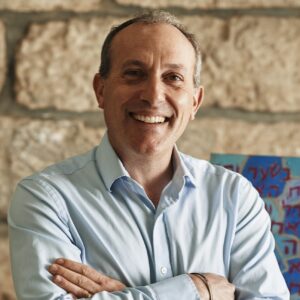
Creation and Creativity
Feb 22, 2003 By Matthew Berkowitz | Commentary | Ki Tissa
When you sit down to center a piece of clay on the wheel, the first thing you must do is ‘center’ yourself — take a deep breath, let go of all extraneous thoughts, surrender control. You cannot force the clay into position with your hands or arms; rather, the message must emanate from your intellectual and emotional faculties: be quiet, be centered, be calm. To this, the clay responds.
Read More
The Necessity of Inclusion
Feb 15, 2003 By Joshua Heller | Commentary | Tetzavveh
The latter part of the book of Exodus describes the construction of the Mishkan, the portable tabernacle that served as the focus of God’s presence during the Israelites’ wanderings in the desert and beyond. These sections are characterized by a love of regularity and order. The same carefully selected few carry out the same intricately prescribed rituals the same way each day, using sacred objects, which have been standardized down to the last detail. Each aspect is described twice, first as God commands Moses, and then in its actual implementation, which matches the plans almost to the letter. In contrast, extemporaneous religious expressions, like the Golden Calf, are hazardous at best. There is no room for the novel amid the routine.
Read More
Between the Wilderness and Jerusalem: A Tale of Two Holy Spaces
Feb 8, 2003 By Ismar Schorsch | Commentary | Terumah
This week’s parashah and haftarah are an exercise in counterpoint. Superficially, the construction of sacred space joins them in a common theme. While the Torah portion takes up the erection of the Tabernacle in the wilderness, the narrative from the book of Kings recounts the building by Solomon of the First Temple in Jerusalem some 480 years later. The move is from a mobile sanctuary to a permanent one, from wood to stone. Still, the basic design remains the same, an oblong structure with the Holy of Holies (devir) at the rear, farthest away from the entrance. Likewise, the content of the Holy of Holies is unaltered: an ark covered by two large cherubim with outstretched wings. The ark itself contained only the two tablets which attested to the covenant between God and Israel sealed at Mount Sinai.
Read More
Whole Bread
Feb 8, 2003 By Lewis Warshauer | Commentary | Terumah
The weekly Torah readings are moving into territory unfamiliar to our contemporary experience. The Book of Genesis, set mainly in the Canaan and Egypt, mentions places that still exist and people whose names still resonate. The beginning of the Book of Exodus, with its account of the liberation from Egypt, maintains its grip today because that liberation continues to be a focus of Jewish consciousness and celebration.
Read More
The Abolition of the Death Penalty
Feb 1, 2003 By Lewis Warshauer | Commentary | Mishpatim
In the closing days of his administration, outgoing IIlinois Governor George Ryan pardoned or commuted the sentences of all prisoners on the state’s death row. The governor’s action sparked a renewed debate about the death penalty in the United States. For Jews, this debate presents the opportunity to review and clarify the stance of Jewish law on capital punishment not only for our own information but in light of public policy discussions now underway.
Read More
Creation and Liberation
Feb 1, 2003 By Lauren Eichler Berkun | Commentary | Mishpatim
Why do we observe Shabbat rest? The most common response to this question is learned from last week’s Torah portion: we rest on Shabbat, because God rested on Shabbat. Thus, Shabbat becomes a “remembrance of Creation.” The law of Shabbat in the Ten Commandments highlights the connection between Shabbat and Creation:
“Six days you shall labor and do all your work, but the seventh day is a Sabbath of the Lord your God: you shall not do any work… For in six days the Lord made heaven and earth and sea, and all that is in them, and He rested on the seventh day; therefore the Lord blessed the Sabbath day and hallowed it” (Exodus 20:9–11).
The Soul of Torah
Jan 25, 2003 By Ismar Schorsch | Commentary | Yitro
Christianity turns on the doctrine of incarnation as formulated famously by the Gospel of John: “So the Word became flesh; he came to dwell among us, and we saw his glory, such glory as befits the Father’s only Son, full of grace and truth” (1:14). It is a doctrine that Jews tend to identify as uniquely Christian. Whereas both Judaism and Christianity equally acknowledged that at creation “the Word dwelt with God” (1:1) as both wisdom and instrument, Judaism refrained from ever endowing it with human form. Though valid, the distinction does not preclude the appearance in Judaism of the doctrine. For Judaism, the Word became incarnate as book.
Read More
Holy Encounters
Jan 25, 2003 By Matthew Berkowitz | Commentary | Yitro
Three years ago, my wife, Miriam, and I traveled to Italy. While the art of Florence, architecture of Sienna, and vistas of San Gimignano overwhelmed the imagination and tantalized the senses, our most meaningful experience of that trip occurred in Rome. With only one day to visit the sites of this ancient city, a very special shidukh was arranged between us and a Jesuit priest, Father John Navone (American by birth with deep family roots in Italy). As we quickly discovered, Father Navone knows every nook and cranny of this city that is so beloved to him and his family. He exuded not only a special affection for Italy but also a love for humanity.
Read More
God’s Presence in the Arms of Loved Ones
Jan 18, 2003 By Melissa Crespy | Commentary | Beshallah
On the occasion of this joyful Shabbat, on which we celebrate the crossing of the Sea of Reeds, (and this year, Tu Bishevat), I find myself more contemplative than joyful.
Read More
Torah and Jewish Survival
Jan 18, 2003 By Ismar Schorsch | Commentary | Beshallah
We tend to think of revelation as a highly restrictive term. The fate of a revealed text is to be immutable. We humans have no right to alter what God has given. But in Judaism precisely because the Torah is revered as divine, it becomes susceptible to unending interpretation. It would be a denigration of God’s word to saddle it with just a single meaning. In contrast to human speech, which carries a finite range of meanings, the language of God was deemed to be endowed with an infinity of meanings. This theology freed the Rabbis to do midrash, creating the anomaly of a canon without closure. The vessels kept changing their contents. New challenges elicited new insights into a text inviolable only on the surface.
Read More
Fourth Sons
Jan 11, 2003 By Lewis Warshauer | Commentary | Bo | Pesah
I am fortunate to be able to teach to people who know how to ask questions. My students are part of the universe of transmitters and receivers of Judaism. Yet I sometimes wonder about people who are not in my orbit. It is as if a traveler comes to Earth and occupies himself with its inhabitants and their activities, and then looks out into the vast deep darkness of space and wonders who is out there in that domain of silence.
Read More
Dread of Darkness
Jan 11, 2003 By Ismar Schorsch | Commentary | Bo
Darkness unsettles us. As children we went to sleep with a small light on; as adults we prefer to come home to a dwelling not totally dark. We fear what we cannot see. It is for this reason that we start the evening service with the recitation of a verse from Psalm 78: “But he, the compassionate one, would expiate sin, and not destroy; he would again and again turn back his anger, and would not arouse his full wrath” (v. 38, trans. by Edward J. Greenstein). As the darkness of night envelops us, we affirm God’s nearness. God does not withdraw with the setting of the sun.
Read More
What’s in a Name?
Jan 4, 2003 By Lauren Eichler Berkun | Commentary | Va'era
The Book of Exodus is entitled “Shemot” in Hebrew, meaning “Names.” In the first parashah of Shemot, we learned the names of the Children of Israel who came to Egypt with Jacob. This week, in the second portion of Shemot, we focus on the names of God. The opening statement of Parashat Va—Era has puzzled Torah commentators throughout many centuries . . .
Read More
Small Acts of Kindness
Jan 4, 2003 By Ismar Schorsch | Commentary | Va'era
A careful reading of the Torah narrative would quickly persuade us that not all of the ten plagues are unleashed by Moses. The midrash, in fact, attributes only three to Moses – those of hail, locusts and darkness. The first three plagues – those of blood, frogs and vermin – are attributed to Aaron, while still three others – insects, pestilence and the death of the first born – come directly from God. Finally, one plague – that of boils – is triggered by all three of them jointly.
Read More


SUBSCRIBE TO TORAH FROM JTS
Our regular commentaries and videos are a great way to stay intellectually and spiritually engaged with Jewish thought and wisdom.