
Explore JTS’s Online Torah

We invite you to search our vast collection of today’s most compelling Jewish conversations, teaching, and resources, including weekly Torah commentaries, online lectures, curricula for community use, and more.

Use the search bar and filters to find what inspires you.

Read weekly Torah commentaries

Read weekly Torah commentaries

Reflections on the Torah reading cycle

Learn more
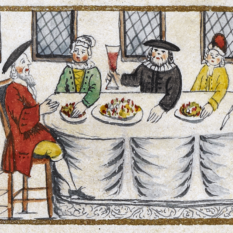
Holiday Learning and Resources

Holiday Learning and Resources

Commentaries and more on the themes, texts, and liturgy of the holidays.

Learn more
Take a Class in Biblical Hebrew

Take a Class in Biblical Hebrew

Take individual courses or pursue the certificate in Biblical Hebrew

Learn more

Listen to JTS podcasts

Listen to JTS podcasts

Learn on the go

Learn more
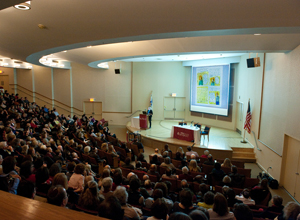
Watch lecture recordings

Watch lecture recordings

Videos of public events

Learn more

Nusah & Cantillation

Nusah & Cantillation

The tunes for Shabbat, festival, and high holiday services and Torah readings

Learn more


Featured

The People Who Love Us Will Miss Us

The People Who Love Us Will Miss Us

Nov 6, 2026 By Israel Gordan | Commentary | Hayyei Sarah

I found myself thinking about that exchange while reading this week’s parashah, Hayyei Sarah. The title itself presents a familiar paradox. Although it means “the life of Sarah,” the portion opens with her death. But perhaps the title is more appropriate than it initially appears. Sarah’s death is announced in the opening verses, yet her presence continues to be felt throughout the narrative.

Read More
A New Heaven and a New Earth:  How the Bible Cultivates Hope for the Future 

A New Heaven and a New Earth:  How the Bible Cultivates Hope for the Future 

Nov 2, 2026 By Amy Kalmanofsky | Public Event video | Video Lecture

It is difficult to have hope in today’s present-focused and crisis-driven society.  Yet, hope is essential to envisioning a future.  This session examines several passages in the Bible designed to cultivate hope and considers whether the Bible can be a resource for the cultivation of hope today.

Read More
When Does Hagar See

When Does Hagar See

Oct 30, 2026 By Ofra Arieli Backenroth | Commentary | Vayera

The story of Hagar poses difficult questions about loyalty, trust, and, eventually, the meaning of evil. Beginning in chapter 16, the narratives opens with a promise from God to Abram: “I will establish My covenant with you, and with your descendants after you, for all their generations, an everlasting covenant” (Gen. 16:7).[2] However, there is tension between God’s promise to Abram to be the father of a great nation and have many descendants and the fact that Sarai is barren. Hagar, an Egyptian maid, is brought to Abram by the childless Sarai, and later becomes his wife and the mother of his first-born son, Ishmael. Sarai initiates this chain of events while a mostly inactive Abram follows Sarai’s wishes and God’s commands.

Read More
The Future of Torah: Jewish Learning in the Age of AI

The Future of Torah: Jewish Learning in the Age of AI

Oct 26, 2026 By Zohar Atkins | Public Event video | Video Lecture

With Rabbi Dr. Zohar Atkins, JTS alum, scholar, writer, and founder of Lightning, a lifelong learning AI platform

Artificial intelligence is transforming how we find, organize, and create knowledge. What could this mean for a Jewish tradition built on centuries of interpretation, debate, and discovery?

Read More
A Parent’s Prayer

A Parent’s Prayer

Oct 23, 2026 By Yael Landman | Commentary | Lekh Lekha

When we think about Abraham and prayer, we might immediately recall the patriarch’s bold petition to God on behalf of Sodom and Gomorrah. We might even think of God telling King Abimelech that Abraham is a navi, a prophet, and thus has the special capacity to pray on the king’s behalf. Yet Abraham emerges as a person of prayer even earlier in his story. Following years of his wife Sarah’s infertility, and the birth of Ishmael to Abraham and Sarah’s slave Hagar, Parashat Lekh Lekha narrates the Divine promise to Abraham that Sarah will finally give birth. But instead of expressing joyous gratitude to God, Abraham responds: לוּ יִשְׁמָעֵאל יִחְיֶה לְפָנֶיךָ —“If only Ishmael could live before you!” (Gen. 17:18).

Read More

SUBSCRIBE TO TORAH FROM JTS

Our regular commentaries and videos are a great way to stay intellectually and spiritually engaged with Jewish thought and wisdom.