The Voice You Can See
Posted on
Reflections on Shofarot and a Musical Pictogram in The JTS Collection
The Shofar Blasts
Marcus Mordecai Schwartz, Ripps Schnitzer Librarian for Special Collections; Assistant Professor, Talmud and Rabbinics
Aside from the human voice, the shofar is the most ancient sound in Jewish ritual—and the most complex. It cries out across meanings: as alarm, as elegy, as anthem, as coronation. The same raw note that thundered at Sinai now trembles in the synagogue. It announces a sovereign. It proclaims a people. And it mourns. On Rosh Hashanah, we gather all those meanings into a single trembling call—and we let it speak.
In a 15th-century Spanish siddur preserved at The JTS Library (MS 4366), an anonymous scribe tried something extraordinary.
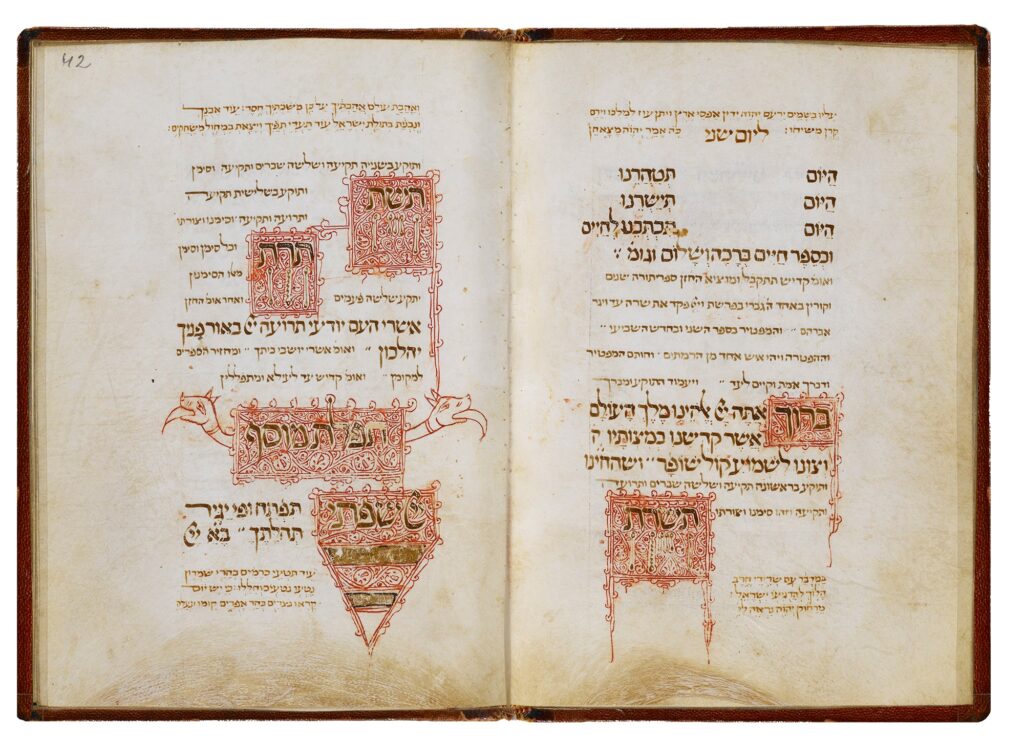
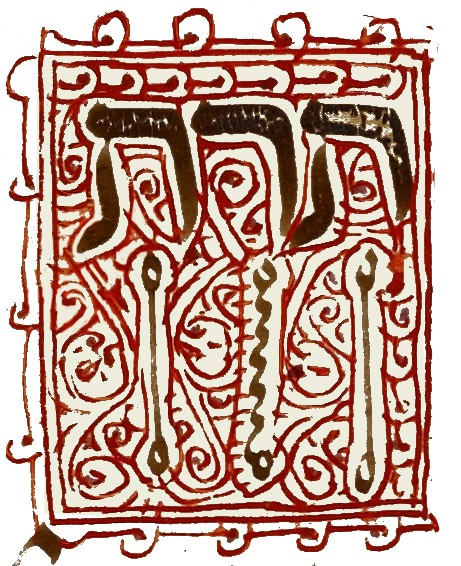
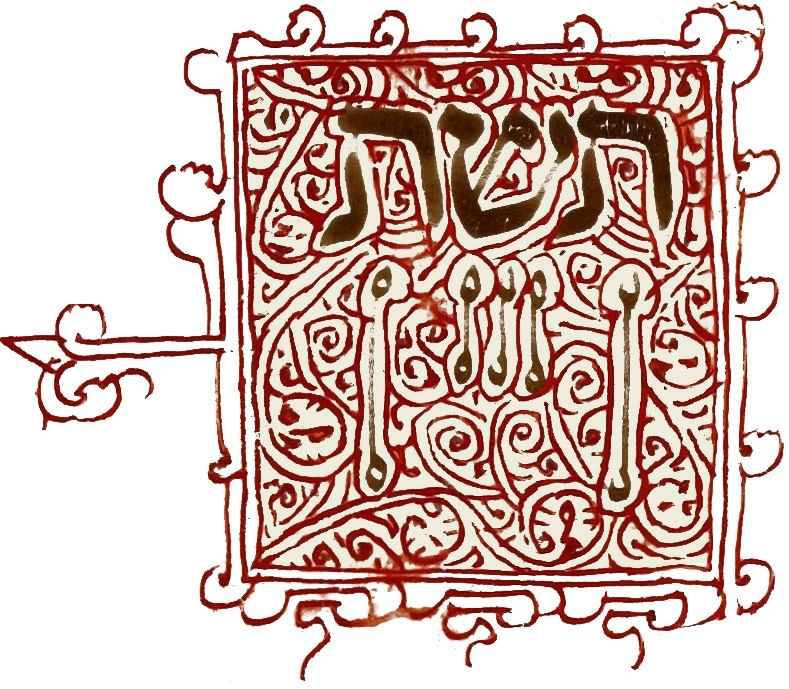
The folios for Rosh Hashanah include the blessings of shofarot—the final section of the Musaf Amidah, where we recall the shofar of Sinai, the shofar of judgment, the shofar of hope. But in this manuscript, the sounds aren’t only named, they are pictured. A long, straight line marks the tekiah, the steady unbroken blast. Three short vertical strokes stand for shevarim, the broken sigh. A trembling wavy line marks teruah, the staccato cry.
These aren’t musical notes—they’re more elemental, a kind of sacred pictogram. The shofar’s voice is turned into a graphic symbol—not to notate pitch or rhythm, but to make sound visible, to let the eye hear what the heart already knows.
The 20th-century linguist Roman Jakobson wrote that certain sounds carry inherent meaning—that sound can evoke feeling before words ever begin. He also described the poetic function of language: when the shape of what’s said becomes part of what it means. This manuscript lives at the intersection of those two ideas. The scribe doesn’t just describe the shofar, he traces its voice. In black and red ink on parchment, he renders sound as symbol—thunder, groaning, glory.
And what are we meant to hear?
The answer is ancient. At Mount Sinai, the Torah tells us, “All the people saw the kolot” (Ex. 20:15). Kolot—thunder, voices, blasts. That paradox—sound made visible—is the secret of Revelation. The shofar echoes that thunder. It is not speech. It is not language. It is the voice beneath language—the sound of truth too vast to say. The voice you can see.
In the manuscript, that voice is simple and stark. Its straight lines and tremors tell us what kind of cry to make. But they also remind us of the cry we are already making. The cry of memory. The cry of longing. The cry of grief. The cry of return.
The shofar is a trumpet, but also a mourner. It crowns God, but it also weeps. It announces a world that could be, even as it grieves the world that is. In this manuscript, the voice of the shofar is made visible so that we do not forget how much is held in a single breath.