Psalm Sung Blue
Posted on Feb 23, 2026
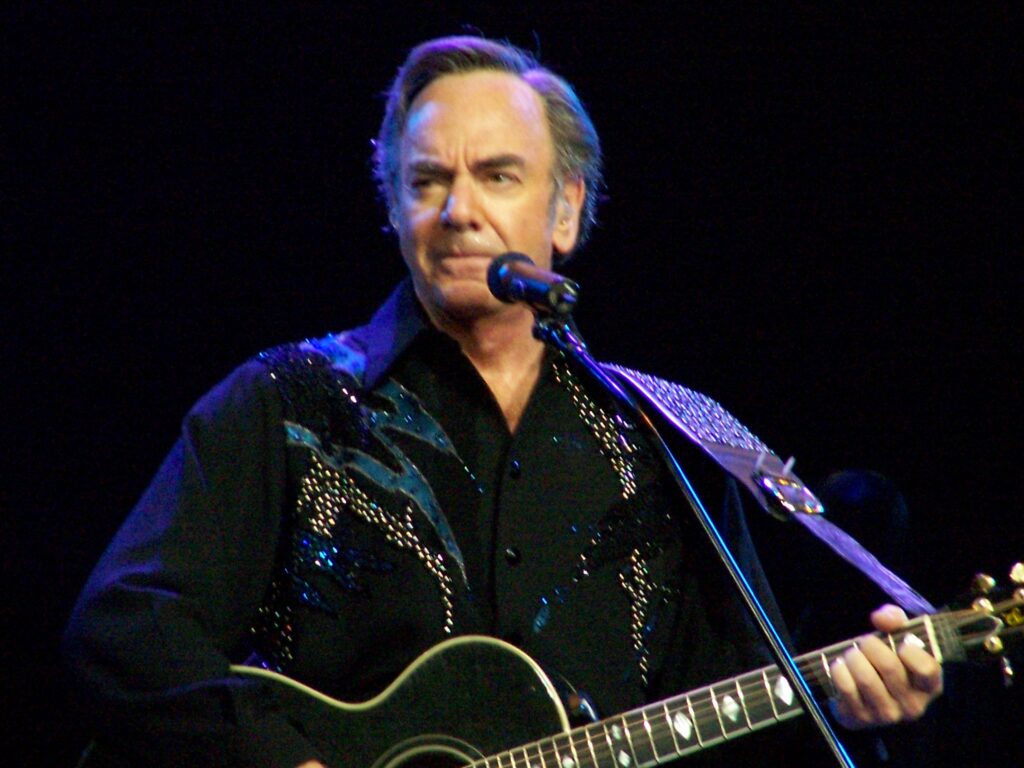
Neil Diamond is enjoying a big resurgence. The iconic singer-songwriter, who turned 85 in January, played an active role in the creation of the award-winning musical A Beautiful Noise: The Neil Diamond Musical, which recently concluded its Broadway run. Even though he was not directly involved in the making of the film Song Sung Blue, his music and likeness were featured prominently, reminding audiences of his enduring presence.
It seems impossible these days to go anywhere without encountering some trace of Diamond, who celebrates the 60th anniversary of his career this year. He has sold more than 130 million records worldwide, is a member of both the Rock and Roll Hall of Fame and the Songwriters Hall of Fame and a Grammy Award winner, and he has appeared on countless wedding playlists over the decades.
The son of Jewish immigrants, Diamond once considered changing his name in hopes of advancing his music career. In 1966, just before releasing his debut album, one choice he was considering was Noah Kaminsky. But when a friend learned that Neil Diamond was his actual real name, she questioned why he would ever change something so perfect.
Diamond’s Jewish identity extends beyond his name and there is something distinctly Jewish in his music. Whether consciously or not, some of his songs seem infused with traces of the Psalms. While this is not a confirmed fact, it is a compelling interpretation.
Take “Holly Holy,” for example. The lyrics:
Call the sun in the dead of the night / And the sun’s gonna rise in the sky
mirror the sentiment of Psalm 30:5: “Weeping may stay for the night, but rejoicing comes in the morning.” Later in the song, when he sings:
Touch a man who can’t walk upright / And that lame man, he gonna fly
one can hear the resonance of Psalm 146:8: “The Lord gives sight to the blind; the Lord lifts up those who are bowed down.”
And we can’t overlook the chorus of Holly Holy:
Sing a song / sing a song of songs / sing it out / sing it strong
Here, the song practically names the Psalms themselves. By definition, a psalm is a sacred song intended for worship, and these lyrics function as an invitation to do exactly that: to sing, wholeheartedly, in praise.
“I Am… I Said” is another example of Diamond channeling a psalmist-like voice. Compare the lines:
I am… I cried / I am… said I / And I am lost and I can’t / Even say why…
to the honesty of Psalm 22:
“My God, my God, why have you forsaken me? Why are you so far from saving me, so far from my cries of anguish? I cry out by day, but you do not answer…”
There is a noticeable similarity, as both convey a sense of isolation and a call for understanding. It is easy to imagine Diamond reading this psalm and feeling a connection with its cry into the silence.
Finally, consider the often-misnamed “Soolaimon,” where Diamond sings:
Hey, God of my want, want, want / Lord of my need, need, need
These words echo Psalm 23: “The Lord is my shepherd; I shall not want.” A few lines later, the song continues:
God of my day, day, day / Lord of my night, night, night
Diamond seems to remind listeners God is attentive at all times, day and night alike. This sounds like Psalm 121:
“The Lord will not let your foot slip; he who watches over you will not slumber; indeed, he who watches over Israel will neither slumber nor sleep.”
In these and other examples, Diamond’s music takes on the structure and spirit of the Psalms: a blend of personal testimony, honest lament, and jubilant praise. His songs bridge the timeless rhythm of the Psalms with the feelings of modern life. It would not be surprising if the Psalms had not been an inspiration to Diamond. After all, the Psalms were mostly written by King David, a musician himself who did not change his name.