
Prayer Is Hard—And That’s the Point
Posted on
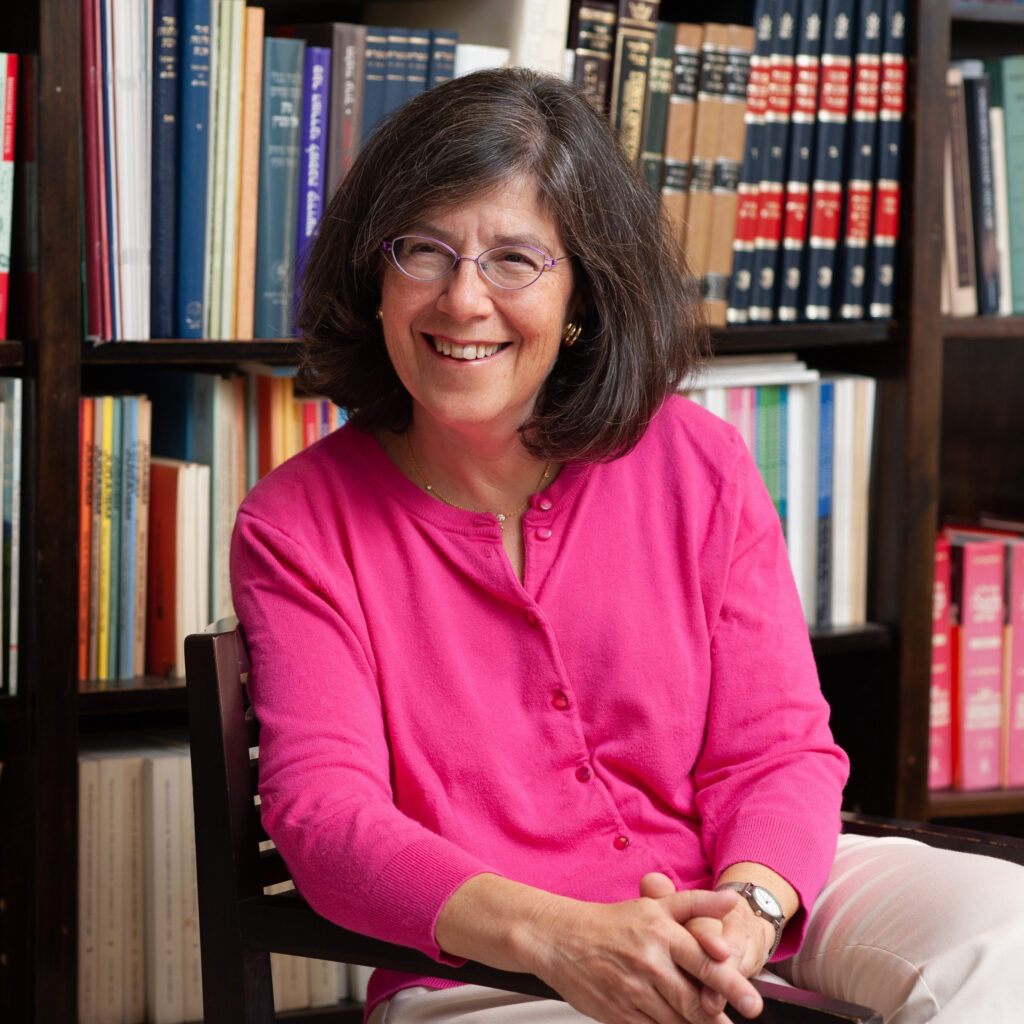
Jan Uhrbach, Director of the Block / Kolker Center for Spiritual Arts
Watch video of Rabbi Uhrbach sharing her thoughts on this topic.
We come to synagogue on the High Holy Days for many reasons: to affirm our Jewish identity, to be part of Jewish community, to connect with family, and to fulfill our obligations to God, the Jewish people, and Jewish tradition. We come for inspiration, learning, comfort, and challenge.
Whatever our usual reasons, this year we’re coming amid uncertain and turbulent times, and most of us are hoping for some guidance and nourishment to help us manage our fears and find hope. A good sermon can certainly do some of that, inspiring us to think and act differently.
But what we’re asked to do for most of our time in synagogue is pray. And prayer is a problem. It’s a problem generally because prayer is rarely easy. It’s a particular problem on the High Holy Days because the services are so long and repetitive, the themes and images of the liturgy are so challenging, and many of us simply don’t know how to engage.
But prayer does different work from teaching within a sermon, and it can offer exactly the kind of hope and sustenance we need.
Why Are High Holy Day Services So Long?
Certainly there’s a lot of special holiday liturgy to get through. But there’s a much deeper, more important reason: authentic prayer, especially transformational prayer, takes time.
Praying is much more than merely reciting words. It involves encountering aspects of ourselves we rarely, if ever, see, shifting our perspective and seeing all things anew, awakening our spirits and sense of wonder. It’s about connection: with ourselves, with a community of other seekers, and with Someone or Something beyond ourselves (God, Oneness, or whatever metaphor you choose for “the all-encompassing larger something of which I’m but a part”).
And on the High Holy Days, prayer has some additional goals.
First, we’re meant to experience and claim the fullness of our humanity. On the humbling side, that means facing our smallness: our vulnerability, our fallibility and actual failures, our powerlessness, and our mortality. On the ennobling side, it means recognizing and embracing ways in which we are made in the image of God: our inherent dignity and unique value, our agency and consequent responsibility, our belovedness, and our resilience and strength. We’re reminded that we’re not supreme and that we’re not alone.
The liturgy and the positioning of ourselves as “pray-ers” facilitates all that. These help us remove or at least pierce our protective armor of ego, self-deception, rationalization, external and internal makeup, posturing, shame—whatever keeps us from seeing ourselves as we really are.
Second, the arc of the liturgy from Rosh Hashanah through Yom Kippur imagines that our prayer may inspire God to leave kisei hadin (throne of judgment) and ascend kisei harachamim (throne of compassion/kindness), thereby bringing us forgiveness, life, and a second chance. But whatever we believe or don’t believe about God, ideally our prayer will have the same effect on us, helping us push past our own harsh judgment (of self and others) and access the gentleness and tenderness within, the place where we feel deeply loved and valued and where we feel most loving of others. That experience may enable us to seek and offer forgiveness of others and lay the foundation for our own growth and change. This, too, brings us life and a second chance.
Services aren’t long
because we have a lot of
liturgy; rather, we have a
lot of liturgy because we
need a long service.
All of this is part of what makes prayer a religious obligation and service to God. Ideally, those moments of profound encounter that may occur in the process of praying change us, shaping our character, our choices, and our behaviors outside the synagogue.
And all of this is the real reason services are long: Moments like that aren’t easy to come by, and they don’t happen in a few minutes or even a couple of hours. In reality, we could get through the required liturgy in a fraction of the time, but then very little would get through to us. We need time to focus, to get past our resistances, to delve deeper, to connect. In other words, services aren’t long because we have a lot of liturgy; rather, we have a lot of liturgy because we need a long service.
How Should I Engage in Prayer?
The most obvious way to engage in prayer is simply to pray the words on the page, along with the prayer leader and congregation, in Hebrew or English or transliteration, silently or aloud. One can do so in a meditative way, losing oneself in the sound and rhythm of the words. Or focus on meaning, taking in the ideas and themes expressed, noting one’s reactions, connecting the text to one’s own life. It helps to remember that liturgy is poetry, not prose, and it needn’t be taken literally to be taken seriously.
The key is persisting past distraction
or boredom to where the depth of
meaning is found.
At the same time, few of us can stay fully focused and prayerful for a brief weekday service, much less the lengthier davening on Rosh Hashanah or Yom Kippur. Short-circuiting the process isn’t the answer; as with any practice, the key is persisting past distraction or boredom to where the depth of meaning is found. (Think how often psychotherapy, gym workouts, or creative endeavors may seem like a waste of time just before a major breakthrough.) And following along with the congregation is by no means the only way to engage. At different times throughout the day when boredom or distraction strikes, rather than disengaging, try employing one of the following alternative paths to meaningful prayer.
Choose one particular prayer and linger there. Abraham Joshua Heschel compared the prayer book to the Metropolitan Museum of Art, filled with great works of art, too rich and beautiful to take in on one visit. So just as some people go to the Met to spend time with a single painting or in a single gallery, you may find that one or more particular prayers speak especially powerfully to you. If so, don’t feel pressured to push forward with the congregation. Stay on that page and allow the text to resonate within you. Explore its many possible meanings and their connection to you.
Pray in your own words. The formal texts of the confessions on Yom Kippur are merely an opening to help identify the failures and regrets each of us needs to own up to as individuals. Similarly, the formal text of the prayer book isn’t meant to substitute for your own concerns, needs, longings, gratitude, and praise. Rabbi Nachman of Bratslav stressed the importance of pouring out your heart to God as though you were speaking to your closest friend. You should feel free to put down the book and say whatever’s on your mind and in your heart. You can do that silently or quietly, stepping out for a few moments to a private place or taking courage and comfort from the company of the community. And don’t worry if you’re not sure who (if anyone) is listening; the important thing is to open your heart and see what’s there.
Read something else for a few minutes. The Conservative Movement’s prayer book, Mahzor Lev Shalem, features a wealth of commentary, poetry, and explanations. If you find yourself distracted or alienated, wander into the margins of the page. Some people bring their own reading material relating to the theme of the High Holy Days for additional inspiration. Choose reading that will keep you in a reflective and prayerful mindset—something that will focus you on inner work, not distract you from it, and help you reconnect to the service.
Meditate or sit in silence. Prayer happens not on the page but in the heart, mind, and soul—and not always in words. Feel free to close the book, close your eyes, and open reflective space within.
Sing. Singing—with words or a wordless melody—can be one of the most powerful modes of prayer there is. Singing can do for the heart and soul what a therapeutic massage does for the body, loosening up places of pain and tension, and allowing us to be more in tune with ourselves. Singing has a way of bypassing some of our defenses, and we may encounter parts of ourselves we rarely see (including our childlike side). So just join in. It doesn’t matter if you know the tune or you don’t, if you sing the words or just hum or chant along, if you stay on pitch or not. The point is not to sing well; the point is to sing.
Listen. We hear a lot about participatory services, by which we usually mean congregational readings and singing. That’s all great. But the participation that really counts is inner engagement. For some, that happens best through active listening. So you may choose to simply listen for part of the service, perhaps closing your eyes and letting all the sounds of prayer wash over you—melodies, words, mumblings and murmurings, sighs, page rustlings. Active listening can take you out of your own concerns and connect you with something larger. As you listen, allow yourself to feel part of the prayer community, uplifted and embraced by the sounds of prayer, and imagine the needs, concerns, joys, pains, fear, and gratitude those sounds express. See if you can feel a moment of capaciousness, the ability to hold more love and compassion for those you know and those you don’t.
Prayer is worth it, especially in these turbulent, uncertain times. Where else can one do such a deep soul dive in the privacy of our hearts while buoyed by the company of others doing it too? What else offers not only the thought but the experience of being tethered to something so much vaster than ourselves, anchored by an ancient and loving tradition, held by a caring community, with mutual obligations toward others? And what could be more important in the face of dehumanization than the challenge and opportunity of confronting and reclaiming the fullness of our humanity?
May you be blessed with a moment of genuine prayer on these High Holy Days.
May your heart open, your soul soar, and your tears flow.
May you lose yourself and find yourself, heal and be healed.
And may you and we be renewed.


