Lessons from Kohelet: If There Is Nothing New Under the Sun, How Do We Solve Our Gigantic Contemporary Problems?
Oct 16, 2024 By Stephanie Ruskay | Commentary | Sukkot
Kohelet (Ecclesiastes) is read during Sukkot, and at this moment I’m finding it to be precisely the wisdom I need. When I feel worried about the many crises we face, the idea that there is nothing new under the sun can be comforting. To me it means we have what we need to address the problem. We need to have humility and consider the tools God has given us and those humans have developed over time. Our main task is to find the right formula. Though breakthrough discoveries and new inventions exist, often what we seek is the right old tool in the proper configuration. It is a question of titration.
Read More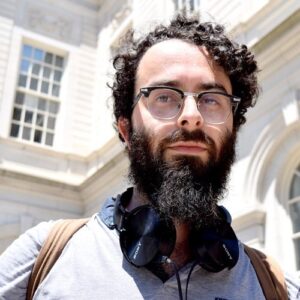
A World in Crisis Needs a Yosef
Dec 15, 2023 By Avi Garelick | Commentary | Miketz
Our society today faces crises of overwhelming proportions on many fronts—some observers have called our situation one of polycrisis, to emphasize how crises interact and amplify each other. Climate change is breathing down our necks, wars proliferate, and pandemics threaten our health, all while governments struggle to react sufficiently. Many who enjoy relative peace and affluence suffer from a sense of helplessness and foreboding. We need a Yosef.
Read More
Why We Gather
Sep 29, 2023 By Alisa Braun | Commentary | Sukkot
This past motzei Shabbat marked 38 weeks since the demonstrations in Israel against the judicial overhaul began. Once again my social media accounts lit up with photos of the streets of Tel Aviv engulfed in crowds, powerful images of democracy in action. I find the sight of so many people gathering to be awe-inspiring and uplifting, and in a ceremony associated with the holiday of Sukkot, I have found some clues as to why witnessing and joining such gatherings can be so moving.
Read More
After Dobbs: Jewish Advocacy for Abortion Rights
Sep 11, 2023 By The Jewish Theological Seminary | Public Event video
The Bernard G. Segal Memorial Lecture in Law and Ethics The U.S. Supreme Court overturned 50 years of constitutional protection for abortion in June 2022. Since the landmark ruling in Dobbs v. Jackson Women’s Health, many states have banned or severely limited abortion access, leading the Jewish community to become increasingly involved in advocacy efforts […]
Read More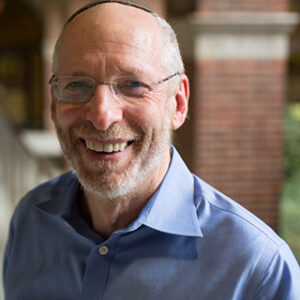
Do Not Turn Away—Then and Now
Aug 25, 2023 By Eliezer B. Diamond z”l | Commentary | Ki Tetzei
In 1861, as a great conflagration spread across our nation, the Bostonian abolitionist and women’s rights advocate Samuel Joseph May published a slender tract entitled The Fugitive Slave Act and Its Victims, an impassioned polemic against the Fugitive Slave Act of 1850. This federal law, born of the Missouri Compromise of the same year, required all federal, state, and local authorities, including those in free states, to return fugitive slaves to their masters, while also criminalizing any attempt to aid and abet a slave seeking to escape bondage. May, a Unitarian pastor, thought it fitting—and rightly so—to grace the tract’s title page with the King James translation of Deuteronomy 23:16–17, which I cite here using the JPS translation: “You shall not turn over to his master a slave who seeks refuge with you from his master. He shall live with you in any place that he may choose among the settlements in your midst, wherever he pleases; you must not ill-treat him.”
Read More
Can Institutions Be Nimble? Community Organizing in Tumultuous Times
Aug 14, 2023 By Stephanie Ruskay | Public Event video | Video Lecture
It’s human nature to build and rebuild, organize and disorganize. Institutions both large and small are grappling with the challenging tasks of shaping the present and future. Rabbi Stephanie Ruskay, Associate Dean of The Rabbinical School, JTS, will lead us in a process of exploring communal narratives and asking provocative questions that help us discover solutions.
Read More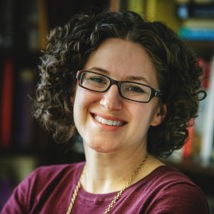
From Justification to Justice: Evolving Jewish Attitudes Towards Abortion
Jul 31, 2023 By Michal Raucher | Public Event video | Video Lecture
In the 1980s, the Committee on Jewish Law and Standards—the Conservative Movement’s central authority on Jewish law—ruled on abortion’s permissibility based on a justification framework. This framework assumes that abortion is generally prohibited but permitted in certain circumstances. They based their position on their reading of particular biblical and rabbinic sources. In the decades that followed, many Jewish institutions in the United States supported abortion rights on similar grounds and using the same texts. More recently, we’ve seen a shift in Jewish attitudes towards abortion. As more Jews have shared their own abortion experiences, their narratives have moved to the forefront and shifted the conversation. Jews are now advocating for abortion rights based on their experiences of abortion and a different reading of classical sources. In this session, we explore why and how this change occurred and consider the impact it might have on abortion rights in the United States.
Read More
Liberating our Planet: Climate Torah for the Passover Seder
Mar 31, 2023 By JTS Dayenu Circle | Commentary | Pesah
This year for Passover, JTS is proud to share Liberating our Planet: Climate Torah for the Passover Seder. Passover is an annual reminder that profound changes to our lived reality are possible, and now more than ever, we as a Jewish community need to pursue profound action to stop the climate crisis. This project is […]
Read More