Finding Comfort in Exile
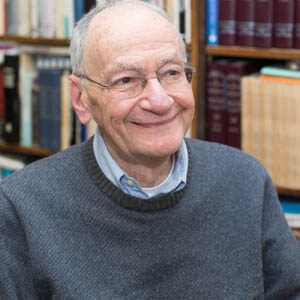
Nov 20, 1999 By Ismar Schorsch | Commentary | Vayetzei
I spent my birthday this month on business for the Leo Baeck Institute (devoted to the study of German-speaking Jewry) in Germany, where I had been born as the curtain came down on German Jewry. If Hitler had not seized power, how differently would my life have unfolded. To leave the place we were born (even in flight) does not end its influence on our lives. While I don’t believe that birth is destiny, our birthplace is often a crucial factor in shaping who we are. In 1910 at age 23, Marc Chagall arrived in Paris to stay for four transformative years. “I brought my objects with me from Russia,” he later reflected. “Paris shed its light on them.” In truth, Vitebsk never left Chagall. How much of my own life have I expended in recovering and appreciating the world of my ancestors!
Read More
What Does Prayer Accomplish?
Nov 13, 1999 By Ismar Schorsch | Commentary | Toledot
What does prayer accomplish? How often have we prayed to no avail for the recovery of someone we loved dearly? I offer a personal experience as a partial answer.
Read More
Loving Kindness in the Torah
Nov 6, 1999 By Ismar Schorsch | Commentary | Hayyei Sarah
We don’t pick spouses for our children anymore. But if we did, what trait would we single out as the best indicator of a happy marriage?
Read More
Welcoming the Stranger
Oct 30, 1999 By Matthew Berkowitz | Commentary | Vayera
Parashat Va-Yera opens with two seemingly unrelated narratives: first, ‘three men’ appear mysteriously to Abraham, bearing the news that his wife, Sarah, will soon conceive. Next we read of God’s destruction of the cities of S’dom and Amora for their immorality and corruption.
Read More
Abraham’s Struggle to See
Oct 23, 1999 By Matthew Berkowitz | Commentary | Lekh Lekha
Visual perception figures prominently in the week’s parasha, Parashat Lekh L’kha . Indeed, the verb ‘to see’, re’eh, repeats itself time and again – declaring its presence as the leitwort (‘leading word’ — a concept central to Martin Buber’s writings on the Bible) of the Abraham narrative. God commands Abraham to go forth “from your father’s house to the land that I will let you see” (Gen. 12:1); Abraham is concerned for his life “when the Egyptians see” Sarah (Gen. 12:12); and after the division of land between Lot and Abraham, God says to Abraham “Pray, lift up your eyes and see from the place where you are, to the north, to the Negev, to the east, and to the Sea” (Gen. 13:14). And although the Torah is silent on the particulars of God’s election of Abraham, many commentators credit Abraham’s keen sense of observation for pointing him in the ‘right’ direction. As will become evident through traditional and modern commentaries alike, this visual perception is at once Abraham’s greatest strength and most profound weakness.
Read More
The Religious Value of Joy
Sep 24, 1999 By Ismar Schorsch | Commentary | Sukkot
Sukkot at the Seminary is the loveliest of festivals. Rabbinical students are back from their high holiday jobs. The tension of officiating for the first or second time has dissipated and the gravity of the season lifted. Joined in community, we fill the synagogue with the songs of Hallel and the pageantry of the Lulav. A feeling of thanksgiving is in the air. Together we take our meals in the richly decorated Sukkot in the quadrangle which invigorate our sense of the natural world. Conversation, singing and a bit of Torah from an invited speaker enhance this fare.
Read More
The Right to Question
Jan 15, 2000 By Ismar Schorsch | Commentary | Bo | Pesah
The custom at many a Seder table is to have the youngest child recite the famous four questions which open the evening’s dialogue. Often the child, still several years away from knowing how to read, recites from memory, having learned them by heart in pre-school. The performance is more than a moment of pride for parents and grandparents. It is a taste of the spirit of Judaism which the child will only come to appreciate years later. Judaism is a religion that not only permits but encourages us to ask questions. Because things are sacred does not mean that we have forfeited the right to think for ourselves.
Read More
Individual and Collective Formation of Nationhood
Jan 22, 2000 By Matthew Berkowitz | Commentary | Beshallah
At the heart of Parashat Beshalah lies the triumphant poem, Shirat HaYam, the Song of the Sea. Having successfully crossed the Reed Sea and witnessed the downfall of Pharaoh’s horsemen, Moses and the children of Israel burst out into an outpouring of praise for the God who freed them from the bonds of slavery. This biblical poem provides the historical transition from Pharaoh’s oppressive rule to God’s glorious kingship. In its biblical context, this song marks the emergence of a nation — from the mixed multitude that leaves Egypt to the people who encounter God at Sinai.
Read More