
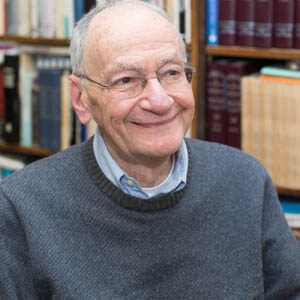
The Power of the Mind Over Reality
Mar 25, 2005 By Ismar Schorsch | Commentary | Tzav
Judaism is a choir of many voices.
Read More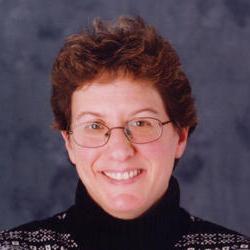
A Kingdom of Priests
Feb 23, 2002 By Melissa Crespy | Commentary | Tetzavveh
Upon meeting non-Jews who are unfamiliar with what a rabbi is, I often tell them my role is somewhat akin to the role of a priest or a minister in the Christian tradition. But the truth is, there are significant differences between rabbis and priests. While rabbis often “officiate” at life cycle and worship ceremonies, Judaism does not require them to perform these rites. Whereas, in the Catholic church, priests are often the only ones who can perform life cycle and worship ceremonies, known as sacraments.
Read More
Grappling with the Rape of Dinah
Nov 30, 1996 By Ismar Schorsch | Commentary | Vayishlah
At first blush there is nothing redeeming about chapter 34 of Genesis. it is a story of rape and revenge full of deceit and brutality. Jacob has returned to the land of Canaan, found his brother Esau to be without grudge for past slights and settled near the city of Shechem with the intent to stay. While on a visit to the city, Dinah, his one daughter, is abducted and raped by the son of the country’s ruler, who then falls in love with her and wishes to marry her.
Read More
The Morality of Wealth
Nov 23, 1996 By Ismar Schorsch | Commentary | Vayetzei
It is well known that the New Testament evinces a strong aversion to personal wealth. In the Sermon on the Mount, Jesus declaims, “You cannot serve God and Money (Matthew 6:24).” Elsewhere he counsels a moral man of great means, “There is still one thing lacking: sell everything you have and distribute to the poor, and you will have riches in heaven (Luke 18:22).” When the man demurs, Jesus lets fly with a retort that has hurtled through the ages: “How hard it is for the wealthy to enter the kingdom of God! It is easier for a camel to go through the eye of a needle than for a rich man to enter the kingdom of God (Luke 18:24-25).”
Read More
Leaving One’s Homeland
Oct 26, 1996 By Ismar Schorsch | Commentary | Lekh Lekha
My family did not leave Germany till December 1938, some five weeks after the Nazis had destroyed Hanover’s magnificent synagogue on Kristallnacht. My father, the last rabbi of this once flourishing community, endured ten harrowing days in Buchenwald. Once we had to get out, my father was determined to leave Europe as well. We came to the States in March 1940, after a stop in England, which my father used to study English. He had just turned 41.
Read More
Voices of the Past Influence the Present
Jan 25, 1997 By Ismar Schorsch | Commentary | Beshallah
I like to daven from old prayer books, especially those awash in personal ties. The sheen of new ones, yet unused, leaves me cold. I am helped by the knowledge that their well-worn pages often brought others great comfort. I treasure two in particular: my father’s traditional siddur from which he davened when not in shul and my great aunt’s pocket siddur printed in Frankfurt in 1939 which was by her side in her concentration camp ordeal. Whenever I daven from these siddurim, I find myself warmed by the memory of loved ones whose lives ease my own quest for religious experience and meaning.
Read More
Justice Is the New Counter-Culture
Jan 4, 1997 By Ismar Schorsch | Commentary | Shemot
The book of Genesis ends on an Egyptian note: after his death, Joseph was embalmed and placed in a coffin to await burial in the land that God had promised his ancestors. Embalming is quintessentially Egyptian, one of a panoply of practices designed to obscure the reality of death. The whole religious tenor of Genesis bristles at the very idea; human life is but an extension of the earth: “For dust you are,” God tells a fallen Adam, “and to dust you shall return (Genesis 3:19).” To facilitate this merger, Jews in Israel are still buried without benefit of a coffin.
Read More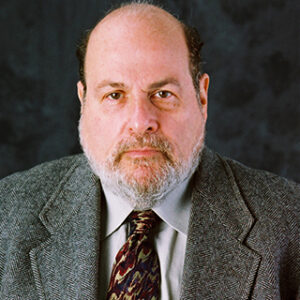
The Golden Calf and the Tabernacle
Feb 20, 2010 By Stephen A. Geller | Commentary | Terumah
Just before Parashat T’rumah begins, the divine Glory descends on Mount Sinai for six days, covering it with a cloud. On the seventh day God summons Moses, who enters the cloud, ascends the mountain and remains there for forty days and nights. The parashah itself begins with a divine command to take offerings (t’rumah) of precious metals, rare cloths, and other items to construct a mishkan, a tenting place (“tabernacle”) in the midst of Israel, together with all its sacred objects and vessels.
Read More

