
Teaching Our Children
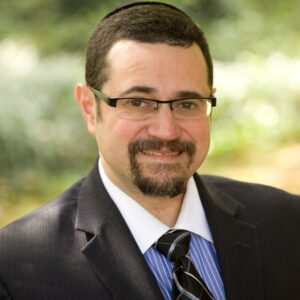
Jul 20, 2002 By Joshua Heller | Commentary | Va'et-hannan
The words of the first paragraph of the sh’ma, taken from this week’s parashah va–ethannan, are among the most important in all of Jewish liturgy and learning — the closest thing we have to a catechism. The words of Deuteronomy 6:4–9 proclaim the unity of God and declare the deepest commitment of faith. They mark the doorposts of the Jewish home, they are recited morning and evening and they were the last words of martyrs in many generations.
Read More
Like a Gazelle Crying for Water
Apr 29, 2006 By JTS Alumni | Commentary | Metzora | Tazria
By Rabbi Aubrey L. Glazer
The gazelle is always in motion skipping through the mountains if she is not getting pierced by Thorn bushes. Surely she doesn’t feel it. Let’s say it another way. Already. She cannot delay.
—Ayelet Solomon, Aphorisms on the Persistence of the Gazelle (2004)
To give birth or to be given birth — that is the question! At the heart of this week’s Levitical regulations concerning the new mother is a highly legal section of Torah that seems less concerned with the new mother’s experience of birth than with how to conceptualize, order, and contain it through law.
Read More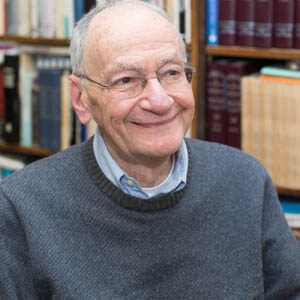
Miracles of All Kinds
Apr 24, 2004 By Ismar Schorsch | Commentary | Tazria | Yom Hazikaron-Yom Ha'atzma'ut
Conspicuous miracles move us more swiftly and deeply than inconspicuous miracles. The latter elude our detection because they are an everyday occurrence. The commonplace numbs our sense of wonder, even as the daily experience of grandeur strips us of awe and radical amazement. It is surely one of the functions of religion to keep our wellsprings of wonder from running dry.
Read More
Rabbi Akiba, Bar Kokhba, and the State of Israel
Apr 13, 2002 By Ismar Schorsch | Commentary | Lag Ba'omer | Yom Hazikaron-Yom Ha'atzma'ut
The Jewish calendar is more than a catechism of our faith. It is also a synopsis of our history. The biblical festivals of Pesah and Shavuot frame the period of the Omer, which is laden with days of commemoration of events that are all post-biblical, indeed largely set in the twentieth century. We move quickly on an emotional roller coaster from Yom Hashoah five days after the end of Pesah (27 Nisan) to Yom Hazikaron and Yom Haatzma’ut the following week (4 and 5 Iyar) to Lag Baomer thirteen days later (18 Iyar). The linkage between the Holocaust and Israel, embodied in the first three commemoratives, is surely warranted.

Purifying Waters?
Apr 28, 2001 By Melissa Crespy | Commentary | Metzora | Tazria
“These are the verses that try men’s souls.” Or better, these are the verses that pain the souls of numbers of serious Jewish women. I refer to Leviticus 12:2—5 in Parshat Tazri·a, and Leviticus 15:19—24 in Parshat Metzora. The first verses describe the laws regarding the days of a woman’s “uncleanness” (tum’ah) after giving birth to a child, which last twice as long if she gives birth to a female child. The second verses refer to the “impurity” of a menstruating woman (niddah). Anything she lies on or sits on becomes “unclean,” and any man who has sexual relations with her also becomes “unclean.” While almost all of the Torah’s impurity laws became obsolete after the destruction of the Temple, these laws, regarding postpartum and menstruating women, remain on the books.
Read More
Completing Creation
Apr 17, 2009 By Ismar Schorsch | Commentary | Metzora | Tazria
One of the better known rabbinic midrashim connects the disease of leprosy with the sin of slandering: that is, God afflicts the slanderer with leprosy (B.T. Arakhin 15b). Underlying the connection is the close resemblance in the Hebrew words for each. According to Resh Lakish, who authored this midrash in the third century long after the Temple had been leveled, the biblical term for leprosy, metzora (Leviticus 14:1), is but a compressed form of the rabbinic term for slandering, motzi shem ra (literally, to give someone a bad name). Even to an ear untrained in Hebrew, the similarity in sounds of this clever identification is apparent.
Read More
Jews and Medicine
May 2, 1998 By Ismar Schorsch | Commentary | Metzora | Tazria
Our family seders always border on a medical convention. My sister, Hanna, who did not live to celebrate Passover with us this year, had three children, all of whom are doctors and all of whom married doctors (well, one is married to a veterinarian, but that’s close enough). The pattern is not an accident. Hanna was by training a nurse and her first husband, Calvin, was an obstetrician. In the mid-1950s, they settled in Vineland, New Jersey. Over the next 20 years, before his untimely death in 1974, he delivered half the babies born there, including the three Schorsch children. For both Hanna and Calvin, medicine was a calling which saturated the conversation around the dinner table. Their children grew up in the loving presence of medical paragons.
Read More
The Word is Flesh and Bread
Apr 20, 1996 By Ismar Schorsch | Commentary | Metzora | Tazria
For Jews, the Hebrew Bible has always been a canon without closure, and the key to that historic paradox is the way we read it. Midrash posits more than one meaning to a word, verse or book. The literal meaning does not begin to exhaust the contents of the sacred text. Beneath the surface lie deeper meanings waiting to be tapped by resourceful readers. What distinguishes a divine from a human text, the Rabbis contended, is a multiplicity of meanings. In their sensitive hands, Scripture (the Tanakh) never lost its pliability: a finite number of books were made to yield an infinity of new readings.
Read More

