How Can People Be Holy?
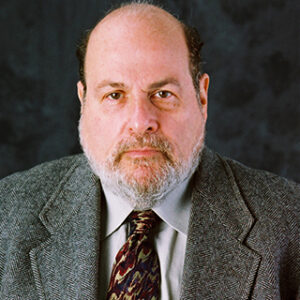
Apr 1, 2016 By Stephen A. Geller | Commentary | Shemini
Shemini (Lev. 9–11) contains two main topics: the elaborate sacrificial rites performed on the eighth day of the dedication of the Tabernacle, and the laws regarding kosher and nonkosher animals. The first topic details the numerous sacrifices accompanying the last stages of the dedication of the shrine, which reach an intensity matched only by the yearly rites of the Day of Atonement. This is no accident, because the annual event is meant to restore the shrine to the purity it possessed on the day it was dedicated.
Read More
Vulnerability and Joy
Oct 10, 2009 By David Hoffman | Commentary | Shemini Atzeret | Sukkot
How do we make sense of two of the central narratives of the holiday of Sukkot that seemingly point us in different emotional directions?
Read More
Tarry a Day Longer
Oct 14, 2006 By Eliezer B. Diamond z”l | Commentary | Shemini Atzeret
For me as a child Sh’mini Atzeret was without question the least memorable among the Jewish holidays of the fall season. Sandwiched between the high drama of Rosh Hashanah and Yom Kippur and the pageantry of Sukkot on one hand and the revelry of Simhat Torah on the other, Sh’mini Atzeret often seemed more like a way station than a destination. It had only two distinguishing characteristics. The first, the prayer for rain, seemed to me supremely irrelevant and even perverse; I wasn’t a farmer and I liked spending time outdoors, so what was the upside to rain? The second, Yizkor, was depressing; in any case in the synagogue of my youth those lucky enough to have parents who were alive and well repaired to the lobby to schmooze while the sad and serious business of Yizkor took place behind closed doors.
Read More
Remembering Moses
Sep 27, 2002 By Ismar Schorsch | Commentary | Vezot Haberakhah | Shemini Atzeret | Simhat Torah
My father died twenty years ago. The day of his yahrzeit has never been hard for me to remember. It follows by one day the day affixed by the Talmud for the death of Moses (BT Kiddushin 38a). Moses died on the seventh of Adar, the last month of the Jewish calendar, and my father on the eighth. Thus the Hebrew date of my father’s passing is forever anchored in my memory by its proximity to the traditional date for the demise of Moses. Reciprocally, that convergence has heightened for me the yahrzeit of Moses, which is barely noted in most Jewish calendars.
Read More
Seeds of Jewish Identity
Apr 10, 1998 By Ismar Schorsch | Commentary | Sukkot
The house is back to normal. The flock of children and grandchildren which descended upon us for the start of the new year left after Yom Kippur. It was not the entire Schorsch family this time, but enough to thrill us and exhaust us. Missing were the Berkeley contingent with their brood of three children, just returned from two years in Israel. The twins from Chicago are now 2 1/2 and talking up a storm, while our granddaughter from Brooklyn has just passed the one-year mark and charms everyone with a smile and a giggle. Visits have a way of turning cousins into friends.
Read More
The Power of Prayer
Oct 3, 1995 By Ismar Schorsch | Commentary | Yom Kippur
The High Holy Days don’t play to our strength. The extended services put a premium on prayer, an activity at which we are no longer very adept. Yom Kippur asks of us to spend an entire day in the synagogue immersed in prayer. But we find it easier to believe in God than to pray to God. It is this common state of discomfort that prompts me to share with you a few thoughts on the art of Jewish praying.
Read More
Psychotherapy as a Lens for Conceptualizing Teshuvah
Sep 26, 2009 By David Hoffman | Commentary | Shabbat Shuvah | Rosh Hashanah | Yom Kippur
I have always thought it interesting that Maimonides places so much emphasis on words in the process called teshuvah, even for transgressions not against other human beings. After quoting the verse from the Torah that speaks about the importance of confession (vidui) as part of the process for repairing a wrong enacted in the world (Num. 5:5–6), Maimonides emphasizes that this must be done with words. Teshuvah cannot be limited to an internal process of reflection. Maimonides stresses that any internal commitments must ultimately get expressed with words and counsels that the more one engages in verbal confession and elaborates on this subject, the more praiseworthy one is (Laws of Teshuvah 1:1).
Read More
A World Without Teshuvah
Sep 18, 2004 By Ismar Schorsch | Commentary | Ha'azinu | Rosh Hashanah | Yom Kippur
The Torah is largely a series of legal texts set in a narrative context. It is not replete with outbursts of poetry. Our poetic sensibility seeks satisfaction elsewhere in the Tanakh – in the passion of the prophets, or the poignancy of the psalmist, or the protest of Job, or in the sensuousness of the Song of Songs. The Torah touches only some of our senses. And yet, it closes in a great poetic flourish. As Moses nears his end, he switches from didactic prose to incandescent poetry.
Read More