

The Humanity of Moses
Jul 4, 2025 By Arnold M. Eisen | Commentary | Hukkat
Moses is so very human in this week’s portion. He loses his sister to death at the start of chapter 20, and his brother at the end of that same chapter. In between, he is told by God that he will not live to see the fulfillment of his life’s work (guiding his people into […]
Read More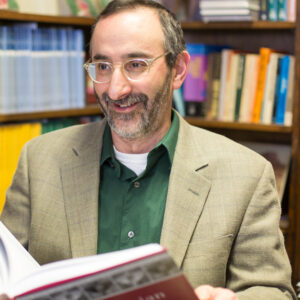
Where Does Holiness Come From?
Jun 27, 2025 By Benjamin D. Sommer | Commentary | Korah
Parashat Korah can be challenging for a modern Jew. There is a good guy in this parashah—it’s Moses—and there is a bad guy—Korah. Modern readers, however, often find themselves sympathizing with the bad guy. In the opening verses of the parashah (Num. 16:1–3), Korah stands up against the leadership of Moses and Aaron, saying, “You’ve got too much! The whole congregation, all of them, are holy, and Hashem is in their very midst. So why do you act like princes, raising yourselves over Hashem’s congregation?” Korah’s speech appeals to a modern reader: he’s the democrat who takes the aristocrat to task for acting so much better than everyone else. It can seem disturbing that Moses enjoys a monopoly on holiness, doling out a healthy serving of the sacred to his brother, the high priest Aaron (nepotism!), while leaving everyone else outside the priesthood. Aren’t we all holy? Doesn’t God belong to all of us equally?
Read More
The Desert Dead
Jun 20, 2025 By Raymond Scheindlin | Commentary | Shelah Lekha
When the spies returned to the Israelite camp in the wilderness of Paran after scouting out the Land of Canaan, they reported that the land did indeed flow with milk and honey but that it could not be conquered. It was full of warlike people—Amalekites, Hittites, Jebusites, Emorites, and Canaanites—men of enormous size and strength, giants descended from the sons of gods dwelling in fortified towns with walls that reached the sky. Even the land’s produce was intimidating, for it took two Israelite men holding a great pole on each end to carry out a single cluster of grapes that they had taken as a sample of the land’s bounty and as evidence of its supernatural scale. The spies were sincere in urging caution; they had been truly terrified by their experiences. When they were in Hebron, for example, they had hidden in a cave from giants. The cave was actually a pomegranate rind that a giant’s daughter had thrown away. But when the girl remembered her father’s admonition not to litter, she returned, picked up the pomegranate rind with the twelve spies inside it, and tossed it into her garden as easily as you pick up and throw an eggshell.
Read More
New Generation, Old Leaders
Jun 13, 2025 By Ute Steyer | Commentary | Beha'alotekha
To paraphrase Moses’s meltdown in Numbers 11:11–15, “Lord! I’m so done with them! I can’t take it anymore. These people are nothing but a bunch of whingeing losers.” Yet the People are doing what they have been doing since day one of the Exodus: complaining. About the lack of water, the lack of food, and now the lack of meat. So why is Moses losing his temper so completely this time?
Read More
The Problem with Priests
Jun 6, 2025 By Daniel Nevins | Commentary | Naso
Modern Judaism has a problem with the priesthood. The notion of hereditary holiness—that one segment of the Jewish people is set apart from others, given ceremonial privileges, and invited to bless the people—conflicts with our egalitarian ethos.
Read More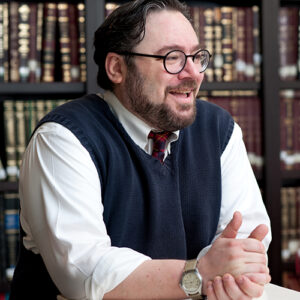
Counting as a Spiritual Practice: Bemidbar and the Road to Shavuot
May 30, 2025 By Marcus Mordecai Schwartz | Commentary | Bemidbar | Shavuot
Every year, without fail, we read Parashat Bemidbar just before the festival of Shavuot. This liturgical pairing is more than a scheduling convenience; it offers a profound insight into the spiritual architecture of Jewish time. Bemidbar begins with a count: “Take a census of the whole Israelite community by their clans, by ancestral houses, listing the names, every male, head by head” (Num. 1:2; בְּמִסְפַּר שֵׁמוֹת לְגֻלְגְּלֹתָם). This act of counting seems administrative on the surface, but like so much in the Torah, its spiritual depth lies beneath.
Read More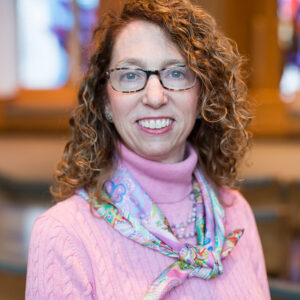
Grappling with Slavery in Parashat Behar
May 23, 2025 By Marjorie Lehman | Commentary | Behar | Behukkotai
Parashat Behar is filled with powerful messages about building a just and compassionate society, emphasizing commandments to care for the land, support the poor, and treat hired workers with fairness and dignity. However, I find that Parashat Behar stirs up more discomfort than ethical inspiration. I am always struck by the difficult distinction it makes between Israelites and non-Israelites with regard to slavery. With the themes of Passover and the Israelites’ freedom from Egyptian bondage in my mind, I find it hard to reconcile that Leviticus 25 permits the enslavement of non-Israelites while protecting Israelites from such a fate.
Read More
Who Belongs?
May 16, 2025 By Rachel Rosenthal | Commentary | Emor
Who is the Other? This question, which is asked more and more often in our world, is not often easy to answer. Can one choose to be part of a community? Are people who were once outsiders ever fully welcomed as insiders? In Judaism, these questions are especially important. While Judaism has categories to define and even praise non-Jews, opting into the Jewish community is not simple. However, the Talmud tells us that once someone converts to Judaism, we are supposed to treat them as any other Jew. Unfortunately, this is a mission in which many communities fail. This failure can have significant consequences, as we see in this week’s parashah, Emor.
Read More

