

The Dangers of Sacred Space
Mar 5, 2010 By Benjamin D. Sommer | Commentary | Ki Tissa
For more than a month during this time of year, we read about the mishkan, the Tabernacle, also called the ohel mo’ed, or Tent of Meeting. Parashiyot T’rumah and T’tzavveh, which we read the past two weeks, contain what amount to blueprints in prose format. These readings describe exactly how the Children of Israel in the wilderness of Sinai should construct the mishkan.
Read More
The Meaning of Aaron’s Holy Garments
Feb 27, 2010 By Robert Harris | Commentary | Tetzavveh
The Torah portion of T’tzavveh continues God’s instructions to the Israelites for building the Tabernacle in the Wilderness—the central concern of the previous week’s Torah portion (T’rumah) and the next three portions as well (Ki Tissa, Va-yakhel, and P’kudei). Altogether, the Tabernacle and its accoutrements are the most prominent subject matter of the entire last section of the book of Exodus, comprising chapters 25 through 40. These portions cover many details, the precise explanation for many of which remains somewhat uncertain to this very day.
Read More
Realpolitik and the Exodus
Jan 23, 2010 By Burton L. Visotzky | Commentary | Bo
This devar Torah is about religion, politics, and war. We are a country currently fighting two foreign wars (Iraq and Afghanistan) and a war on terror at home and abroad. My intention is not to tilt Republican or Democrat; rather, the point of these words of Torah is to reflect on what it means to be Jewish under these circumstances. Or to ask in the classic rabbinic formulation: what can this week’s Torah portion teach us?
Read More
Israel’s Self-Emancipation
Jan 16, 2010 By Daniel Nevins | Commentary | Va'era
There is a lot of action in Parashat Va-era, but not much of it directly involves the people of Israel. Their role is primarily to witness the increasingly violent confrontation between Moses and Pharaoh. Given last week’s negative response of the Israelite elders to Moses and Aaron, this passivity is quite understandable. His early experience with Israel has demoralized Moses, for he objects to God’s renewed command this week with bitter words: “In fact, even the Israelites haven’t listened to me, so how will Pharaoh ever heed me, and I have impeded speech!” (6:12).
Read More
Innovation in Jewish Tradition
Oct 3, 2009 By Marc Wolf | Commentary | Sukkot
I have yet to cave and get a Kindle, but I will be honest and say that it will probably be within a few weeks. From my years of schooling, I have gained an appreciation for, and on some level, a preference for the printed word—that is, a tangible, heavy, dusty, written word. I like holding a book, turning the pages, feeling the weight of the paper—and the Kindle just seems to fall flat. Nonetheless, the idea of browsing The New Republic and Commentary Magazine on one device seems almost a little bit too exciting to pass up.
Read More
Biblical Original Intent
Feb 12, 2010 By David Hoffman | Commentary | Mishpatim
Does the text of the Torah really mean what I am claiming it means or am I reading too much into it? Am I pushing my own agenda and value system on words that intend something else? What are the larger religious values that animate certain laws of the Torah? How does my own value system influence my reading of Torah?
Read More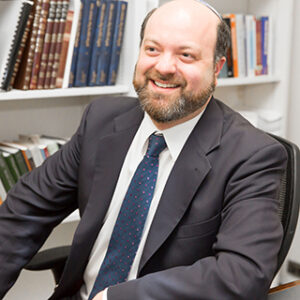
Awakening to the Divine Radiance
Feb 6, 2010 By Eitan Fishbane | Commentary | Yitro
This Shabbat we read the most pivotal narrative in all of scripture: the revelation of God to the people of Israel at Mount Sinai, the reception of the Torah as the divine word transmitted through Moses. From this moment forth, everything changes. The people enter into a covenantal relationship with God; they accept the life of mitzvot as their responsibility and the obligation of their descendents. At the heart of this narrative is the transmission of the Ten Commandments (or the Ten Statements [aseret ha-dibbrot]), the core principles understood by later Jewish tradition to be the root and foundation of all the mitzvot, the fabric of Jewish religious life.
Read More
Updating Our Mindset
Jan 9, 2010 By Marc Wolf | Commentary | Shemot
The conclusion of Genesis and the beginning of the book of Exodus coincide this year with not only the end of a secular year, but the winding down of a decade. Of all its nicknames shopped around during the last days of December (the Ohs, Noughties, Aughts, or, as Slate Magazine put it, the Uh-Ohs), “the digital decade” is the one that I find most fitting. The past ten years have brought us blogging, Googling, YouTubing, tweeting on Twitter, and updating our Facebook statuses. Each progressive step (if we really want to call it progress) has brought new meaning to here and now. What these technologies have demonstrated is that we have a virtual obsession with being current—with letting people know exactly what we are thinking, doing, or experiencing.
Read More

