
Longing for Our Homeland
Dec 20, 2003 By Lewis Warshauer | Commentary | Vayeshev | Hanukkah
Mrs. Matsunaga looked at me with a puzzled face. She was the local English teacher in a village in Northern Japan. Moments before, she had bustled into the house where I was staying. It had come up in conversation that I was Jewish and she was trying to figure out what that meant. Suddenly, her face cleared. “You are from Israel,” she exclaimed. I laughed and said: “Yes, but that was a long time ago.”
Read More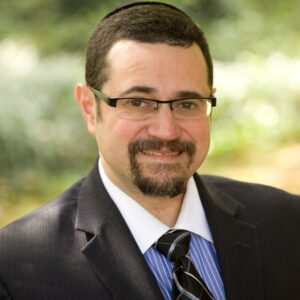
Facing Our Struggles
Dec 12, 2003 By Joshua Heller | Commentary | Vayishlah
The story of Jacob wrestling with the angel is surely among the most puzzling in the Bible. Ancient and modern commentators debate the identity and motivation of Jacob’s mysterious attacker. Is it a divine representative? Esau’s guardian angel? Esau himself? Or, perhaps, the struggle is internal, played out in the realm of dreams. I am struck by a more basic question. The text records that the attacker sets upon Jacob only after he has sent the rest of his camp over the Jabbok river, and Jacob is left alone. Given the number of people in his camp, how did Jacob end up alone in the first place? The answer reveals something essential about human nature.
Read More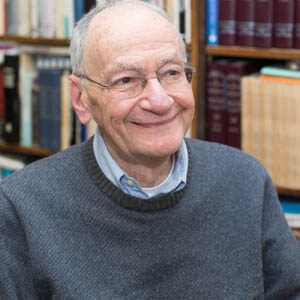
Rachel the Victim, Rachel the Hero
Dec 6, 2003 By Ismar Schorsch | Commentary | Vayetzei
In this week’s parashah Jacob gets his just desserts. He meets his master in the art of deception. As Jacob had denied his brother Esau the blessing to which his birthright entitled him, so, too, he is now denied the hand of Rachel, the younger daughter of Laban his uncle, with whom he is madly in love and for whom he has worked seven hard years. The counterpoint is exquisite. By substituting Leah for Rachel on Rachel’s wedding night, Laban exacts divine retribution at a moment of peak anticipation in a way that is no less intense than what Jacob did to Esau Along the way, Laban demonstratively reaffirms the sanctity of primogeniture.
Read More
A Dialogue Across the Ages
Nov 29, 2003 By Ismar Schorsch | Commentary | Toledot
Like his father Abraham, Isaac is driven by famine to take refuge in the city of Gerar, in the western Negev northwest of Be’er Sheva. The abundance of water for their large herds is what spurs them to relocate, and it is over water that both of the patriarchs contend with the locals. In the first instance, Abraham accuses the ruler of Gerar, Abimelech, that servants of the latter stripped him of a well that he had dug. Abimelech professes to be ignorant of the theft and willing to make amends; whereupon he and Abraham strike a pact. A gift of seven ewes by Abraham will serve to legally establish his claim of ownership of the well. Indeed, according to the biblical account, the pact gives rise to the name of Be’er Sheva, “the well of seven.” At the time, the dominion of Gerar must have stretched eastward to Be’er Sheva, which appears to have had no ruler of its own (21:22-32).
Read More
The Meaning of the Shalshelet
Nov 22, 2003 By Ismar Schorsch | Commentary | Hayyei Sarah
In 1981, the Union of American Hebrew Congregations (UAHC) published The Torah: A Modern Commentary, admirably edited by Rabbi W. Gunther Plaut. The first of the denominational commentaries, it combined an unflinchingly scholarly perspective with a reverence for traditional readings. Conspicuously absent, from the Hebrew text, however, was the trope, the musical notations by which the Torah is chanted in the synagogue. The omission reflected Reform practice: in most Reform synagogues where the Torah is read, it is literally read and not chanted. But the omission triggered a storm of criticism and the UAHC quickly put out a second edition that included the trope.
Read More
Visiting the Sick
Nov 15, 2003 By Ismar Schorsch | Commentary | Vayera
During World War II and the Korean War, my father served as the civilian Jewish chaplain at the sprawling army hospital at Valley Forge, not far from his pulpit in Pottstown. Every Wednesday he would walk its endless halls visiting wounded Jewish servicemen. On Thursday evenings he returned to conduct a prayer service for them accompanied by a few women from the synagogue sisterhood who had prepared a collation of kosher deli. No part of my father’s rabbinate gave him more satisfaction because no Jews ever needed him more than this pitiful refuse of military carnage. Their numbers were large and their condition often shattering. My father assuaged their pain with warmth, wisdom and faith. In 1918, as a teenager in the German army on the Western Front, he had witnessed the devastating brutality of mechanized warfare and the chaos of defeat. That experience brought him to choose the rabbinate while his empathy for victims of misfortune made him an ideal pastor. He turned the mitzvah of bikkur holim (visiting the sick) into a fine art.
Read More
Between Humility and Grandeur
Nov 9, 2003 By Ismar Schorsch | Commentary | Lekh Lekha
Judaism is a religion of polarities. An in-depth view of reality requires a stereoscope. No single lens can do justice to any aspect of the complexity of our experience of the world.
Read More
Connecting Pesah with Sukkot
Oct 10, 2003 By Ismar Schorsch | Commentary | Pesah | Sukkot
The parallelism between Sukkot and Pesach is striking. The Torah scripts them to start on the fifteenth day of the month when the moon is full and to last for seven days. Originally agricultural festivals, their historical overlay links them both to the redemption from Egypt. In each case, the name of the festival derives from the ritual which is its most prominent feature. In tandem, the two anchor the changing of the seasons in the fall and the spring (the two times of year when the seasons actually change in the Middle East) in the biblical calendar. They are the axis on which that calendar turns.
Read More