Amassing Religious Capital

Abi Dauber Sterne

In this constructed debate, Abraham and Sarah reflect an important, yet false, dichotomy that mirrors the anxieties of contemporary Jewish life. There are those, like Abraham, who say we need to create educational experiences that elicit strong positive feelings, or a strong sense of Jewish identity. And there are those, like
Sarah, who believe that education ought to encourage people to do, to act.

But, there is a crucial element missing in both of these approaches: Jewish education for the sake of gaining Jewish knowledge. Neither actions nor feelings are truly sustainable or meaningful without understanding.

To make a comparison to other areas of our lives where knowledge plays a critical role, let’s think about our relationships with other people and, in particular, with falling in love. When we first meet another person—while the relationship is still superficial—we have a general sense of liking the other and wanting to spend time with him/her. But, the only way for that relationship to become truly sustainable and long-term is to really develop a deep knowledge of the other.

It is very hard for us to imagine any intervention in Jewish life creating a lifelong connection if it doesn’t also include an intimate and detailed knowledge and understanding of where the ideas and practices come from. Feeling connected to other Jews, for example, or lighting Shabbat candles—or any combination of feelings and actions—cannot possibly be enough without a significant level of knowledge and understanding to go with them.

Michael Rosenak, the late educational philosopher, took the importance of Jewish knowledge one step further. In his article “Educated Jews: Common Elements,” Rosenak explained that in order to sustain and enable the creation of general culture, rich language is needed. The same is true for Jewish culture. He explained that the language of the Jews is the Torah and related texts, and in order to sustain and develop Jewish life, Jews need to have deep Jewish knowledge of this language. This shared language of Jewish texts has, for generations, continued to support the creation of a rich, new Jewish culture.

In his words from Roads to the Palace:

The concepts of language and literature are helpful in describing what we should like to see happen in education: namely, to initiate the young into the language of a culture by way of its most cherished literatures, including and perhaps particularly those formative literatures called “sacred” or “classic.” When it succeeds, education provides learners with the tools to select literature for use by abundantly exposing them to the forms and substance of diverse literatures. Optimally, education also prepares them to take part in the enterprise of making new literature.

We need to educate people in a way that ensures that Jewish ideas, texts, and traditions are so much a part of our lingua franca that we begin to create a rich new Jewish culture. Similar to the development of every language, it is shaped and changed by its ongoing usage. We develop new slang, write new songs, create new movies. By educating toward a deeper grasp of Jewish ideas and texts, we will help raise a generation that can renew our culture in a way that will strengthen Jewish life beyond our wildest imaginations.

Can we imagine Sarah and Abraham debating, not whether to measure identity or actions, but rather to debate what knowledge we ought to be teaching, what texts ought to be on the tips of our tongue, what ideas should be core to us as Jews?

I see Jews of varied backgrounds, with a diversity of Jewish practices, with different understandings of what it means to be Jewish, but who all speak the same language, who share a vocabulary that is laden with Jewish resonances and meaning. And these same Jews will use their shared language to create inspiring new Jewish experiences and expressions.

To implement this vision, Jewish communal organizations and individuals must commit to gaining a fluency in the language of Torah and Jewish ideas. We need to commit to measuring not identity or practice, but what people know and understand.

At Hillel International, we’ve been using the term “Jewish fluency” to capture this idea, but we try to take Rosenak’s idea even further. We view Jewish fluency as the magical combination of knowing specific Jewish content, having the ability to do Jewish actions (or rituals), and having a personal emotional attachment to Jewish experience.

In academic terms, the idea of integrating knowledge and practice with more general emotional attachment is called “religious capital.” According to Roger Finke and Kevin D. Dougherty, in an article about the training of Christian clergy:

Religious capital consists of the degree of mastery of and attachment to a particular religious culture. The mastery of the religious culture refers to learning the knowledge, skills, and rituals of a specific religion. Yet, religious capital includes more than a learned mastery of religion, it also includes an emotional attachment to a particular religious culture.

Imagine if we created ways of educating toward amassing religious capital? We could begin to think not in terms of practice or identity, but rather in terms of practice, identity, and knowledge. We can achieve our goal as Jewish educators to ultimately capture the hands, hearts, and minds of our students, which in turn will enable the ongoing development and vibrancy of new Jewish cultures.

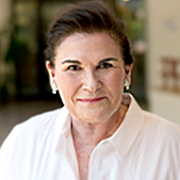
Abi Dauber Sterne is vice president for Jewish education at Hillel International. She is developing the Center for Jewish and Israel Education of HillelU, which will provide training and continuing education to all 1,000 Hillel professionals to enhance their Jewish fluency and educational skills.

Fake Debate / Real Conversations

Charlotte Abramson and Rabbi Sheryl Katzman

Kress and Levisohn’s “Fake Debate” certainly echoes the deliberations we hear in Jewish day schools across the continent. During a recent visit to a school participating in the Legacy Heritage Instructional Leadership Institute, we engaged in one such conversation where the faculty focused on three related and compelling sets of questions:

How do we intentionally foster students’ desire to contribute competently to the ongoing Jewish conversation, long after they leave our classrooms?

• How do we cultivate student text skills that give access to our textual tradition in a manner that is engaging and empowering?

• How do we help our students acquire the knowledge necessary to read texts and inspire them to discover personal meaning and relevance?

By Kress and Levisohn’s own admission, the polemic in the “Fake Debate” is forced. In isolation, neither side of the debate fully captures the mission of Jewish education. In schools, too, the argument is not framed in either/or terms, but rather in terms of balance and trying to find the right combination for helping students achieve Jewish developmental outcomes steeped in discipline-specific competency. The questions above articulate the internal debate of teachers of sacred text. How do we help our students develop a relationship with the texts of our tradition so that they feel at home in the texts and conversations of our tradition?

The faculties we observe appreciate that achieving intended student outcomes is dependent on aligning articulated goals with classroom learning activities that foster an environment that nurtures students’ hearts, minds, and souls. One teacher reflected the Abraham position stating, “The key to student engagement is the affective experiences of the students.” In other words:

• How do the students feel about their learning?

• Do they love the experience of learning?

• Do they feel empowered and successful, with the desire to continue studying and practicing?

• Or do they feel frustrated and incompetent, looking for the nearest escape route?

These are important questions that can guide schools as they develop a vision for instruction and then translate that vision into a coherent curriculum. The personal reflection of one teacher, as she considered her experience as a day school student, further illustrates the internal debate of many teachers:

I remember the environment—the songs, the niggunim, and stories. I remember my excitement to be in classrooms with great teachers. I remember learning through stories; I remember leaving feeling confident in my skills and content knowledge. When and why did we stop teaching in a way that brings our students into a world of excitement and discovery? I am worried that I am creating an environment that speaks to my desire to fill students with content and skills so they won’t feel lost later in life, at the expense of focusing on creating an environment that speaks to my students and what they enjoy.

What seems significant here is that the teachers in this room who shared similar memories are examples of one kind of Jewish educational success stories—people who left day school and continued their formal Jewish education into graduate school, pursued professional careers in the Jewish world, and continue to be involved in Jewish communal life. Their strongest memories are about the environments that allowed them to integrate the skills to continue engaging as Jews into adulthood.

Perhaps the real anxiety exposed by the “Fake Debate,” and echoed in these real faculty conversations, is the fear that the experiences we offer students in our classrooms lead them away from, rather than toward, the intended outcomes described in our schools’ mission statements. At worst, rather than engaging students, our classrooms leave students feeling incompetent, frustrated, and disenfranchised. As educators we know that we cannot only attend to environment and focus solely on the joy of the experience. Likewise we know that powerful learning comes from a combination of the encounter with rich content and the development of skills that lead to substantive feelings of success and the creation of meaningful understandings.

As articulated in the “Fake Debate,” developmental outcomes are not about crafting a fluffy feel-good experience. Developmental outcomes are about creating an intentional atmosphere that promotes the desire to learn and fosters the determination it takes to move toward discipline-specific mastery. As one teacher stated, “Grit is built in a loving environment. It is about developing the skills of perseverance and joy and the desire to persevere. It is about developing a content-rich vocabulary that allows students to feel at home in the conversation. It is about creating an environment that supports difficult work in an atmosphere of love.”

The Davidson School embarked on the creation of standards and benchmarks for TaNaKH and Rabbinics with the belief that if we are going to influence students to “stick with it,” that is, to commit to a lifetime of Jewish learning and engagement, then students need to experience real achievement and personal connection. They need to develop their voice and know that they have the skills and knowledge to authentically access and contribute to the ongoing Jewish conversation. People pursue learning, become involved, and select careers in adult life in those areas of school (or life outside of school) where they feel most successful and appreciated for their contributions. We achieve this desire to continue to learn, participate, and contribute when teachers across grade levels work together to build a coherent curriculum around an articulated and shared set of focused student outcomes.

In the finite number of hours in the school day, teachers need to make decisions about what to teach and, perhaps more importantly, what not to teach so that they remain focused on their shared outcomes. When learning is framed around compelling questions and ideas that ignite students’ curiosity and sense of wonder, we motivate our students to uncover deeper meanings and find personal connections embedded in our sacred texts. Even the Sarah stance admits that the goal of discipline-specific outcomes is to lead students to find deep meaning and relevance that comes from a sophisticated understanding and mastery of the subject matter. It is our belief that when schools have clearly articulated goals aligned to both instruction and assessment, they are best equipped to address the questions raised in the debate.

The debate raises one more important point. There is no question that it is more challenging to measure developmental outcomes. But, it is a mistake to assume that only learning that is objectively measurable makes for better education. Though much harder to both teach and assess, the subjective skills are often the ones students use throughout their lives. As educators, it is our job to develop instructional practices and assessments that inspire students to be creative and original thinkers, promote curiosity, and lead students to take intellectual risks, dare to construct new ideas, and search for personal meaning. Our sacred task is to engage the souls and minds of our students so that they develop the competency and internal drive to continue the Jewish conversation for the next generation.

Charlotte Abramson has served as the director of the Legacy Heritage Instructional Leadership Institute, formerly the Jewish Day School Standards and Benchmarks Project, since its inception in 2003. She directed the development of the Tanakh and Rabbinic standards and benchmarks and designed the Institute’s professional learning and curriculum development program for participating Jewish day schools.

Rabbi Sheryl Katzman is the rabbinics initiative leader of the Legacy Heritage Instructional Leadership Institute. She directs the professional development pilot program for enacting the rabbinics standards and benchmarks in Jewish day schools. In addition, Sheryl is directing the editing of the Rabbinics Standards and Benchmarks Compendium with a distinguished group of scholars and educators.

The Great (Fake) Debate: How Should We Think About the Outcomes of Jewish Education?

Dr. Jon A. Levisohn and Dr. Jeffrey S. Kress

At the Network for Research in Jewish Education (NRJE) Conference in June 2016, we presented a mock debate about the desired outcomes of Jewish education. We used that opportunity to take extreme positions, intentionally overstating our respective sides to highlight the differences. Here we present a truncated version of that debate, employing two fictional characters as our stand-ins to make it clear that neither of us would endorse the strong version of the positions that are presented here. A complete version of the debate will be published in Advancing the Learning Agenda in Jewish Education, edited by Jon A. Levisohn and Jeffrey S. Kress (Academic Studies Press, forthcoming).

Abraham: What do we want to accomplish in Jewish education? Here’s my view, Sarah. The most important outcomes are “Whole Child,” or “whole-person,” or what I would prefer to call “Jewish developmental” outcomes. We want students to find relevance and meaning in this tradition as it plays out outside of the classroom. We want them to make Jewish friends and find a sense of belonging in Judaism; to experience Jewish pride; to see how Judaism can inform important decisions, deepen moments of emotion, and provide support during challenging times; to feel a sense of responsibility for others and tikkun olam; to come to see themselves within the flow of Jewish history; and to be prepared for “citizenship” within the current and emerging Jewish community.

Sarah: Well, that all sounds lovely. But I believe that domain-neutral outcomes—the kind of “Jewish developmental outcomes” that you are talking about—are bogus, artificial constructions. We invent them and then we turn around and we believe in them as if they’re really real.

Let me use the example of “Jewish identity.” Psychologists and sociologists invented this idea because they want a quick and dirty way of capturing a whole set of phenomena. Rather than talking about a set of Jewish practices—ritual practices like candle-lighting on Shabbat and fasting on Yom Kippur; communal practices like giving to Jewish Federations; social network robustness like how many Jewish friends you have—the researchers can assemble an index of these various phenomena and call it “Jewish identity.” Some people do better on the index and some do less well. Before you know it, we’re talking about Jewish identity as something that can be measured, that some people have more of than others.

That’s not a bad thing in itself. But there’s no justification for turning the idea of “strengthening Jewish identity” into a goal of Jewish education. There is no “Jewish identity” muscle in the body, which then controls our candle-lighting and Federation-giving. And since there’s no “Jewish identity” muscle, we shouldn’t expect that Jewish education is going to strengthen it.

But it gets worse. When we focus on domain-neutral outcomes, we disrupt the connection between the outcomes and the pedagogic practices that produce them. In the case of Birthright Israel, when we focus on the domain-neutral outcome of more Jewish babies, we disrupt any connection between the outcome and the pedagogy of the Birthright trip—the careful sequencing of sites, the creation of spaces for reflection and group processing, the mifgash with Israeli peers, etc. So education becomes even more of a black box than it already is, and our research on outcomes cannot help to improve the quality of the education.

But let’s think about the alternative. The more that educators are focused on a subject-specific capacity, the better and sharper their planning will be and the more focused and constructive their assessment will be. The educators will actually find out whether the students have learned what they wanted them to learn, and if they haven’t, they will have to adjust their pedagogy accordingly. Moreover, the educators will be able to articulate to the students what it is that they are actually learning, and if they work at it, what they’ll be able to do—and they’ll be able to do that in a way that provides the kids with a sense of actual accomplishment within the domain. The students will feel like they’re making real progress toward clear, articulated goals. All of this is driven by specificity.

Abraham: You make a compelling case, but I still find the domain-specific outcomes you support to be artificial, distracting, and distancing.

To start with, you seem to be proposing a surprisingly sharp differentiation between the various academic disciplines. Surely students of Talmud are also, inevitably, students of Hebrew and Aramaic language, students of Bible and biblical interpretation, students of Jewish history, students of law, students of folklore, and on and on. They’re doing all this at the same time. You can’t avoid crossing domains—and that’s a good thing. We want students to walk away not only with knowledge of these subjects, but also with a big picture of how they are related to each other, that there is a value system woven throughout the tradition.

And let’s not forget that a lot of learning in schools happens outside of formal domain-based settings to begin with. Where in a domain-specific approach do we account for what students take away from Shabbatonim, for example? In what domain do we file the feelings that accompany the celebration of Shabbat with their friends? Domain-specificity preserves the sort of fragmentation that we are seeking to overcome.

You’re worried about instrumentality, about using education for some other purpose. But I’ve got no problem seeing Jewish education as instrumental. Once we talk about desired outcomes, then instrumentality is unavoidable. What we want is for Judaism to become part of who learners are. For some reason I don’t understand, the term “identity” has fallen out of favor to describe this. So substitute whatever term you like, as long as it encompasses Judaism’s intersection with multiple domains of human experience. This is what Maimonides proposed when, in the 12th century, he declared that the purpose of the entire Torah is the improvement of the body and the improvement of the soul. There is no reason to take for granted that deep subject-matter mastery is sufficient, or even necessary, to achieve this. In fact, it can turn off those students who find the material too challenging or irrelevant.

Sarah: I am glad you brought this up. If you ask me why I really care about the issues that we’ve been talking about, it’s not the case that I want a relentlessly cognitivist education that will end up being meaningless to the students—or worse than meaningless. On the contrary, I want to encourage Jewish educational practitioners to structure their curricula so that they will be deeply meaningful to students. And I believe that the way to do that is to do real, serious work on something of value, in a way that makes sense to students and that leads to a sense of real accomplishment and even mastery. The only way to do that is to define a particular domain and focus, focus, focus.

By the way, you still haven’t talked about the impossibility of measuring developmental outcomes.

Abraham: Impossibility? That would be news to generations of psychologists who study the topic. I admit it is harder to measure developmental outcomes, but this only means we need to work harder to develop better assessments. And, just because we can assess domain-specific outcomes more easily doesn’t mean we should.

We won’t find the relevant outcomes in the assessment of domain specific competence even though subject matter knowledge might help achieve them. Jewish education should prepare Jews to participate in contemporary Judaism. While it might be nice for students to be able to interpret Judaism’s roots in primary texts, we have to ask ourselves what it takes to participate in contemporary Judaism. The answer involves negotiating the conflict of commitments that emerge from living with multiple identities, between cultural norms, as well as negotiating Judaism’s tensions between particularism and universalism, and communalism and individualism. One needs a stance on the nature of obligation in an era of choice. And, students should have experience with the joy and meaning of living within community.

These Jewish developmental outcomes are not subject specific, but they’re not exactly subject neutral either. They transcend subject matter divisions and should be addressed and assessed as such.

Sarah: I’m not entirely convinced, Abraham. I still worry about providing students with an educational experience that is challenging and meaningful, that provides them with a sense of accomplishment and mastery within some particular domain. I think that the idea of making progress is key, and it almost doesn’t even matter to me what they make progress in. But as for us, I do think we’ve made some progress. Thanks for participating with me in a mahloket le-shemshamayim, an “argument for the sake of Heaven,” which is the Rabbis’ term for the things that really matter. Which is really what we’ve been talking about all along: what really matters in Jewish education.

Dr. Jeffrey S. Kress is the Dr. Bernard Heller Chair in Jewish Education at the William Davidson Graduate School of Jewish Education of The Jewish Theological Seminary.

Dr. Jon A. Levisohn holds the Jack, Joseph and Morton Mandel Chair in Jewish Educational Thought at Brandeis University, where he directs the Jack, Joseph and Morton Mandel Center for Studies in Jewish Education. He is co-editor with Jeffrey S. Kress of Advancing the Learning Agenda in Jewish Education (forthcoming) and the co-editor with Ari Y. Kelman of Beyond Jewish Identity (forthcoming).

Read Responses to Dr. Levisohn and Dr. Kress’s Viewpoint

Learners Matter Most: The Rest Is Commentary

Dr. David Bryfman

Barry Holtz begins his precise and insightful article about the outcomes of Jewish education by stating, “Many people in today’s Jewish world might find it hard to believe that there was a time in which Jewish education was not high on the community’s list of funding priorities.”

Holtz has been a leading voice in Jewish education for several decades and has always maintained a deep-rooted commitment to Jewish literacy. By this measure, Jewish education is indeed in tremendous standing with arguably more Jews engaged in the study of traditional Jewish texts than at any other time in history. In the diaspora, Jewish day schools, traditional and progressive yeshivot, many adult-learning programs, academic Jewish studies, and online Jewish learning programs are filled with thousands of Jews studying Jewish texts on a regular basis. In Israel, there are also tens of thousands of Jews engaged in Jewish learning. Historically and in present times the bulk of this type of learner is what we now label as “Orthodox” or “ultra-Orthodox,” contributing at least numerically to the assertion that Jews have been and continue to be the People of the Book. However, it is my interpretation that Holtz’s articulation of the outcomes of Jewish education is not primarily directed at Orthodox Jews and this is where his core thesis begins to break down.

Alongside the surge in these formal Jewish learning institutions, the growth in informal, or experiential, Jewish learning in the last few decades has been even more dramatic. Established organizations, including Jewish youth groups, summer camps, and Hillels have grown in numbers. In addition to these traditional initiatives, we have also seen a plethora of Jewish experiences enter the Jewish educational space including Birthright Israel, PJ Library, Hazon, Moishe House, Chabad on Campus, Repair the World, and OneTable, which collectively are positively influencing the lives of tens of thousands of young Jews today. Although many of these experiences incorporate the study of Jewish texts, very few would argue that the study of Jewish text is the primary, or often even an essential, aspect of this category of Jewish education. Outcomes that are more action-oriented—including development of stronger moral behavior, the building of social networks, and the empowerment of learners to be activists—are far more prevalent outcomes in the world of experiential Jewish education than the creating of more literate Jews.

But despite their successes, these new organizations pose for Holtz and many other Jewish educators—especially for educators like myself, who for many years have insisted that the boundary between formal and informal Jewish education is blurry—a fundamental challenge. It is primarily because these forms of experiential Jewish learning, which are attracting extremely large numbers of Jewish learners with the support of some of the largest financial investments the Jewish world has ever seen, are actually not in line with Holtz’s primary assertion that, “Jewish education, like all education, is essentially in the knowledge and skills business.” Holtz is totally correct in asserting that Jewish education is front and center for many Jewish communities today—it’s just not necessarily the Jewish education outcomes that Holtz is actually advocating for in this article.

For many readers this would be a comfortable point at which to conclude this article. Such an ending would go something like this:

The Jewish world needs continued investment in both traditional Jewish learning and experiential Jewish education. Although both might have different, or perhaps overlapping, outcomes, all of these are essential in order to reach and have impact on as many different Jews as possible. In so doing, the Jewish people have a far greater likelihood of being vibrant now and in the future.

The problem with this conclusion is that in its desire to be inclusive and additive (we should continue to support this and also this), it is neither brave nor helpful given the time in which we currently live.

The conclusion that ought to be written goes something like this:

The Jewish world needs to realize that the world has changed considerably since most institutions of Jewish education were established. In order to have impact on the vast majority of Jews today, Jewish education must stop defaulting to literacy over values, texts over ethics, and the past over the present and future. For Jewish learning to be both meaningful and relevant it must empower Jews (and fellow travelers) to thrive—in their personal success and happiness, in being more socially connected to each other and their communities—and better equipped to make the world a better place.

Renowned educational professor, Joseph Schwab wrote about the four commonplaces of education—student, teacher, subject matter, and milieu (Schwab, 1973/1978). More often than not in Jewish educational circles, this message has been translated as educators needing to ensure that all four dimensions are equally taken into account when preparing educational experiences. While I could make the argument that all are essential or that at various stages of program development all four need to be addressed, I want to assert that at the end of the day (or at the end of time), the only commonplace that will really matter is the learner.

This is nothing new to adherents of progressive education, but it is something new to those educators who caveat learner-centered education with statements such as, “Yes, but if they don’t really learn something (i.e., our curriculum/knowledge), then it isn’t really education.”

This tilt toward the learner being the center of Jewish education is not an acquiescing to the egocentrism of millennials and Generation Z today. It is a fundamental acknowledgement that for Jewish education to be successful, it must be focused on making a positive difference in the lives of Jews today. This is foundationally different to Jewish education that has traditionally seen its purpose as making people more Jewish, allowing Jewish institutions to prosper, and making the Jewish community stronger.

Instead, the significant outcome that Jewish education and engagement should be tackling is that Jewish educational experiences enable people to thrive as human beings in the world today—as human beings, in their various communities, and in the world at large.

This is not the vision of Jewish education as the transmission of skills and knowledge delivered by an educator that Holtz describes. It is a new paradigm for what matters most in enduring Jewish education today. It includes the relationships we develop, the pride we inculcate, and the positive emotional onnections to being Jewish that we enhance. In the language of positive psychologists, Jewish education, if it is to be valuable to people today, must empower individuals to thrive and to flourish. Jewish wisdom has the inherent capacity to inform this new paradigm for Jewish education. Whether Jewish educators, leadership, and communities are willing to accept this new reality will largely impact the future of the Jewish people.

Dr. David Bryfman is the chief innovation officer at The Jewish Education Project. David completed his PhD in Education and Jewish Studies at NYU, focusing on the identity development of Jewish adolescents. He is also a graduate of the Wexner Graduate Fellowship Program. Prior to moving to New York, David worked in formal and informal Jewish educational institutions in Australia, Israel, and North America. He is also currently a Schusterman fellow and a research fellow at the Shalom Hartman Institute of North America.

Judaism. . . A Deeply Nourishing Source of Human Flourishing

Dr. Chip Edelsberg

Professor Barry Holtz raises what is in essence an age-old question about Jewish education: What role will it (continue) to play in defining what it means to be Jewish? In puzzling about contemporary Jewry, Holtz asserts what any true-blue Jewish educator would claim, namely that well-crafted educational experiences positively influence one’s Jewish identity, values, and ideas about the world individuals inhabit.

Holtz correctly notes that salient findings of the seminal “A Time to Act” presaged that Judaism would need to become a “compelling source for personal human flourishing” if it was to engage Jews, educationally, in substantive encounters with the faith and its sacrosanct teachings, hallowed values, ritual practices, and storied history. He opines that the relationship between knowing and doing is uncertain while adhering to the value of learning for its own sake. By contrast, Michael Zeldin, commenting on the intrinsically valuable nature of Jewish learning, adds the critically important observation that such learning must not be “merely instrumental to some future Jewish identity.” Zeldin argues that Jewish education is perpetually relevant in teaching “resonance and spirituality that come from attachment to Judaism, Jewishness, and the Jewish people as well as for the dissonance that allows Jews to explore the rationale for being Jewish” (“Remembering What We Never Knew: Jewish Education in the 21st Century,” Founders Day Address, HUC-Jewish Institute of Religion, February 28, 2008).

In considering these contrasting points of view, I am reminded of remarks made by my former Jim Joseph Foundation colleague, Adene Sacks, who in her acceptance of the prestigious Jewish Funders Network JJ Greenberg Memorial Award brilliantly contemporized Jewish learning in the contexts of finding a teacher and a chaver (friend). Ms. Sacks invoked the growing influence of networks (of all types) on one’s identity formation; the weak and strong ties networking entails and what those connections mean to a person’s sense of self; the so-called bridging and bonding capital that network users acquire and accumulate as a result of their network activity. It turns out, Sacks insightfully contends, that learning for its own sake in the 21st century, given the pervasive presence of networks, will ineluctably become learning done in relationships learners have with others.

Moreover, to Holtz’s point that “we are committed to transmitting a body of knowledge and related skills—broadly defined—to our students,” I would argue that the very nature of education has changed, manifestly and irreversibly so. In brief, what most typically involved transmission of circumscribed bodies of content and demonstration of static sets of skills by experts to novices in fixed time and space no longer monopolize the structure for teaching and learning. Technology has fundamentally subverted this classical model of education—democratizing it and, in so doing, making even deep learning possible in real time, anytime, anywhere. New modalities of learning involve avatars, simulations, maker spaces, virtual realities, use of original source material heretofore unavailable for use except in limited edition print format, etc. New fields of study now regularly are created, with formerly discrete disciplines animating one another and leading to novel interdisciplinary discoveries.

Hyper accelerated technological change and radical new forms of social organization have ruptured venerable Jewish practices. According to Dr. Paula Hyman, modernity has “fractured Jewish experience, destroying the hegemony of rabbinic Judaism and the authority of traditional Jewish elites. Contemporary currents of thought like postmodernism and multiculturalism have challenged virtually all certainties and shaken all canons. No canon is fixed, and all guardians of cultural transmission are required to make hard choices” (“Who Is an Educated Jew?” Posted on My Jewish Learning). Challenges to conventions in Jewish worship, rabbinic ordination, denominationalism, even halakhah are now commonplace as Judaism is actively reimagined and reconceptualized.

Additionally, in a 21st-century universe, people intermingle across geographic, generational, racial, religious, ethnic, cultural, and even economic boundaries in making for unprecedented diversity of human interaction. Jews have never enjoyed the freedoms they do today, nefarious and virulent anti-Semitism notwithstanding.

As a result of profound historical shifts in so many aspects of human affairs, then, perhaps we need to confront different kinds of questions about Jewish education than those Holtz poses. It seems to me the relevance of Jewish education to being Jewish in today’s world has less to do with discrete content and specific educational outcomes than with matters of inventive, easily accessible ways for individuals to mine Judaism’s rich treasury of wisdom for purposes of making meaning and living authentically in a complex, dynamic society.

If I am correct, then the community should feel relatively comfortable about the investments in Jewish education that foundations and funders have been making now for more than a decade. In my experience, significant numbers of today’s supporters of Jewish education construe it broadly (as Holtz acknowledges), fund it generously, help to widely populate the community with highly trained professional educators, and respond to opportunities to support myriad promising educational innovations in a spirit that bespeaks good faith in the power of Jewish education to continue to nourish the Jewish people.

While I fret about a future in which too many Jews might sit in solitude at their own Shabbos tables, it does not trouble me to see Jewish education as integral to a Jewish individual’s life-long pursuits of purpose and community without predicting how that education is best attained or prescribing its content. I agree with Hyman that “the legacy of our generation may well be a postmodern hermeneutics of suspicion and a recognition that a diverse people requires cultural diversity.”

Judaism can be a deeply nourishing source for human flourishing. We are an ever-renewing people. I am sanguine that we will creatively adapt centuries-old Jewish education content in finding effective ways to enrich Jewish minds, impart life affirming Jewish values, and inspire a next generation of Jews to design invigorated Jewish communities of belonging, relevance, and meaning.

Dr. Chip Edelsberg devoted more than two decades to Jewish synagogue, federation, and foundation executive-level work. He is a professional educator by training. Dr. Edelsberg now teaches and writes on trends in education and philanthropy, consults social sector organizations on performance improvement, and mentors next generation leaders.

Purposeful and Powerful Outcomes-Driven Jewish Education

Dr. Susan Kardos

Toward the end of his informative and thought-provoking article, Dr. Barry Holtz describes “the business of Jewish education”—and the business of education more broadly—as the business of teaching skills and imparting knowledge. He explains that learning certain skills (how to lead birkat hamazon) or attaining certain knowledge (what the words of birkat hamazon mean) does not guarantee that students will like to or want to say birkat hamazon. I argue that, in fact, the business of Jewish education is broader than Dr. Holtz suggests, and the outcomes we seek should be more proximate.

Purpose. In general education literature, there is at least a century-old debate about the purposes of school, ranging from socialization, Americanization, job-skill attainment, and college preparation to civic participation, resistance to oppression, personal redemption, and a host of other sometimes competing or complementary purposes. Over a decade ago, I examined this question through a study of the underground schools in the Warsaw Ghetto during the Holocaust: an extreme case to be sure, but one which presents a powerful case of schooling for not only skills and knowledge but also for beliefs and commitments. The case also reminds us that the purposes of school are often shaped by external forces beyond our control. In the Warsaw Ghetto, sometimes deliberately and sometimes unintentionally, students in underground schools learned both content and skills, and developed beliefs and commitments. Beliefs about and commitments to a vision of survival, self determination, and Jewish flourishing were nurtured through specific curricular material, activities, and role modeling.

Educational experiences are always teaching students beliefs and commitments—beliefs about who one is and is not, where one belongs and does not, and what is and is not valued.

One formulation (from the AVI CHAI playbook). Jewish learning environments, of all types and in all settings, have multiple, and some uniquely Jewish, purposes. On their best days, Jewish day schools, in particular, are places where learners:

1. Master Jewish history, Hebrew, and sacred texts;

2. Learn Jewish ritual, leadership, and communal skills, and learn to understand their American lives through a Jewish lens (and vice versa);

3. Develop the beliefs that they are part of a distinctive Jewish people, connected to the State of Israel, and bound to other Jews;

4. Cultivate commitments to ongoing Jewish learning and spiritual growth, developing their dual identities, and taking responsibility for transmitting their Jewish heritage to future generations; and

5. Practice bringing Jewish values and wisdom into the discourse of humankind.

Broadening Holtz then, the Jewish education enterprise is, therefore, in the knowledge, skills, beliefs, and commitments business.

Why in-marriage can’t be used as a measure of the effectiveness of Jewish education. In his article, Holtz explains that vast philanthropic investments in Jewish education materialized after the 1990 NJPS reported a 52 percent intermarriage rate among Jews and the release of “A Time to Act.” In 2013, the Pew Research Center Survey of US Jews found that 58 percent of Jews married between 2005 and 2013 were married to a non-Jewish spouse. Are we to conclude from the uptick that the Jewish education enterprise has failed?

In education, purpose is and must be the Guiding Star. It fashions our organizational structures and cultures. It guides leadership, hiring, curriculum, and pedagogy. It provides vision for special programs, projects, and lesson plans. It provides scaffolding for student assessments, teacher evaluations, and discipline policies. Jewish educational programs are not specifically designed to promote in-marriage, and thus should not be measured by in-marriage rates. Doing so misguides Jewish education’s content, pedagogies, structures, cultures, and measures of success.

Outcomes and measures. Learner outcomes should be the natural extensions of purpose and will vary accordingly.

The content and skill outcomes—however specified—are easily measured (if the will and the standards are there), and belief and commitment outcomes can also be fairly easy to measure, especially if clearly articulated at the outset and if measured close to the time when the school ceases to have influence over the student. Thus, we must view as the purpose of schools to produce certain kinds of graduates on graduation day, not graduates who, 10 or 20 years later, will make one specific decision or another.

Most important, belief and commitment outcomes have to be interpreted with humility. Individual characteristics and family background are highly associated with student success in school. Knowledge and skills well learned and practiced can have real staying power with students, especially if called upon frequently and built upon in subsequent learning environments. So too beliefs and commitments, but they can also evolve, change, or upend when tested.

So why bother? If, for example, a student’s belief in the centrality of the State of Israel to Judaism is highly influenced by family background and may be susceptible to change in the face of competing beliefs, one might argue that perhaps it is futile to invest precious time and resources in a thoughtfully developed Israel education program. I argue that it is not. Developing beliefs is a basic feature of what our minds do, and students are creating the building blocks of what will become their personal identity. If, over many years, learners’ developing beliefs and commitments are aligned with the knowledge and skills they are acquiring and consistent with other beliefs and commitments they hold, they build a strong identity.

John Dewey wrote that, “Education is not preparation for life, but life itself.” That is to say, the process of teaching and learning is itself a text that students learn. And the classroom and school environment is itself a world in which students live. Thus, when students are in a learning environment that both shapes and tests beliefs and commitments, these challenges are real-world opportunities for growth, for strengthening some beliefs, and for abandoning others. In the best education settings, learners wrestle with beliefs and commitments (as they do with content and skills) in a deliberate environment characterized by rigor, respect, and love. If we do our jobs correctly, they will wrestle for the entirety of their lives.

What does this mean for philanthropy? To be clear, Jewish kids who have Jewish knowledge, commitments, and social circles are less likely to intermarry than kids who don’t (particularly if marriage market forces are in their favor). Jewish education, therefore, is a sound philanthropic investment for those interested in promoting in-marriage—and the more intensive and immersive the better.

Thus, my argument is not that Jewish education has no role to play when Jews make marital decisions, rather that philanthropists ought not assign it that. In fact, philanthropists ought not assign any particular purpose to Jewish education that Jewish education doesn’t assign to itself. Let each Jewish educational institution find its own Guiding Star. Let each create the powerful contexts for learning and growing guided by that articulated purpose. Let each create gloriously distinctive Jewish environments with social, intellectual, emotional, physical, and spiritual content and character drawn from our texts and traditions. Let each nurture student understanding and skills, beliefs and commitments. Let each teach the words and meaning of birkat hamazon, and let students’ young hearts dance when they sing it together. Many will want to lead it tomorrow.

Dr. Susan M. Kardos is senior director, strategy and education planning, at The AVI CHAI Foundation.

Outcomes of Jewish Education and the Philanthropic Community

Dr. Barry W. Holtz

Many people in today’s Jewish world might find it hard to believe that there was a time in which Jewish education was not high on the community’s list of funding priorities. But almost 50 years ago, things were very different. In 1969, at the annual General Assembly of the Council of Jewish Federations (the predecessor of today’s JFNA, Jewish Federations of North America), a group of students marched in protest in order to call for greater communal support for Jewish education. At the time, education was low on the totem pole of communal concerns, and despite some lip service paid in response to the protesters, it would take a generation before anything resembling significant financial support for Jewish education would emerge in the community.

In the article “A Time to Act: The Report of the Commission on Jewish Education in North America,” historian Jonathan Krasner tells the story of the rise of Jewish education in the eyes of Jewish communal leaders. Krasner notes that it was not until the publication of “A Time to Act” in 1990 that the link between philanthropic funding and Jewish continuity came to be highlighted in the community. The Mandel Commission (as it came to be known) called for, among other things, “raising Jewish education to the top of the communal agenda . . . and providing substantially increased funding from federations, private foundations and other sources.”

The Mandel Commission turned the term “continuity” into common parlance in Jewish communal life. “Continuity commissions” began springing up in federations across North America. And although a few individuals (Samuel Melton, for example) had been financial supporters of Jewish education, the early 1990s and the years that followed saw enormous growth for Jewish education from private philanthropists, foundations, and federations. The Jim Joseph Foundation; Edgar and Charles Bronfman’s Foundations; The AVI CHAI Foundation; the Steinhardt Foundation for Jewish Life; and the Jack, Joseph and Morton Mandel Foundation, among many others, became major forces in promoting a variety of initiatives in the field of Jewish education, having an impact on Jewish summer camps, day schools, Hillel, and Israel education programs. Federations in key communities such as Cleveland, New York, and Boston became models for communal engagement in funding Jewish education.

Appearing at almost the same time as the publication of “A Time to Act,” results of the National Jewish Population Survey (NJPS) of 1990 were widely disseminated in the media. The most avidly discussed finding was the fateful and somewhat controversial discovery that 52 percent of all marriages that occurred among Jews were intermarriages. Although later analysis adjusted the figure somewhat downward, the number struck fear in the hearts of the Jewish community’s leadership. Although the Mandel Commission’s work was completely independent from that of NJPS, its recommendations were seen by many as a kind of response to the findings of the research survey.

First, “A Time to Act” stated that “a substantial number of Jews no longer seem to believe that Judaism has a role to play in their search for personal fulfillment and communality” (p. 25). Second, it pointed out that in “our uniquely pluralistic society . . . there are so many philosophies and ideologies competing for attention . . . [that] the pursuit of Judaism increasingly involves a conscious choice . . . [and] the burden of preparation for such a decision resides with education” (p. 26). And finally, the report states that Jewish education must be so “compelling” that Jews will decide “to remain engaged” and connected to Jewish values and Jewish life (Ibid.).

For Jewish educators, seeing a report of a national commission of Jewish leaders that put such a strong emphasis on support for Jewish education was a surprising turn of events. Long the neglected child of Jewish communal life, education became the darling of funders and communal leaders. Krasner writes, “For Jewish educators, the turn to identity and continuity was fortuitous in that it propelled Jewish education from a marginal concern to a priority on the communal agenda” (p. 93). Funds came into Jewish education in amounts that were unimaginable before. In a talk at JTS in the mid-1990s, Professor Seymour Fox, the intellectual architect of the Mandel Commission, told education students that they were living in the “golden age of Jewish education” in America. At no time before, he said, was there such support for the field of education.

At the same time Jewish educators themselves were mixed about the analysis that led to this new interest from funders. Educators understood that new sources of funding could lead to better professional preparation programs, in-service education, working conditions, and recruitment techniques, but they rarely spoke about delivering on the larger expectations. Would improved Jewish education truly lead to deep Jewish commitment? Everyone knew that the pluralistic American landscape education was only one of many influences on the life choices of the young.

WHERE WE ARE TODAY

So what exactly is the situation we find ourselves in now, in the light of many new initiatives and an increase in philanthropic support for Jewish education? One need only look at the landscape of Jewish education today to see the remarkable changes: developments in academic training programs for Jewish educators in a variety of settings, initiatives in Israel education, Jewish summer camping, and in-service training of day school teachers and leaders, as well as programs for early childhood educators and Jewish community center staff that didn’t exist before 1990. There are direct service programs for young people, such as the Bronfman Youth Fellowship and Birthright Israel.

In today’s world, however, a good deal remains unclear and questions abound. First, do the measures that we have used to correlate time spent in Jewish education with classic markers of Jewish identification such as “marrying in” still apply in contemporary American society? Marrying within the community was seen in the past as a powerful indicator of Jewish identification at a time in which “marrying out” was by and large a statement of rejecting one’s connection to being Jewish. But the emphasis in our community on that one measure may be misunderstanding the way young Jews think about things in our time. Perhaps an antipathy toward tribalism is something that characterizes millennials and that antagonism goes hand in hand with seeing intermarriage as something acceptable. Or, to put this in terms relevant to Jewish education in particular: A child can have a great Jewish education—intensive and creative with wonderful educators leading the programs—and still not see intermarriage as something unacceptable for themselves or for others. Perhaps for this generation intermarriage does not necessarily mean a loss of Jewish connection, and if this is true, how will we find ways to nurture those connections in these unfolding versions of “Jewish families”?

Finally, an even deeper question is relevant. Jewish education, like all education, is essentially in the knowledge and skills business. That is, we are committed to transmitting a body of knowledge and related skills—broadly defined—to our students. That knowledge may be at the level of a set of facts (Who was Moses Maimonides? When did the Second Temple fall?), or it may be more abstract, exploring the great ideas of Judaism (What is meant by “covenant”? What does it mean to be created “in God’s image”?), or it may be focused on the very practical level of specific skills (reading Hebrew, leading birkat hamazon, engaging in tzedakah). But the relationship between learning and feeling or doing is complicated and unpredictable. Learning how to lead birkat hamazon does not guarantee that I will want say birkat hamazon
after I eat. Gaining a good deal of Jewish knowledge does not mean that I will become an engaged Jew. And even experiential education, with its focus on lived experiences, does not guarantee that the students will want to change the way they lead their lives.

SO WHAT SHOULD OUR OUTCOMES BE?

First, Jewish learning is an end in itself. Our tradition values education as one of the most essential aspects of being a Jew. About that there is no question, no matter what its impact may be on later Jewish identity. Second, giving young people the best possible Jewish education increases the likelihood that being Jewish will speak to them in their personal lives. It can become a source of values and ideas, some of which will run counter to the weaknesses of the culture in which we live. We want to cultivate those dispositions in the people that we educate, and we believe as educators that Judaism as a religion and Jewish culture in its broadest sense offers a tradition of wisdom and practice that can make a difference in an individual’s life and in bettering the state of the world.

In order to maintain the continuity of the Jewish people, the only intervention over which we have any control as a community is that of education. We can’t legislate who will marry whom. We can’t dictate where people will live and who their friends will be. But we can work toward the goal that education will have an impact on the lives of learners.

THE ROLE OF PHILANTHROPY

Finally, we can wonder about the evolution of Jewish philanthropy in the years ahead. Will Jewish education remain high on the list of philanthropic concerns if it can’t be seen as moving the needle on intermarriage? Will Jewish foundations and local federations still invest in education? Indeed, will community federations—now more than a century old—continue to play a central role in collecting and allocating Jewish charitable dollars? If so, which institutions and programs will be favored with support? We do know that Jewish education will have a role to play in defining the future, even if that future ends up looking very different from the world we live in today. How great a role it will play may depend on what counts as an important outcome to foundations and community funders and their willingness to envision a vital role for Jewish education.

Dr. Barry W. Holtz is the Theodore and Florence Baumritter Professor of Jewish Education at The Jewish Theological Seminary. From 2008 to 2013 he served as dean of the William Davidson Graduate School of Jewish Education of JTS. He leads courses in teaching classical texts, professional development for teachers, philosophy of Jewish education, and current issues confronting Jewish education.

A New Turnkey Curriculum from JTS

The Ethical Life: Jewish Values in an Age of Choice

From political and financial scandals to rapid progress in biomedical science and technology, the complex issues of modern society are, at their core, issues of ethical and moral concern. Now more than ever, we require a solid understanding of how Jewish ethics can inform our discussions and decisions about the critical questions of the day. Judaism has a long history of wrestling with moral questions, responding to them in a way that considers all sides of an issue. 

This complete, turnkey course for adult learners gives rabbis and educators the resources to facilitate nuanced communal conversations grappling with today’s most pressing ethical dilemmas. It includes videos featuring JTS faculty, other expert scholars, and practitioners in the field; classical and contemporary texts; an extensive leader’s guide; and additional resources online.

What the Curriculum Includes

  • Video Lectures: JTS faculty members and other expert scholars lecture for approximately 10–15 minutes, offering a reasoned position on an ethical dilemma.
  • Sourcebook: The sourcebook includes primary texts for each lecture—in the original language and with English translation—and recommended background readings.
  • Leader’s Guide: An extensive collection of resources for course leaders, including guidelines for conducting conversations about ethics; recommendations for how to structure each session; an outline of each video lecture; hevruta questions and explanatory notes for primary sources; illustrative case studies; suggested discussion questions; and recommended background resources.
  • “Voices from the Field”: Videos 3–5 minutes long featuring individuals from the American Jewish community who, in their professions, grapple with ethical challenges on a daily basis.

All course materials are housed on a password-protected online platform. Video lectures are also provided on a USB drive. Textual sources are provided as PDFs, to be printed locally by each participating community or accessed on electronic devices for a paperless experience. The Leader’s Guide is provided both in print and online as a PDF.

How to Order

The price for this complete course is $500. This includes all video lectures on USB, and password-protected access to all course materials online.

Order the course by completing the form below.

Course Contents

I. FOUNDATIONAL SESSIONS

  1. Introduction:
    • The Centrality of Ethics to Jewish Life: Chancellor Arnold Eisen
    • Does Ethics Need God?: Dr. Alan Mittleman
  2. The Sources of Jewish Ethics:
    • Ethics and Halakhah (Law): Rabbi Gordon Tucker, PhD and Rabbi Elliot Dorff, PhD
    • Ethics and Aggadah (Narrative): Dr. Eitan Fishbane
    • Ethics and the Lived Experience—A Feminist Approach: Dr. Michal Raucher 

II. ETHICS OF GLOBAL CITIZENSHIP AND THE PUBLIC GOOD

  1. The Ethical Dimensions of Food Production: Dr. David Kraemer
  2. Fracking: A Case Study in the Ethics of Neighborly Relations: Rabbi Eliezer Diamond, PhD
  3. Is Teshuvah Possible? Rethinking Mass Incarceration: Rabbi Jill Jacobs
  4. Modern-Day Slavery and Our Ethical Responsibility: Rabbi Gordon Tucker, PhD
  5. The Ethics of Torture and Just War: Rabbi Melissa Weintraub 

III. PERSONAL AND INTERPERSONAL ETHICS

  1. Advance Directives and the Ethics of End-of-Life Care: Rabbi Mychal Springer
  2. Disabilities and the Ethics of Inclusion: Rabbi Daniel Nevins
  3. Surrogacy and the Ethics of Relationships: Dr. Michal Raucher
  4. Better than Normal? The Ethics of Enhancement: Rabbi Leonard Sharzer, MD
  5. Is Lying Ever Ethical?: Rabbi David Hoffman, PhD

A Modular Framework

The videos and accompanying materials are designed to be used by clergy or educators as part of an ongoing study program, rather than as stand-alone sessions. However, each unit stands on its own, so course leaders may select which sessions they wish to include and in what order they wish to teach them.

Sites offering The Ethical Life include:

  • Calgary, AB—Beth Tzedec
  • Long Beach, CA—Temple Beth Shalom of Long Beach
  • Los Gatos, CA—Yavneh Day School
  • Colorado Springs, CO—Temple Shalom
  • Greenwich, CT—Temple Sholom
  • Manchester, CT—Beth Shalom B’nai Israel
  • Middletown, CT—Adath Israel
  • Stamford, CT—Temple Beth El
  • Washington, DC—Adas Israel Congregation
  • Washington, DC—Georgetown University Jewish Life
  • Clearwater, FL—Congregation Beth Shalom
  • Gainesville, FL—Congregation B’nai Israel
  • Northfield, IL—Am Yisrael Conservative Congregation
  • Needham, MA—Temple Aliyah
  • Frederick, MD—Beth Sholom Congregation
  • Olney, MD—B’nai Shalom of Olney
  • Rockville, MD—Kol Shalom Synagogue
  • Ann Arbor, MI—Beth Israel
  • Nashua, NH—Temple Beth Abraham
  • Bridgewater, NJ—Temple Sholom
  • Closter, NJ—Temple Emanu-El Closter
  • East Windsor, NJ—Beth El Synagogue
  • Fair Lawn, NJ—The Fair Lawn Jewish Center/Congregation B’nai Israel
  • Middletown, NJ—Congregation B’nai Israel
  • Scotch Plains, NJ—Congregation Beth Israel
  • South Orange, NJ—Oheb Shalom Congregation
  • Teaneck, NJ—Congregation Beth Sholom
  • Toms River, NJ—Congregation B’nai Israel 
  • Woodcliff Lake, NJ—Temple Emanuel of the Pascack Valley
  • Dix Hills, NY—Dix Hills Jewish Center
  • Mamaroneck, NY—Westchester Jewish Center
  • Mount Kisco, NY—Bet Torah
  • New York, NY—Park Avenue Synagogue
  • New York, NY—Sutton Place Synagogue
  • Oceanside, NY—Oceanside Jewish Center
  • Pelham Manor, NY—Pelham Jewish Center
  • Syosset, NY—Midway Jewish Center
  • Pepper Pike, OH—B’nai Jeshurun Congregation
  • Toronto, ON—Beth Tzedec Congregation
  • Harrisburg, PA—Beth El Temple
  • Montreal, QC—Shaare Zion
  • Alexandria, VA—Agudas Achim Congregation
  • Hampton, VA—Rodef Sholom Temple
  • Seattle, WA—Congregation Beth Shalom

Special Note for USCJ Congregations

By filling out the form below and ordering now, 20% of the purchase price will go toward assisting kehillot with travel to USCJ trainings.

Contact Us

To learn more about this course, please contact ethical.life@jtsa.edu

This course is made possible through the generous support of the Hereld Institute for Jewish Studies of JTS.

FOR THE ETHICAL LIFE COURSE LEADERS & PARTICIPANTS

ACCESS COURSE MATERIALS