
JTS Summer Session III

JTS Summer Session III

Summer Session III

Summer Sessions III features graduate-level courses that are open to both undergraduate and graduate students. Courses are taught in English and provide a wide array of offerings in advanced Judaica for JTS students, students from other universities, and continuing learners. Each course earns 3 credits, unless otherwise noted. Session II and III courses meet three or four days every week, except for holidays. During Session III, JTS also offers summer Hebrew language courses.

2026 Dates
June 29–August 13

Non-Credit Learning

Through the JTS Summer Learners program, you can enroll in any Session II or Session III courses, on a non-credit basis. The Summer Learners program also offers access to our summer Hebrew language courses.

3-credit Hebrew course for AuditNon-JTS Students$1,120 
6-credit Hebrew course for AuditNon-JTS Students$2,240 

More Summer Sessions

We also offer two other summer sessions, one for undergraduates and a second session featuring graduate-level courses open to both undergraduate and graduate students.

Learn more about Summer Session I (for undergraduate students only)

Learn more about Summer Session II (for undergraduate and graduate students)

2026 Session III Classes

HEB 5101: Alef 2 (6 credits)
Instructor: TBD
MTWR 2:00–4:30 p.m. ET in person on the JTS campus
This course, a direct continuation of Alef 1, brings students near the end of the first volume of Hebrew from Scratch A (Ivrit min ha-hatḥala alef) with the same emphasis on reading comprehension, as well as the development of communication skills. Students will continue to expand their vocabulary and learn–among other basic language forms–the past tense. Additional readings will be assigned from the folktale anthology Sipur ve-od sipur.

HEB 5101Z: Alef 2 (6 credits)
Instructor: TBD
MTWR 2:00–4:30 p.m. ET on Zoom
This course, a direct continuation of Alef 1, brings students near the end of the first volume of Hebrew from Scratch A (Ivrit min ha-hatḥala alef) with the same emphasis on reading comprehension, as well as the development of communication skills. Students will continue to expand their vocabulary and learn–among other basic language forms–the past tense. Additional readings will be assigned from the folktale anthology Sipur ve-od sipur.

HEB 5103: Alef 3 (6 credits)
Instructor: TBD
MTWR 2:00–4:30 p.m. ET in person on the JTS campus
This course is designed to seamlessly follow Heb 1101 by building on comprehension and oral-aural skills previously acquired, and continue to develop vocabulary and grammar skills (including the future tense of verbs). During this course, students advance from an advanced beginners’ level to the low intermediate level. The two volumes of Hebrew From Scratch (Ivrit min ha-hatḥala) are used as textbooks, supplemented by additional readings from a diversity of sources.

HEB 5103Z: Alef 3 (6 credits)
Instructor: TBD
MTWR 2:00–4:30 p.m. ET on Zoom
This course is designed to seamlessly follow Heb 1101 by building on comprehension and oral-aural skills previously acquired, and continue to develop vocabulary and grammar skills (including the future tense of verbs). During this course, students advance from an advanced beginners’ level to the low intermediate level. The two volumes of Hebrew From Scratch (Ivrit min ha-hatḥala) are used as textbooks, supplemented by additional readings from a diversity of sources.

HEB 5203: Bet 2 (3 credits)
Instructor: TBD
MTWR 2:00-4:00 p.m. ET in person on the JTS campus
This intermediate-level course will bring students to the end of Hebrew from Scratch II (Ivrit min ha-hatḥala bet), supplementing the textbook with materials from level gimel books and other readings in Hebrew from various periods (e.g., adapted stories, poems, selections from parashat hashavua, mishnah, midrash, tefillah, and biblical commentary). Students will complete the study of verbs in all binyanim, develop strategies for reading comprehension and word recognition, and practice conveying ideas and opinions in both speaking and writing.

HEB 5203Z: Bet 2 (3 credits)
Instructor: TBD
MTWR 2:00-4:00 p.m. ET on Zoom
This intermediate-level course will bring students to the end of Hebrew from Scratch II (Ivrit min ha-hatḥala bet), supplementing the textbook with materials from level gimel books and other readings in Hebrew from various periods (e.g., adapted stories, poems, selections from parashat hashavua, mishnah, midrash, tefillah, and biblical commentary). Students will complete the study of verbs in all binyanim, develop strategies for reading comprehension and word recognition, and practice conveying ideas and opinions in both speaking and writing.

SS3 HEB 5300Z ADV. HEBREW SKILLS: BIBLICAL THEMES IN HEBREW LITERATURE THROUGH THE AGES (3 credits)
Instructor: Miriam Meir

MTWR 2:00pm–4:00 p.m. ET on Zoom
This advanced-level Hebrew language course aims to further develop Hebrew comprehension, conversation, reading and writing skills. Readings include Hebrew texts of diverse genres, registers and periods, including classical texts. Each week will be devoted to a biblical story and its transformations in Hebrew literature throughout the ages. Grammatical topics include a systematic integrated study of the binyanim system and a variety of advanced topics in syntax.

RLC 6113 Rabbinic Texts A: Building Blocks for Talmud (6 credits)
Dr. Isaac Roszler
MTWR

9:00 a.m.–12:30 p.m.
This course will focus on close reading and comparison of three foundational layers of early rabbinic literature—the Mishnah, Tosefta, and early Midrash Halakhah—in the original Hebrew. We will develop core comprehension skills, build familiarity with tannaitic writing, and explore the interpretive possibilities within these texts that later shaped the Talmud Bavli’s approach. Along the way, we will consider how these early sources construct law, meaning, and narrative, and reflect on the ways they continue to inform contemporary understandings of halakhah and the sacred. By the end of the course, we will begin to examine how the Bavli integrates, expands, and reframes this material within its own distinctive discourse.

RLC 6620 Rabbinic Texts B: Taking Hold of Talmud (6 credits)
Rabbi Jessica Spencer
MTWR 9:00 a.m.–12:30 p.m.

This course will focus on developing essential skills for reading the Talmud Bavli, including understanding its structure, technical terminology, key concepts of rabbinic culture, and the use of rabbinic languages. Through close study of selected passages, students will practice navigating sugyot, identifying their building blocks, and appreciating the religious and conceptual questions that animate Talmudic discourse. The course is designed to strengthen fundamental textual skills while introducing students to the interpretive world of the Bavli and the methods by which it constructs law, meaning, and narrative.

RLC 6642 Rabbinic Texts C: The Bavli and Later Rabbinic Adjudication (6 credits)
MTWR 9:00 a.m. – 12:30 p.m. 
TBD

This course offers an opportunity for students with prior experience with the Talmud Bavli to deepen and expand their textual skills. Through close reading of selected sugyot, we will work to sharpen proficiency in navigating the structure and logic of Talmudic discourse. Significant attention will be given to the classical commentaries of Rashi and Tosafot, with an emphasis on developing strategies for reading, comparing, and understanding how their interpretations shape the meaning and implications of the Talmudic text. We will also investigate how medieval rabbinic authorities transformed the Talmud into a foundational source for legal adjudication.

Registration and Deadlines

For JTS Students

For All Other Students

Deadlines

Full payment of both tuition and fees must be made before the first day of class.

Please be sure to bring a government-issued photo ID when you visit JTS.

Note: If there is insufficient registration in any course, JTS reserves the right to cancel that course. Enrollment is limited, and we recommend that you submit the appropriate form as soon as you are able.

Tuition and Fees for Non-JTS Students

TUITION (SUMMER 2026)

Type of CourseStudent CategoriesPer Course
3-credit course (not including Hebrew)Rabbinical, Cantorial, Kekst, Davidson, Professional Studies Schools, and Non-JTS Students$4,917
6-credit course (not including Hebrew)Rabbinical, Cantorial, Kekst, Davidson, Professional Studies Schools, and Non-JTS Students$9,834
3-credit Hebrew courseAll JTS and Non-JTS Students$4,881
6-credit Hebrew courseAll JTS Students$6,216
6-credit Hebrew courseNon-JTS Students$6,522

FEES

Registration Fee$52 per session
Student Activities Fee$42 per session
Application Fee (Non-JTS Students Only)$62

Rates are subject to change.

Questions?

Feel free to contact us at summersessions@jtsa.edu.
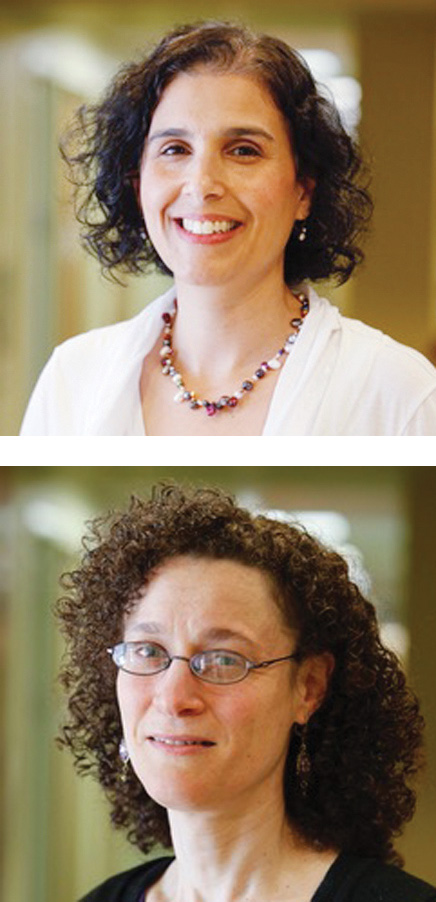
How We Learn Is What We Learn

ALLISON COOK AND DR. ORIT KENT

Let us listen closely to what voices of Jewish wisdom teach us about learning:

  • Each human being is created b’tzelem elokim (in the image of God). Each of us is immeasurably valuable in our own singularity (Gen. 1:27, JT Sanhedrin 37a). 
  • The entire community of Israel, through every generation, received the Torah (Shemot Rabbah 28, Midrash Tanhuma Nitzavim).
  • Each person heard the Torah according to their particular capacity, in their own language (Talmud Shabbat 88b, Pesikta d’Rav Kahane, 12).
  • The Torah isn’t sustained by one who studies on their own (Taanit 7a), and the Shekhinah (God’s emanation on earth) resides when we study in community (Shabbat 63a). 

These sources, especially when we weave them together, offer profound instruction for Jewish education to meet the needs of our generation and to ensure that both Jews and Torah may flourish and thrive. From these teachings we learn that each person, in their particularity, possesses Torah that only that person can reveal, as shaped by their unique capacities, languages, and experiences. It is no wonder then that tradition teaches that learning in relationship with others becomes the ideal site of connection with Torah and God. When we learn together, we expand understanding of Torah beyond our personal horizons into new insights and implications for living as individuals and in a covenantal community. In order to thrive, people and Torah need one another to reveal and be revealed in mutual fullness. This ideal posits that through relationships grounded in mutual accountability, we will flourish. Thus, these sources represent not only core content—the “what”—of a Jewish education but they illuminate the “why” and guide us in the “how” of Jewish learning. 

For Jewish educators, the work of designing and facilitating educational experiences must be guided by such an ideal, that learning should be centered around individual expression brought into relationship with others and with Torah in such a way that all of these participants, Torah included, need one another to grow and thrive. In this way we align the “why” of Jewish learning with the method. In the Pedagogy of Partnership, our Jewish professional development organization, we call this relational mode of partnership learning, “interpretive learning.” This mode is distinct from factual learning or personalization learning.1

The factual mode of learning is characterized by questions and activities that pursue one right answer that can be definitively pointed to in the text. In the factual mode, there is a concrete right and wrong. Learners can get inside the details of what a text says, memorize important textual facts, get the story or the law straight, and collect information. The factual mode is all about the text; it is not about the reader. Factual activities do not draw on or require the particularity of a learner’s individual experiences or reading of a text because the answers to factual questions will remain the same no matter who is looking for them. In Jewish education today, in many contexts, the factual mode remains a core goal and at the core of learning activities. In these contexts, learners are accountable to the content.

In contrast, the personalization mode is all about the individual. Questions and activities that animate personalization learning privilege individual expression and may use text or Jewish content as a springboard for personal reflection and sharing, but the learning activity quickly leaves the text behind. To respond to a personalization question, the learners need only look into their own opinions, judgments, and experiences to formulate their responses. In this mode learners are accountable to themselves. In many contexts in Jewish education, the personalization mode dominates the learning activity. Plenty of room is made for individual expression and opinion. Very little room remains for the voice of the text in its own integrity to be heard and considered deeply on its own terms or even in relationship to its readers’ experiences.

Both factual and personalization learning are indeed important in the mix of learning activities. Within the dominant cultural forces that shape our generation, however, it is too easy for Jewish education to be pulled in one direction or the other. Taken to the extreme, the domination of factual learning can have an alienating effect, leaving individuals to feel that there is no room for their humanity and particularity. On the other end of the spectrum, personalization learning feeds into narcissism such that students learn that they need not be accountable to others or to a tradition that, in its wisdom, beckons us to look outside of ourselves. Ironically, both of these modes are often practiced for the purpose of bringing people into relationship with Torah and yet alone, cannot sustain that relationship.

There is a third way, interpretive learning. Jewish wisdom points us toward this mode and models it within our textual tradition. Educators in any context can make this third mode more central to the “how” of Jewish education. Different from the factual mode, learners in the interpretive mode explore questions that are personally meaningful—thereby bringing themselves to the table—and the questions have multiple answers. But different from the personalization mode, the answers depend on both the text and people’s particular experiences and knowledge. The text will place boundaries on answers so that there are wrong answers and those that are more compelling than others based on the evidence one brings to bear from the content. At the same time, each person may notice something different in the text and may pursue a different line of discovery based upon their personal framework. Furthermore, in interpretive learning, learners work in conjunction with other learning partners to discover much richer and deeper learning than they would if focused only on what was meaningful to them. In the work of interpreting, learners must draw upon their own views, questions, and voices while simultaneously honoring those of the text and their human learning partners. 2  

In other words, interpretive learning holds learners and Torah in relationship. In order to convert fixed words into living ideas, or expression into meaning, the Torah needs human partners to notice it, wonder about it, grapple with it, and appreciate it. In turn, individuals need the text to invite them, through its complexity, beauty, difficulties, and sacredness, into new horizons of understanding and growth—intellectually, ethically, and spiritually. And finally, individuals need one another, with their different insights, in order to shed light on the text’s meanings and to support and challenge one another to stay accountable to all of the participants in the learning encounter.

Learning in the interpretive mode teaches us that to thrive, we each must bring something particular to the task of making meaning of Torah and of the world around us. At the same time, it teaches us that we also are in need of others to stretch our thinking, go beyond the self, and hold ourselves, one another, and Torah itself accountable in a dynamic state of responsiveness to one another. Our mutual accountability makes learning in the interpretive mode an act of ethical engagement.

Whether it be in text study, in our interactions in Jewish communal life, or beyond to the town square, Jewish education must focus deliberately on building the discrete skills and dispositions necessary for this interpretive engagement. It is not enough for these skills and dispositions to be in the hands of a few; they must be taught and made available to individuals of all ages. In the Pedagogy of Partnership we seek to do just this, because we believe that Jews and Judaism thrive in relationship and that how we learn is ultimately what we learn.

Allison Cook and Dr. Orit Kent are teacher-educators and researchers. They are the founders and co-directors of the research-based Pedagogy of Partnership (PoP), providing cutting-edge professional development to 21st-century educators.

PoP’s comprehensive model enables learners of all ages to develop the habits of wonder, empathy, and responsibility toward others and toward Torah. It also teaches learners concrete tools to improve their communication and interpretive skills and be better able to seek understanding, work collaboratively, and engage with Torah as an ongoing source of Jewish wisdom and instruction. For more information, visit  www.hadar.org/pedagogy-partnership.


1 The work of the Great Books Foundation provides one of the bases of this distinction that we are drawing. See for example, An Introduction to Shared Inquiry. 4th ed. Chicago: the Great Books Foundation, 1999.

2 For another discussion of this interpretive mode specifically in relationship to Tanakh education, see Allison Cook and Orit Kent, “Interpretive Experience as the Fulcrum of Tanakh Education.” Ha’Yidion (Summer 2012). 58–60.

Outside In: Jewish Education That Matters

RABBI SID SCHWARZ

Jon Woocher and I both grew up on the South Shore of Long Island. His father was my childhood dentist and our parents were friends. I had two connections to Jon, one intellectual and one personal. His book, Sacred Survival: The Civil Religion of American Jews, came out in 1986 and had a big impact on my thinking. He understood, as few others did, that a religious heritage could manifest itself not just in people’s patterns of religious observance, but also in their civic behavior. In fact, if our metrics were synagogue attendance, belief in God, and religious observance, Jews would be described as among the least conventionally religious ethnic groups in America.

Yet Jews are, arguably, the most civically engaged ethnic group America has ever seen. That is true both in the way that the Jewish community organizes itself (e.g., the Federation system, ties to Israel and world Jewry, educational institutions, social service agencies, and thousands of Jewish non-profits serving every cause under the sun), as well as the way Jews are over-represented in the social, political, and civic institutions that underpin American society.

When PANIM: The Institute for Jewish Leadership and Values was founded in 1988, Jon headed up the Jewish Education Service of North America (JESNA), and I asked him to serve on PANIM’s Advisory Board. His enthusiasm was precisely the kind of validation that a young social entrepreneur needs. Our working relationship continued for over 25 years, a time he reflects upon in the chapter he wrote for my book, Jewish Megatrends: Charting the Course of the American Jewish Future (2013). Jon’s chapter, entitled, “Jewish Education: From Continuity to Meaning” argued that the key question facing the field of Jewish education today is not group preservation but rather conveying a sense of personal meaning.

PANIM’s mission was to inspire young people to assume leadership roles on the local, national, and international stage, and to be activists on issues of concern to the Jewish people and to the world at large. The methodology involved integrating Jewish learning, Jewish values, and social responsibility. In effect, PANIM was a beta test in using Judaism as a vehicle for individuals to live thriving, meaningful lives.

It is worth reflecting on how PANIM attracted thousands of Jewish teens to a fairly serious Jewish educational program at a time when the vast majority of teens were not flocking to such structured Jewish educational programs as Hebrew high schools or synagogue post-confirmation classes. One, the program was billed as a “trip to Washington D.C. to explore politics, social justice, and service.” This is what got most of our participants to sign up. Two, we planned the experience to be personally transformational. Our aim was for PANIM to change the way that these young people would forever understand the relationship between their Jewish identity and their responsibility to the world. We were, in effect, following Jon’s prescriptions for what Jewish education and should be aiming for.

A key principle that guided our entire educational methodology: Every concept had to be developed from the outside in, not from the inside out. An “inside-out” methodology assumes that a Jewish value, a biblical quotation, or a Jewish rabbinic text will have inherent significance to students. That is the approach that typifies most Jewish educational strategies in conventional Jewish institutions. We, however, made no such assumption about our teen participants. In fact, we assumed that they came to us skeptical of the relevance of Jewish texts and values.  The outside-in methodology had a different starting point: How does X (e.g., human rights, poverty, discrimination, climate change, war, hunger, refugees) affect the world you live in and how can you make a positive difference?”

Few things are more motivating to a teenager than to be empowered to make a difference in the world. PANIM’s programs ended with meetings on Capitol Hill and with members of Congress. We challenged teens to exercise their democratic right to petition public officials. The primary tool they had for these meetings was the information they garnered during our policy sessions. Given that virtually every public policy issue has a moral/ethical dimension, the integration of Jewish wisdom was therefore organic and welcomed. Every educational unit we developed and curriculum we published integrated the wisdom of the Jewish tradition with analysis of social and political issues that would dramatically impact the world these teens were about to inherit. 

We didn’t have to preach Jewish pride to our teens; rather, they instinctively understood that their heritage included generations of wisdom about how we need to repair a broken world. Thus, they learned that Jewish people were among the most politically engaged citizens of America. Jews learned the hard way what can result when political regimes don’t protect the most vulnerable among us.


Jon often used the term “civil religion.” It involves asking, “How will Jews behave toward each other with people of other faith and ethnic backgrounds and with the people and institutions that lead our society and the world?”

Every Jewish school, synagogue, and organization would do well to take a step back and ask whether or not they are advancing a Jewish framework that matters to their respective constituencies, and how they can practice “outside in.” This is what gives people a sense of meaning and purpose. This is what releases the power of Judaism to help people flourish and thrive. When this is offered by Jewish institutions, the identity and continuity questions take care of themselves. 

Rabbi Sid Schwarz is a senior fellow at Hazon where he runs two national programs, the Clergy Leadership Incubator (CLI) and Kenissa: Communities of Meaning Network. He was founder and president of PANIM for over 20 years. He is the founding rabbi of Adat Shalom Reconstructionist Congregation (Bethesda, Maryland), where he continues to teach and lead services. He also is a past Covenant Award recipient for his contributions to the field of Jewish education.

Forging a Path

ANNA MARX

The term “thriving” has begun to sweep through the Jewish community. This concept is a paradox in that it is both a complete paradigm shift and also already deeply embedded in Jewish education.  

For a number of years now, I have had the pleasure of meeting with educators and communal leaders across North America to consider the future of Jewish education. Before I even heard the term “thriving,” I was sharing related ideas. I have discussed the “big scary world” our children are growing up in and the resources Judaism has to prepare them to walk tall and proud through it. I have spoken about how Judaism has made my life and so many lives I know better, more full, and more meaningful. I have shared visions of Jewish educational programs that focus on creating young people who have strong moral compasses, sharp critical thinking skills, and empathy for fellow human beings.

I have shared these thoughts in different settings with different sets of leaders in small and large groups, in person and in writing. I have yet to hear a person reject these thoughts. Of course not. It’s why we’re in this business. It is the purpose of what we all do. Synagogue educators, most of all, have nodded with great enthusiasm when I’ve spoken these words. They have been the ones, with tears in their eyes, who have thanked me for speaking what they know to be true. And that is how I know that these concepts are already embedded in Jewish education and that they are very close to the hearts of our educators. These ideas are familiar and powerful.

And yet, at the very same time, when we take a closer look at the educational programs in synagogues (“religious schools”), we see that they are still far from achieving these goals. The primary achievements of these programs remain preparation for b’nei mitzvah, much to the chagrin of many educators and clergy. Resting firmly in organizations whose business models depend on a steady influx of members, the educational programs are seen as critical sources of income. Their success continues to be measured by the number of synagogue members they attract and retain. I have been approached by countless synagogue leaders interested in transforming their educational models so that they can attract more young families. I have never been asked to help make their children’s lives better. I have yet to be asked for expertise on how they can help families to have more fulfilling experiences.

Here is where the paradigm shifts: how does one move from believing a vision is worthy and true to having a clear understanding of the path to achieving it?

It has been over a year now since Shinui: the Network for Innovation in Part-Time Jewish Education began to adopt this new vision for part-time education. This network, made up of representatives of 10 community education agencies across North America, has been meeting together for a number of years to support one another in the effort to change educational models inside and outside of congregations. Together, we have wrestled with defining “innovation” and identifying worthy models to share with one another. We have developed strategies to collectively spark, nurture, and spread innovation across the continent. Last spring, with the guidance and support of The William Davidson School Leadership Commons, we have begun to draft a theory of change that would shift the field to a focus on helping learners thrive in the world.

Always far ahead of the rest of the field, Dr. Jonathon Woocher gave this call five years ago when he asked, “How can we help Jews draw on and use their Jewishness to live more meaningful, fulfilling, responsible lives?” These words are both a tremendous paradigm shift and also deeply embedded in our collective beliefs. It’s hard for me to imagine people would say they do not wish for children to grow up to live meaningful, fulfilling, responsible lives. But, somehow, we did not focus our energies on creating a Jewish educational system that intentionally and compellingly would nurture this vision.

When the members of the Shinui network agreed that we would adopt this new vision for part-time Jewish education, this concept we called “thriving,” we found ourselves facing the same paradox. This new outcome felt right and familiar, but how should we accomplish this change? Believing that a vision is worthy and true is a far cry from clearly understanding the path to achieving it. 

So far we have adopted the following short-term strategies:

  • Learn what others have to say about thriving. While this is new to us, many others have been investigating thriving for many years. We have found thriving exploration in positive psychology, anthropology, and urban planning. What makes a human being thrive? And what makes a community or culture thrive?
  • Experience thriving. It’s hard to imagine successfully implementing a paradigm shift without first experiencing it. We are finding ways to bring thriving into our personal lives and to our colleagues. We are becoming our own lab rats.
  • Find more bright spots. It is difficult for most of us to change to what we don’t know. We can explain it and try to paint a picture. But real examples can inspire action and demonstrate possibility.
  • Think Like a Network. No one organization can accomplish this paradigm shift alone. We have acknowledged, as a network of organizations, that we can only accomplish this goal by working with one another and many others. When all those who share in this paradigm shift work with one another, we will make it a reality.

Turning theory into practice will be the greatest challenge in this process. Yet it is a process to which we are committed. We see the vision of a bright future where young people access their Jewish heritage and experiences to thrive fully in the world. The road to get there appears untamed and rocky. Together, we plan to forge a trail. We hope you join us for the journey.

Anna Marx is chief strategy officer of Jewish Learning Venture in Philadelphia, Pennsylvania, and the project director of Shinui: the Network for Innovation in Part-Time Jewish Education, a network of 10 communal agencies from Boston, Chicago, Cleveland, Detroit, Houston, Los Angeles, New York City, Philadelphia, San Francisco, and Toronto. She was also a former research assistant for Dr. Jonathan Woocher, z”l, a gift for which she will be forever grateful.

Modeling and Learning Thriving Through Civic Engagement

DR. MEREDITH KATZ

How can Jewish students, in all their various educational settings, thrive both in the Jewish community and in broader society? In the United States, the broader society aims toward a pluralist democracy. A plan for thriving in that society must include experiences navigating and balancing one’s multiple identities, particularly through engagement with others. In addition to building connections with Jewish texts, values, and rituals, engaging as a Jew must include interacting with the others with whom we live on equal terms. This approach builds on, but is not the same as, a commitment to tikkun olam that while valuable, often frames the interaction on unequal terms: Jews giving the help to those “others” receiving it.

How can we envision a more expansive type of thriving, especially in the short term, while we have students in our programs? Civic education has always been the main project of the public schools. Historically, progressives and traditionalists have consistently touted model citizen production as the outcome of their pedagogical approaches of choice. Jewish education, in its predominantly complementary forms, has gone through ebbs and flows itself in emphasizing the “American” component of students’ hybrid identities. In the 1920s, Jewish institutions responded to pressure to prove the compatibility of their religious and cultural agenda with American values. However, an effort to promote the engagement of Jewish students in the broader society has since not been the main focus of the many Jewish educational endeavors focused on Jewish continuity.

How, then, might we start to frame civic education today? Dr. Diana Hess—in her book Controversy in the Classroom: The Democratic Power of Discussion—argues for the centrality of controversial issues as subject matter around which to build skills of deliberation. She atomizes deliberation into concrete skills that must be practiced as part of civic education, including reason giving, listening, and perspective taking. While these skills can be integrated into different content areas, including Judaic studies, working with these skills in isolation does not promote civic engagement by osmosis. Learners need direct, facilitated opportunities to deliberate about their roles as Jews in the broader society and to engage with others inside and outside the Jewish community. Ideally, this deliberation leads to action. These are tall orders for programs used to seeing themselves as battling American culture in order to make head and heart space for Judaism. How might a focus on the skills of deliberation accommodate the identity-building program of Jewish education?

The Jewish Court of All Time (JCAT), a 10-week online simulation for American and Canadian middle school students in the Prizmah Jewish day school network, blends these two desired outcomes—exploring Jewish identity and practicing deliberation. JCAT was started by the University of Michigan’s Interactive Communications and Simulations Group and is currently administered by The William Davidson School in partnership with the University of Michigan, with generous sponsorship by the Covenant Foundation and the William Davidson Foundation. Through an online platform across several schools, students research and play historical and current personalities who debate a complex issue that situates Jewish history in a broader context. The characters are assigned through student choice with teacher discretion. They represent a variety of backgrounds—Jewish and those of other faiths. Students research their characters and are introduced to the background of the case by their classroom teachers. They then respond to prompts in character and initiate interaction with other characters through a variety of public and private channels on the website. There are always twists and turns, the building of alliances, and a vote to bring closure. In the fall of 2017, 450 students from 15 day schools participated in two parallel simulations. Characters ranged from the Jewishly predictable—Theodor Herzl, Emma Lazarus, and Benjamin Netanyahu—to the less expected—Han Feizi, Frieda Kahlo, and Bob Dylan.

JCAT plays out over 10 weeks; as such it is an extended role-playing activity. This allows students the time to “become” their characters as the games advances. Significantly, the process of figuring out what one’s character would say starts with the questions: What would I say? Why do I feel this way? What from my previous experiences and background leads me to answer this way? Students explore their own identities as they explore the identity of their characters.

Each year the JCAT case is purposefully structured around big ideas. This year we debated the need for a memorial for the passengers of the MS St. Louis. Students engaged with the ideas of memory and memorialization and issues of personal vs. group or national responsibility. The case connected current American conversations about memorials and immigrants to the Jewish historical experience, underscoring the hybrid identities of North American Jews.

In this excerpt, PBS personality Gwen Ifill, played by a JCAT project director, interviews St. Louis Captain Gustav Schroeder, played by a sixth-grade student:

Gwen Ifill: What motivated you to assist the passengers of the MS St. Louis, especially when you didn’t know them and aren’t Jewish yourself? Was there a moment in your life that served as motivation to take action?

Gustav Schroeder: It was the right thing to do. Just because I was not a Jew at a time when some people hated Jews did not mean that I had to hate them too. Although I did not share their beliefs nor understand all of their traditions, I made sure to give them space where they could pray.

Ifill: Do you consider yourself a hero?

Schroeder: No. I did what’s right, that’s all. If you did what was right, I would not call you a hero. If doing the right thing makes me a hero, then I guess we all are heroes sometimes.

This exchange showcases the deliberation skills of questioning, reasoning, and perspective taking, and, one has to imagine, the internal monologue of a Jewish boy playing a non-Jewish German ship captain in the 1930s.

Certainly, role-playing and deliberation can and should take place offline, face to face. However, as an online program, JCAT offers some unique advantages with regard to civic education. The extended time frame is matched by an extended character pool way beyond the diversity of a single class of characters. An online simulation also provides a useful opportunity to practice interaction in an unpredictable social setting akin to the real-world social media outlets with which the students are familiar. At the same time, the asynchronous format gives students space to reflect on comments coming in and to research and draft answers, often with feedback from teachers and classmates. This “wait time” is an important aspect of civic behavior.

Obviously, JCAT on its own is not real-world engagement between Jews and people of other backgrounds, although individual schools often arrange programs in their communities as a result of their participation. Rather, JCAT is a starting point for framing Jewish identity as a balancing act that requires engagement with the other. JCAT role-playing offers a sustained opportunity for students to reflect their character’s ideas against their own and to deliberate with others—Jewish people and people of all backgrounds. Notably, when students are asked what they are taking away from the JCAT experience, the most common response has to do with the idea of multiple perspectives. Students gained “the knowledge of what people that think differently than me think about” and “the ability to see a problem from more than one perspective.” This ingredient, evolving empathy for the other, is crucial as we engage our learners in a Jewish experience that enables them to thrive as human beings and engaged participants in a larger society.

Dr. Meredith Katz is clinical assistant professor of Jewish Education in the William Davidson Graduate School of Jewish Education of The Jewish Theological Seminary. She is also a project director for the Jewish Court of All Time (JCAT). Meredith’s background as a social studies educator drives her current research interests in Jewish history and Jewish civic engagement curriculum in Jewish educational settings.

Taking the Time and Making the Investment to Thrive

RABBI JENNIFER GOLDSMITH

How are we helping our learners today draw on their Jewishness to live more meaningful, fulfilling, and responsible lives?

It sounds like it should be so simple.

We spent the last decade talking about the importance of getting our learners in the door and excited to be there, of opening the arms of Jewish education wide, for example, engagement in coffee shops, a congregant’s home, or while on a bike ride or hiking. Of shifting the learning model to be student-centered, project-based, outside of the building. Words like “meaning” and “mindfulness” entered the Jewish educational lexicon. Suddenly the goal—as articulated by Aryeh Ben David in “Launching the Third Stage of Jewish Education”—was to bring Jewish learning into our hearts and feel a deeper personal connection to the sources.  Many part-time Jewish educational programs, in settings such as synagogue schools, integrated these innovations into their educational programs.

Yet the question of how to draw on our Jewishness to live more meaningful, fulfilling, and responsible lives is not simple at all. We believe the answer is quite complex, requiring a new approach to Jewish education and educational leadership roles. An intense planning process at The Jewish Education Project in New York ultimately led us to a new theory of change for our agency, something that we had not tackled for almost a decade but can serve as a model for our constituents.  

We arrived at a new agency vision: for more Jewish children, youth, and families to experience a Jewish education that helps them thrive as Jews and in the world today. Now we are working to define thoroughly what we mean by “thrive” and then take the necessary steps and time to make thriving a reality in every corner and setting of Jewish education.

Our work is inspired by positive psychology and Dr. Martin Seligman. In his book Flourish, Seligman puts forth a theory of well-being that can lead to an increase in personal and communal thriving. Organized with the acronym PERMA, it includes five measurable elements: Positive Emotion (happiness, fun, gratitude), Engagement (losing ourselves and becoming absorbed in work, hobbies, the moment), Relationships (those that touch our hearts, our souls, our minds), Meaning (a sense of purpose and fulfillment), and Achievement (learning and moving forward with our endeavors big and small; knowing and using our strengths). Each element has unique properties and, applied independently, can add value to a Jewish educational enterprise. Yet to thrive, all of these elements must be applied together.

For this to occur, we not only must consider how and what the learner is learning (the content of the education), but also how we can support the educators, clergy, administrators, teachers, and lay leaders delivering this new vision. Our new paradigm must insist that we support the whole delivery system. We can no longer only be about implementing innovative models of learning. That can only get us so far. We must now intentionally help educational leaders and their teams thrive. This includes developing a thriving educational team that understands one another’s strengths and weaknesses, is trusting, grows together, fails forward together, supports one another, and creates a shared vision. Only then can they, in turn, create communities that lead their learners to living fulfilling lives.

What small first steps can you, as a Jewish educational organization take to begin to make this new vision a reality?

  1. Create a Common Language: To start, take the time to learn together. Begin to understand what thriving can mean to you and your organization. Assign the whole staff a book on the topic and then meet to discuss it. (Examples include: Flourish by Martin Seligman; Becoming a Soulful Educator by Aryeh Ben David; and Mindset: The New Psychology of Success by Carol S. Dweck.) Schedule time in staff meetings or informal conversations to talk about how you would define thriving and thriving Jewishly as an individual and as a team. Share examples of learning that you feel leads to thriving—unpacking why you feel that way and what can be learned and possibly replicated in your setting.
  2. Shift Your Organizational Culture: You can’t expect your constituents to accompany you on this journey if they have not bought into it yet. What small but intentional changes can you make that will begin to bring people along? A suggestion: pick one element of PERMA and see how many experiences in your programmatic year support growth and development in that area. Create opportunities for parents to deepen their relationships with each other as well as with the staff. Begin faculty meetings with strength spotting, raising up something you are proud of that you accomplished over the last week or something you spotted in a colleague. Start to use this different language when drafting curriculum, communicating with key stakeholders, or creating new signage.
  3. Take the Time for You, Personally, to Thrive: As an educational leader and one that may be leading this change process, make sure you are taking time to understand what you need to thrive. What do you need to do to nourish yourself? Carve out time to write or read. Use all of your allotted vacation days in a given year. Finally spend that professional development money on an experience that will help you grow.

The steps outlined above will help you and your educational team begin the conversations necessary to transform learning in a way that uses thousands of years of Judaism to help meet people’s desire for a deeply meaningful life.  Thriving and positive psychology provide us new vessels to deliver our ancient tradition in a way that will help our learners—indeed, our whole communities—live more fully, meaningfully, and responsibly.

Rabbi Jennifer Ossakow Goldsmith is the managing director of Congregational Learning and Leadership Initiatives at the Jewish Education Project in New York. Born in Cleveland, Ohio, and raised in Ann Arbor, Michigan, Jennifer received her BA from the University of Michigan and rabbinic ordination and MA in Religious Education from HUC-JIR.

From Piles of Schnitzel to Living Extraordinary Lives

SHARON GOLDMAN, JD

I have many fond memories of cooking with my grandmother in her kitchen. As we flipped over seemingly endless schnitzels, I remember asking, “Who’s coming for Shabbat dinner?” “You, your parents, and your brother,” she replied. She put three pots on the stove. “Who else?” I asked. “That’s it,” she answered. I felt incredulousness welling up in me. There was enough food to feed an army. 

I remembered learning about the Holocaust generation and the link between living with shortages and later generations of overcooking. Yet, I wondered what making rice for 20 instead of five had to do with the richness and vibrancy of our heritage. Perhaps it didn’t? While this post-survival–style Shabbat dinner seemed to work for my grandmother, I was in the middle of my college career and searching for something more. The overcooking was a small representation of an expression of Judaism that lacked relevance for me. 

I found that relevance as a mother and educator-administrator at a school, Moriah Early Childhood Center, with its vision, “Inspired by Judaism, our children, teachers, and families immerse and participate in joyful learning for living extraordinary lives.” You may be asking yourself, “How does a Jewish early childhood program move us from Jewish overcooking to Jewish extraordinary living?”

Reggio Emilia pioneer Carla Rinaldi quotes Jerome Bruner as stating, “School is not a preparation for life, but is life itself.” (Bringing Learning to Life, xi). The children and families that walk in our doors every morning are experiencing Jewish living, not a preparation or “gateway” for Jewish living. Our school is a microcosm for Jewish living as extraordinary living.

So what then is extraordinary Jewish living?

Jewish living is creating and sustaining high-quality relationships.

Relationships are promoted and practiced on every level. When children count their friends at morning meeting, it is not only to develop numeracy skills. The community wants to know who is missing and why. All students in the classroom are integral. When a student is absent, the other students miss him/her and eagerly make a “mitzvah call.” On the other side, the ill child eagerly awaits the call. Some parents even call into the school, asking for their mitzvah call because their child won’t take a nap until it comes. My mitzvah call experience as a parent came when my youngest was hospitalized at a year and a half with a respiratory infection. For six days, I held her little body in my lap, working around the many cords and tubes tied to her. When the phone rang, her eyes were closed. She opened them as she heard her teacher’s voice. As she watched her closest friend toddle over on FaceTime and stroke the phone, a smile appeared on her pale face. It was the first smile she had mustered all day. I hid my tears of joy under a tissue as I watched her classroom community bring her physical and emotional strength. 

Jewish living is practicing appreciation. 

In every classroom, the children and teachers participate in the Modeh Ani (the morning prayer we say to thank Hashem for restoring our soul). One class, in particular, had spent weeks exploring the concept of thankfulness. We became more aware as a collective of all the good in our lives: a sunny day, a new bike at the park, a hug. The children made a festive meal to celebrate Thanksgiving in the classroom together and decided on their own to invite the school chef to thank her for all the delicious meals she prepares for them. They wrote her an invitation, hand-delivered it with giggles of glee, and decorated her place at the table with great love and care. 

Jewish living is pursuing peace that allows for differences that make up a whole. 

One classroom of four-year-old children decided that they wanted a place in the classroom to discuss and resolve issues. They named it “the Helping Spot” and decorated it (according to their taste and with the help of parents bringing materials) with fabric, carpeting, and LED lighting. Over time, the children began to seek out the toranim (the children assigned as class leaders for the day) to come to the Helping Spot. Over time, through the documentation and reflection we practice at Moriah, the teachers noticed that the children’s ability to reframe, or thoroughly express the issue, increased. The teachers also noticed that the children began to solve more complex conflicts on their own, such as allowing others to join in their play and negotiating space and materials where they had not been willing to do so before. 

Jewish living is taking responsibility and giving space for others to do the same.

The teachers in one of our classrooms for two year olds observed that the children were craving and inventing jobs for themselves. They wondered how they might foster the children’s desire to act as helpers and contributors in the class. They responded by co-constructing jobs with the children and creating a visible chart in the room where the children race over first thing in the morning to see who is on duty. The teachers reported that the children saved a place for the line leader, letting her know that it was her turn to be in front. They excitedly urged her to take her spot at the front of the line. It is uplifting to hear about the respect and acknowledgment the children have of their friends’ roles at such a young age. 

Jewish living is asking tough questions and relentlessly pursuing answers.

A group of four-year-old children went to the sanctuary (as they often do) to look at the siddurim (the prayer books). After finding the Sh’ma in the prayer book and reciting it together, the discussion about the Sh’ma prayer flowed into deep topics such as life and death, gender, and the concept of “forever.” They debated whether God is a boy or girl name as they grappled with whether God is a he, a she, or both. They wondered how they might find out by seeing God. When one child suggested that when they are dead, they can see God, another responded with a probing question, “If they are dead and their eyes are closed, then how can they see God?” As the conversation moved organically into whether God is married, a child responded in a way that only children can, weaving depth and innocent humor, “God does not need to be married because if God is married then there will be two Gods and then we’ll have too many rules. God’s wife will make more rules for us. God is also a true God and if we have another God, then God will not be so special.” What makes this conversation special is that it isn’t special. This type of discourse is commonplace among the children. 

To echo Jerome Bruner, we in the Jewish early childhood center are not in the business of preparing people to live extraordinary lives. The children, families, and teachers are currently living extraordinary lives as a result of living Jewishly.  

While my grandmother’s delicious schnitzel can also be part of extraordinary living, I make enough for whoever is coming to dinner, rather than an army unit. I live with the faith that tomorrow will bring a new day that will start with Modeh Ani and go extraordinarily from there even when I don’t have leftovers in my fridge.  

Sharon Goldman is the assistant director of documentation and research at Moriah ECC. Sharon began her career as an educator when she taught and trained new teachers with Teach For America. Enjoying the advocacy involved in working in the public school system, she pursued a law degree and worked as a litigator. Sharon left the practice of law to spend four and a half years in Israel, attending seminary and researching Jewish Value Based curriculum as a Dorot fellow.

Toward More Expansive Perspectives on Gender, Authority, and Role Modeling

DR. REBECCA J. EPSTEIN-LEVI

One of the most frequently quoted Talmudic passages—especially in my own subfield of Jewish sexual ethics—is Bavli Berakhot 62a, in which Rav Kahana hides under his master Rav’s bed while the latter is having sex with his wife. Kahana, apparently, is so shocked by what he overhears (the text tells us that Rav was “laughing, and talking, and doing what he required”) that he blurts out, “It is as though Abba had never sipped from the dish before!” Rav, unsurprisingly, is not amused, and he tells Kahana to scram. Kahana’s response—now, in its reception, nearly cliché—is that “This, too, is Torah, and I must learn.” 

This text is usually deployed in service of the point that, for the Rabbis, everything, even sex, is worthy of serious study and modeling by a master. And, at first glance, this narrative may look like straightforward role modeling. But closer attention reveals ruptures: both Kahana and Rav are discomfited by the encounter. Rav’s sexual behavior is not what Kahana seems to have expected from his master, to the point where his exclamation may be read as rebuke. Kahana’s behavior, conversely—his initial intrusion, his undisciplined exclamation, and his retort to what is obviously a command—is clearly not what Rav expects from an obedient and attentive student.

Context highlights these ruptures. The passage is preceded by anecdotes of students who follow their masters into the privy and learn uneventful lessons that are passed down multiple generations. Linguistic and literary cues point even further toward the conclusion that the modeling that occurs between Rav and Rav Kahana represent a break in normal patterns of role modeling. And feminist readers will note that the gender dynamics of the text are troubling indeed: Rav’s wife does not speak and is not named. Indeed, she is present only by inference, not even meriting a pronoun of her own.

In our particular sociopolitical moment, matters of sex, gender, and authority have taken on greater visibility and urgency, as the recently viral #metoo movement—started 10 years ago by Tarana Burke—has drawn renewed attention to the ways in which the abuse of authority and power enables gendered and sexualized oppression. Yet we work with and within a cultural and textual tradition in which potentially problematic structures of authority are an integral and unignorable part. Whether these authorities are currently or recently living (rabbis, teachers, poskim, administrators, funders) or historically active (the Rabbis of the Talmud and of the medieval and early modern halakhot), our tradition is filled with figures who exert authority over our moral lives. And we, as Jewish scholars, rabbis, and other Jewish community professionals, also exert practical authority over others.

How, then, can we grapple with the role of authority—ours and others’—so that we may live more ethically bound and thriving Jewish lives? How shall we relate to authority that is integral to our traditions when it can function and does often function in ways that are problematic? How do we structure our own authority such that it does not reproduce unjust power structures?

These last two questions are intimately related. The relationships we cultivate with our texts and our histories will shape and condition the ways we relate to our fellow humans. We should, therefore, cultivate an ethic of respectful and creative questioning of authority in each case. We should honestly acknowledge the problematic dimensions of rabbinic authority—their consolidation of intellectual and ritual resources, which, in turn, enabled them to normalize the exclusion and dehumanization of women, gentiles, and ammei-ha-aretz (non-rabbinic Jews). We also, however, should recognize the constructive and helpful functions served by their authority, particularly as we read that authority itself as a form of resistance against certain forms of imperial authority over them. In each encounter, we should seek out and recognize both destructive and constructive elements of their authority, and use each of these as guides (whether positive or negative) for our own ways of relating as authorities to others. 

This means that we must embrace a more expansive understanding of what it means to be an authority and a role model. In the rabbinic virtue ethics tradition, the teacher and sage was a source of authority by both word and example. In this textual world, an apprentice learned from his master both interpretive skill and the fine points of day-to-day conduct, both from explicitly didactic lessons in the beit midrash and by watching his master’s personal conduct. Much of the time, the master was the exemplar and the student did well to copy his example. But occasionally, the master’s weaknesses and foibles provided a counterexample to the student, as we see hinted at in the Rav Kahana story—and as we think about more liberatory models of authority, we should attend to these occasions.

Such instances also give us clues about rabbinic texts themselves. Instead of relating to rabbinic texts as simple, top-down sources of authority that deliver unmediated rulings on our day-to-day lives, the texts’ authority is better understood in terms of role modeling. When we engage with a text at a given moment, it behooves us to think about that text neither as an object whose meaning we are trying to divine nor as an oracle handed down whole, but as a partner in the conversation we are having about how to live Jewish lives. This partner is older and wiser, but not infallible or immune to rebuke. Indeed, this partner may, with uncomfortable clarity, model how not to behave.

Thus, we return to the Rav Kahana story. As contemporary readers with concerns about authority and gender, we might notice all the troubling features I mentioned above. What, then, should we do with them? When we interact with this text, we might praise and emulate a certain commitment to experiential learning, to the existence of some sort of back and forth between teacher and student, and to a granular sort of recognition that all aspects of life have relevance to the sacred. But we can and should rebuke the text’s failure to establish and respect clear boundaries, and especially its failure to acknowledge and respect all the voices in the room—female voices, in particular. And in this process of dialogue and discernment with the text—whose age, wisdom, and place in the interpretive tradition grant it significant but not absolute or static authority—we can take both its positive and its negative examples as models for how we can build more and more just authority structures.

Dr. Rebecca J. Epstein-Levi is the Friedman Postdoctoral Fellow in Jewish Studies at Washington University in St. Louis. She is a practical ethicist who examines questions of sexual, biomedical, and environmental ethics through a Jewish lens.


MORE ARTICLES FROM “GLEANINGS”

READ NOW