Jewish Traditions in the Age of Catholic Humanism: The Making of the Antwerp Polyglot Bible (1568–1572): A Conversation with Professor Theodor Dunkelgrün
On Wednesday, November 12, Theodor Dunkelgrün, Assistant Professor of Jewish History at the University of Antwerp, presented his engaging new monograph, The Multiplicity of Scripture: The Making of the Antwerp Polyglot Bible. His talk brought to life the history behind this ambitious sixteenth-century Bible-printing project. Dunkelgrün explored how the Antwerp Polyglot both shaped and was shaped by the intellectual and cultural currents of its time, especially the intense debates between Catholics and Reformers. He highlighted in particular the Catholic encounter with the Masoretic tradition of the Hebrew Bible and the study of medieval Sephardic traditions that emerged from post-expulsion Spain.
Attendees learned that producing the Antwerp Polyglot Bible was a monumental collaborative effort. It drew together an extraordinary team—biblical scholars, linguists, lexicographers, artists, grammarians, translators, editors, printers, engravers, and theologians—who worked in concert to create a multilingual edition of the Old and New Testaments.
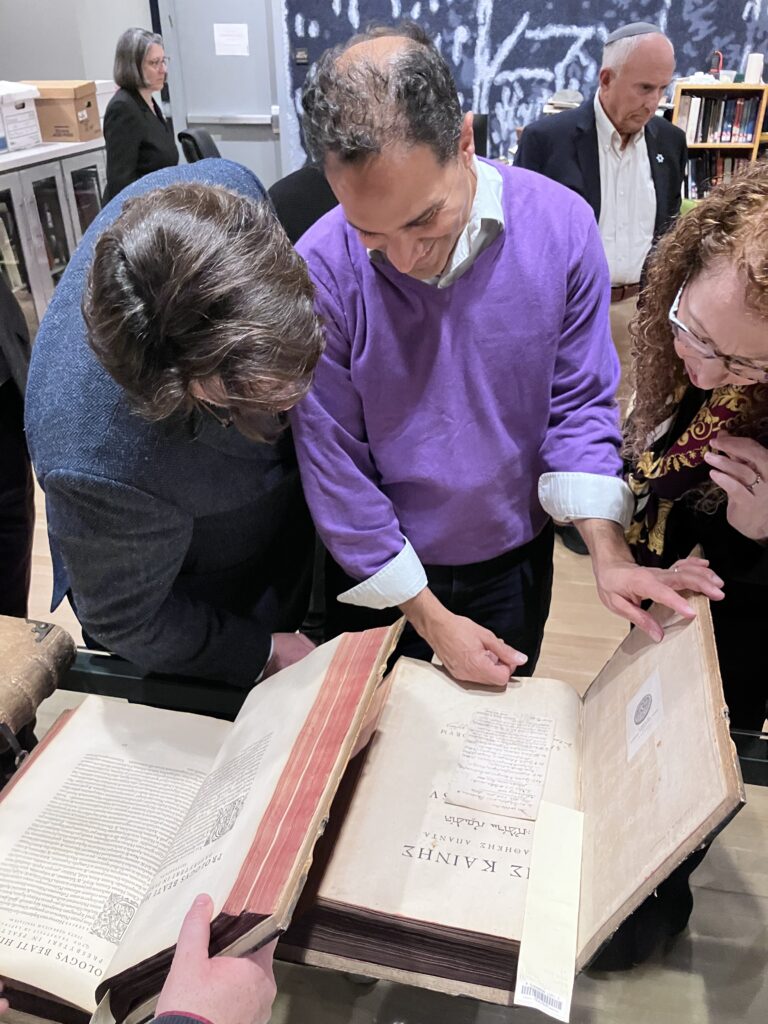
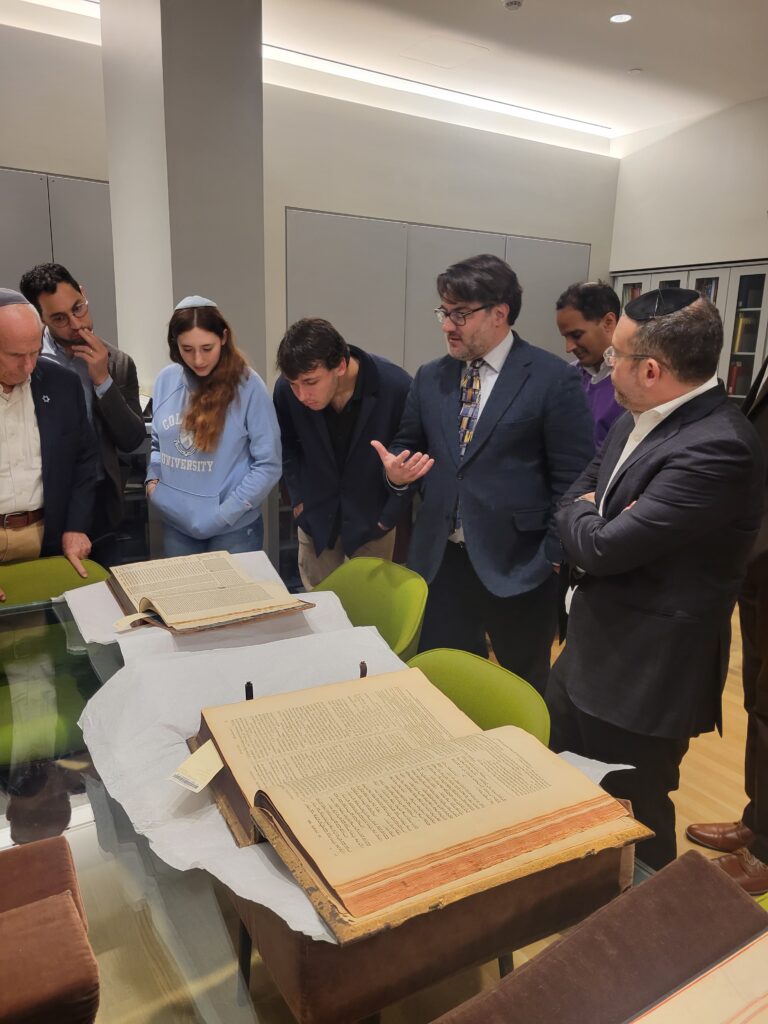
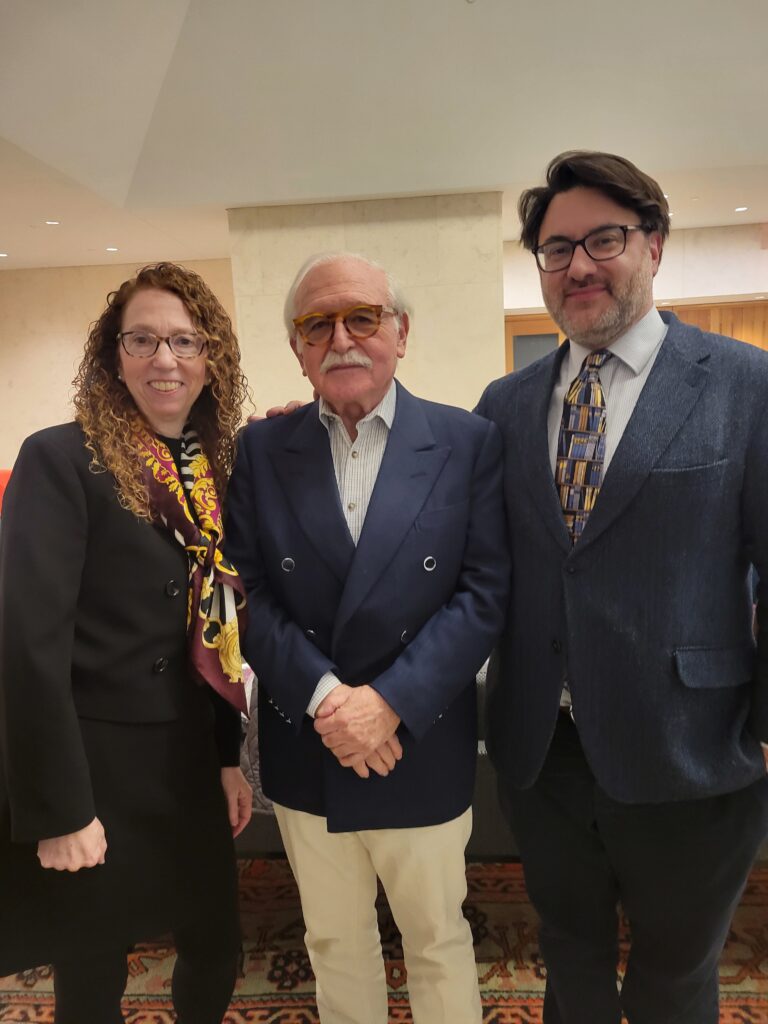
Two interlocutors, Loraine Enlow (a medievalist specializing in biblical reception history and a JTS alum) and Professor William Stenhouse (professor of history at Yeshiva University, specializing in classical scholarship in the early modern period), joined Dunkelgrün for further conversation. Participants also had the opportunity to view a complete copy of the eight-volume Bible in JTS’s Rare Book Room, guided by Dr. Dunkelgrün. Professor Marjorie Lehman, area Chair of Rabbinic Literatures and Cultures at JTS, remarked that seeing the physical volumes made Dunkelgrün’s insights truly come alive.
JTS extends its deep gratitude to our sponsor, Ivan Berkowitz. Dr. Berkowitz, a financial and real-estate professional and an Honorary Fellow at the Lauterpacht Centre for International Law at Cambridge University, continues to demonstrate generosity and dedication to the field of Jewish Studies. His support is invaluable.