
Going Toward the Present
Nov 11, 2011 By David Hoffman | Commentary | Vayera
Martin Buber, the great 20th-century Jewish theologian, observed a powerful literary connection between the beginning of Abraham’s life and the end. God first speaks to Abraham suddenly, seemingly without introduction, and commands: “Go forth (lekh lekha) from your native land and from your father’s house to the land that I will show you” (Gen. 12:1). With these few words, God introduces God’s Self to Abraham and it is with these words that their relationship is founded.
Read More
The Redeeming of Captives
Nov 5, 2011 By Eliezer B. Diamond z”l | Commentary | Lekh Lekha
What does it mean to be someone’s brother or sister, beyond a biological fact? In Genesis, the answer seems to be: not much. Every story involving brothers is one of violence, discord, enmity, or deceit. Cain murders Abel; Ham shames his father and is doomed to serve his brothers. Isaac and Ishmael, Jacob and Esau, Joseph and his brothers—we all know how those relationships played out. In fact, the only brother who comes to his brother’s aid is not actually his brother: it is Abraham—then Abram—who rides to the rescue of his nephew Lot.
Read More
Gifts to God
Nov 5, 2011 By David Levy | Commentary | Text Study | Lekh Lekha
The midrash seems to be pointing out that we can learn from Abraham: we are to give a gift to God when we receive good news.
Read More
Creating an American-Jewish Counterculture
Oct 31, 2011 By Carol K. Ingall | Public Event video
This lecture was part of the 100th anniversary celebration of The Teachers Institute of The Jewish Theological Seminary.
Read More
Hebrew at the Heart
Oct 31, 2011
“Hebrew at the Heart” chaired by Dr. Rela Mintz Geffen with Dr. Shuly Rubin Schwartz and Nessa Rapoport. This lecture was part of the 100th anniversary celebration of The Teachers Institute of The Jewish Theological Seminary.
Read More
Rabbi Harold Kushner at the Teachers Institute
Oct 31, 2011
Rabbi Harold Kushner (SC ’55, RS ’60, ’72) delivers the keynote address in memory of William Davidson (z”l) at the 100th anniversary celebration of The Teachers Institute of The Jewish Theological Seminary
Read More
The Future of Higher Education
Oct 31, 2011
“The Future of Higher Education,” a discussion with JTS Chancellor Arnold M. Eisen and Barnard College President Debora L. Spar. This lecture was part of the 100th anniversary celebration of The Teachers Institute of The Jewish Theological Seminary.
Read More
A Sabbath Song for Parashat Noah
Oct 29, 2011 By Judith Hauptman | Commentary | Noah
It is a lovely Jewish practice to sing songs at the Shabbat table. The little booklets that contain grace also provide the words of many zemirot, Sabbath songs. If we look at two of the more popular ones, Yah Ribbon and Mah Yedidot Menuhatekh, we find that their common theme is a plea to observe the Sabbath in the present, and a hope for a future in which God redeems the People Israel. But there is one song that differs from all the rest. It makes reference to this week’s Parashat No·ah. The name of the song is “The Dove Found a Place to Rest on the Sabbath (Yonah Maz’ah Bo Manoah).”
Read More
Small Crimes, Big Punishment
Oct 29, 2011 By Charlie Schwartz | Commentary | Text Study | Noah
This week’s midrash has a rather shocking answer to the question of why the world deserved to be wiped out in the days of Noah.
Read More
The Women Who Reconstructed American Jewish Education
Oct 27, 2011 By Carol K. Ingall | Public Event audio
Read More
Louis Finkelstein and the Conservative Movement: Conflict and Growth
Oct 27, 2011 By Michael B. Greenbaum | Public Event audio
Rabbi Michael B. Greenbaum, vice chancellor and chief operating officer of JTS, discussed his recently republished book, Louis Finkelstein and the Conservative Movement: Conflict and Growth (JTS Press, May 2009), a history of the Conservative Movement and and a case study of mission conflict through an exploration of Finkelstein’s presidency of JTS between 1940 and 1955.
Read More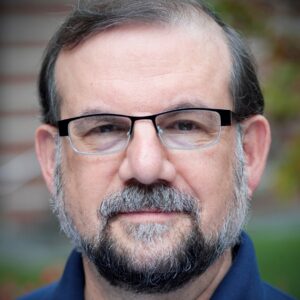
Sage Tales: Wisdom and Wonder From the Rabbis of the Talmud
Oct 27, 2011 By Burton L. Visotzky | Public Event audio
Dr. Burton Visotzky, Appleman Professor of Midrash and Interreligious Studies and director of the Louis Finkelstein Institute for Religious and Social Studies of JTS, presents a Library Book Talk on his new work Sage Tales: Wisdom and Wonder from the Rabbis of the Talmud.
Read More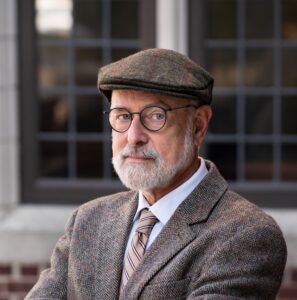
Hope in a Democratic Age
Oct 27, 2011 By Alan Mittleman | Public Event audio
Dr. Alan Mittleman, director of the Louis Finkelstein Institute for Religious and Social Studies and the Tikvah Institute for Jewish Thought, as well as professor of Jewish Philosophy at JTS, discusses his book Hope in a Democratic Age, in this Library book talk.
Read More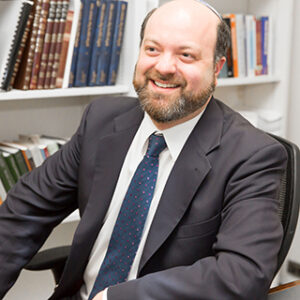
Jewish Mysticism and the Spiritual Life
Oct 27, 2011 By Eitan Fishbane | Public Event audio
Eitan Fishbane, assistant professor in the Department of Jewish Thought of The Jewish Theological Seminary, presents a Library book talk on Jewish Mysticism and the Spiritual Life: Classical Texts, Contemporary Reflections.
Read More
Judaism and Islam in America Today
Oct 25, 2011 By The Jewish Theological Seminary | Public Event video
Arnold M. Eisen, chancellor of JTS; Sherman Jackson, professor of Islam at the University of Michigan; and Serene Jones, president of Union Theological Seminary discuss Judaism and Islam in the United States today.
Read More
Reason Versus Faith
Oct 22, 2011 By Rabbi Abigail Treu | Commentary | Text Study | Bereishit
If the ancients worried to prove God’s existence, the challenge of Darwinian evolution posed an even greater threat: counterevidence to the biblical account of Creation. In the postmodern era, we Jews-in-the-center find ourselves oddly caught in the middle of a debate portrayed in the news media as between those who insist literally on the biblical account and those who reject it altogether.
Read More
Creation and Good Health
Oct 22, 2011 By Matthew Berkowitz | Commentary | Bereishit | Simhat Torah
With this week’s celebration of Simhat Torah and Shabbat Bereishit, we return to the very beginning of Torah as we read anew the narratives of Creation, the Garden of Eden, and the tragedy of Cain and Abel.
Read More
The Universal and Particular Nature of Creation
Oct 22, 2011 By Andrew Shugerman | Commentary | Bereishit
Shortly after Rosh Hashanah this year, Jewish extremists torched a mosque in an Arab-Israeli village in the Galilee, damaging the building and destroying its holy books. Two days later, a rabbinic statement condemning this desecration of a house of worship on Israeli soil garnered the signatures of more than a thousand rabbis of all denominations within 36 hours of the document’s publication. One of my former JTS classmates, however, explained with great disappointment why he did not add his name to this effort.
Read More
Between Hope and Doubt
Oct 15, 2011 By Andrew Shugerman | Commentary | Text Study | Sukkot
After the High Holy Days, I sometimes feel torn between feelings of hope and feelings of doubt regarding humanity’s prospects for improvement. At the very least, it helps me to know that our ancient Sages understood this emotional tension.
Read More
Work Transforming into Joy
Oct 14, 2011 By Rabbi Abigail Treu | Commentary | Sukkot
In my mind’s eye, I maintain quite an idealized image of Sukkot. I imagine a beautiful sukkah, resting on a lush green lawn, surrounded by trees not quite yet at the peak of autumn. I sit with my family and friends, leisurely enjoying a delicious meal (which appears magically, costs nothing, and requires no cleanup), under a radiant blue sky during the day and a glittering canopy of stars at night. The tension between ideal and real: exactly where we should be, four days after Yom Kippur.
Read More


SUBSCRIBE TO TORAH FROM JTS
Our regular commentaries and videos are a great way to stay intellectually and spiritually engaged with Jewish thought and wisdom.