
Search Results
Back to JTS Torah Online's Main page
Making Our Democracy Work
Oct 5, 2012
The 2012 Bernard G. Segal Memorial Lecture in Law and Ethics
Why does the American public accepts the Court’s decisions? What must the Court do to maintain the public’s trust? How do our courts make our democracy work? This and more is discussed in this lecture by Associate Justice Stephen G. Breyer of the United States Supreme Court.
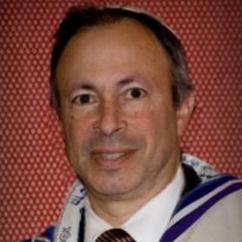
Nusah: A Key to the Meaning of Prayer
Oct 5, 2012 By Jack Chomsky | Commentary
Of all the traditional melodies in the liturgical year, I have long been impressed by the remarkable musical setting of the kaddish preceding the prayers for Geshem (rain) at Shemini Atzeret, near the conclusion of the fall festival, and Tal (dew) at the beginning of Pesah in the spring).
Read More
An Interreligious Dialogue on Tragedy
Oct 5, 2012 By The Jewish Theological Seminary | Public Event video
You or someone you know has suffered a tragedy; how would you proceed? Many people turn to their religion in these situations. Many religions have similar practices and beliefs when it comes to tragedy, and therefore, this program will explore the views different religions have on tragedy.
Read More
Jewish Responses to Tragedy
Oct 5, 2012 By Burton L. Visotzky | Public Event video
You or someone you know has suffered a tragedy; how would you proceed? Many people turn to their religion in these situations. Many religions have similar practices and beliefs when it comes to tragedies, and therefore, in commemoration of September 11th, 2001, this program will explore the Jewish view on tragedy.
Read More
Jewish Traditions on Healing
Oct 5, 2012 By Burton L. Visotzky | Public Event video
You or someone you know is ill; how would you proceed? Many people turn to their religion in these situations. Many religions have similar practices and beliefs when it comes to healing, and therefore, in commemoration of September 11th, 2001, this program will explore the Jewish view on healing.
Read More
Ushpizin in the Sukkah
Oct 5, 2012 By Rabbi Ayelet Cohen | Commentary | Sukkot
By Rabbi Ayelet Cohen
Immediately on the heels of the intense spiritual work of Rosh Hashanah and Yom Kippur, Sukkot challenges us to turn our lives inside out again, this time quite literally. The Talmud tells us that for the duration of Sukkot we must leave our permanent dwellings and reside in temporary dwellings (BT Sukkah 2b). By its very nature, the sukkah must feel temporary; we must experience the elements in a way that we do not when we are at home.
Read More
And the Gates Opened: Women in the Rabbinate
Oct 5, 2012 By The Jewish Theological Seminary | Documentary
“And the Gates Opened” investigates the legacy that women are creating for Jewish religious and lay leaders. This program explores the rich history behind the move to ordain women and the current status of female religious leaders.
Read More
Choosing Life: Ways of Jewish Healing
Oct 5, 2012 By The Jewish Theological Seminary | Documentary
How does Judaism respond to tragedy, and how can it help one with healing? This and more are discussed in the documentary, “Choosing Life: Ways of Jewish Healing”
Read More
Legacy of Our Ancestors
Oct 5, 2012 By The Jewish Theological Seminary | Documentary
Legacy of Our Ancestors: 350th Anniversary Celebration of Early Jewish America This program brings to light the story of the first wave of Jewish immigration that occurred between 1654 and 1820. “Legacy” features leading Jewish historians in the field- Jonathan Sarna, Hasia Diner and Eli Faber, among others – who bring to life this rich chapter in American history.
Read More
To God’s Ear: Music and Song of the Jewish Liturgy
Oct 5, 2012 By The Jewish Theological Seminary | Documentary
A rich tapestry of traditional liturgical prayer, contemporary lyrical renditions, and fascinating commentary is interwoven with colorful scenes, from a congregational choir practice to a vibrant children’s Shaharit service. This program offers an excellent introduction to liturgical prayer. Features JTS’s H.L.Miller Cantorial School. Produced in 2000. Co-produced with Diva Media. Nominated for a 2001 New York Emmy Award for Outstanding Religious Programming.
Read More
To Lead a Jewish Life: Education for Living Part 1
Oct 5, 2012 By The Jewish Theological Seminary | Documentary
This program investigates the mechanisms Judaism has used for generations to disseminate knowledge and forge a solid connection to one’s heritage. Featuring a Solomon Schechter day school, and Camp Ramah Darom in Georgia, plus commentary from Jewish educational leaders.
Read More
To Lead a Jewish Life: Education for Living Part 2
Oct 5, 2012 By The Jewish Theological Seminary | Documentary
The Sh’ma says, “Impress them [the Torah] upon your children” (Deuteronomy 6:7), but how has Judaism done that? This program investigates the mechanisms Judaism has used for generations to disseminate knowledge and forge a solid connection to one’s heritage. Featuring a Solomon Schechter day school, and Camp Ramah Darom in Georgia, plus commentary from Jewish educational leaders.
Read More
A Feminist Commentary on Massekhet Taanit
Oct 4, 2012 By Library of the Jewish Theological Seminary | Public Event audio
As part of The Library’s series of book talks, Dr. Tal Ilan delivers a lecture on A Feminist Commentary on Massekhet Taanit: How to Read Gender into a Commentary of the Mishnah and the Babylonian Talmud.
Read More
Uneasy Communion: Jews, Christians, and the Alterpieces of Medieval Spain
Oct 4, 2012 By Vivian B. Mann <em>z”l</em> | Public Event audio
Dr. Vivian Mann, director emerita of the Master’s Program in Jewish Art and Visual Culture, discusses Uneasy Communion: Jews, Christians, and the Alterpieces of Medieval Spain in this Library Book Talk.
Read More
The Philosophy of Hebrew Scripture
Oct 4, 2012 By Library of the Jewish Theological Seminary | Public Event audio
What if the Hebrew Bible wasn’t meant to be read as “revelation”? What if the authors of the Bible meant to present us with a book that is not about miracles or the afterlife-but about how to lead our lives in this world? In this Library Book Talk, Dr. Yoram Hazony addresses these questions while discussing his latest book, The Philosophy of Hebrew Scripture.
Read More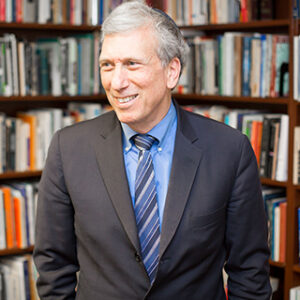
Community
Oct 4, 2012 By Arnold M. Eisen
Community is very important in Judaism, but how does it affect Conservative Judaism? What can a strong community do to a synagogue, if instead of everyone just coming to pray, they also come in to study? How can a strong community improve on what Conservative Judaism already has?
Read More
Peoplehood
Oct 4, 2012 By Arnold M. Eisen
Judaism, especially Conservative Judaism sees the need for Jews to be a people, different from the rest of the community in which they live. However, Conservative Judaism is also inherently pluralistic, in that Conservative Jews can feel comfortable in a variety of services, whether they are Orthodox or Reform. What other ways can peoplehood benefit Judaism?
Read More
Continuing the Conversation
Oct 4, 2012 By Arnold M. Eisen
Chancelor Eisen has previously recorded three essays relating to Conservative Judaism. One on Covenant, one on Community, and one on Peoplehood. All of these essays received many comments, and such a debate is encouraged. Therefore, Chancellor Eisen now responds to a selection of the comments he received.
Read More



SUBSCRIBE TO TORAH FROM JTS
Our regular commentaries and videos are a great way to stay intellectually and spiritually engaged with Jewish thought and wisdom.