

Search Results
Back to JTS Torah Online's Main page
Taking Two to Tango
Jul 9, 2013 By Matthew Berkowitz | Commentary | Devarim
This coming Shabbat, we begin the fifth and final book of Torah as we read Parashat Devarim, the opening of the book of Deuteronomy.
Read More
Tisha Be’av
Jul 8, 2013 By Samuel Barth | Commentary | Tishah Be'av
These words will reach you during the nine days that lead to the fast on Tish’ah Be’Av, the day we mourn the destruction of the first and second Temples and many other tragedies of Jewish history. It is traditionally a complete fast—from sunset until sunset—with Yom Kippur the only other such fast day in the Jewish calendar. There is a Hasidic teaching that no halakhah concerning fasting on these days is needed, for “on the black fast of Tish’ah Be’Av, who could eat, and on the white fast of Yom Kippur, who needs to eat?”
Read More
To Listen and to Discern
Jul 3, 2013 By Matthew Berkowitz | Commentary | Masei | Mattot
Parashat Mattot,the first of the two parashiyot this week, opens and closes with the idea of meaningful and thoughtful communication.
Read More
“My Soul Thirsts for You”
Jul 2, 2013 By Samuel Barth | Commentary
“My soul thirsts for You; my flesh longs for You” (Ps. 63:2).
Read More
“They Said”/“They Said”
Jul 2, 2013 By Walter Herzberg | Commentary | Masei | Mattot
In this week’s parashah, we are told that the children of Reuben and Gad “had a very great multitude of cattle” (verse 1) and the land of Gilead on the eastern side of the Jordan was an excellent “place for cattle.” They, therefore, hoped that Moses would permit them to stay on the eastern side of the Jordan and not cross over to Canaan/Israel proper when the time would arrive to enter the Land.
Read More
Aging in America: Second Career/Post Career
Jun 25, 2013 By The Jewish Theological Seminary | Public Event video
As more baby boomers approach traditional retirement age, a seismic shift is taking place in our culture. The change is manifest in the graying of the workforce and in the current political debates on the future of Social Security and Medicare.
Read More
Turn Aside (Haseir) Evil Forces
Jun 25, 2013 By Samuel Barth | Commentary
Last week, we began to explore Hashkiveinu, the blessing unique to the evening service that asks for peace through the night and renewed life in the morning (Siddur Sim Shalom for Weekdays, 140).
Read More
Comfort Food
Jun 25, 2013 By Abigail Treu | Commentary | Pinehas
When we go to help someone—in times of mourning, illness, or just a basic potluck pitch-in—do we give them what we need to give, or what they need of us? How are we to know, if we are not explicitly told, what will please, comfort, or help someone else the most? And the religious corollary to this line of thinking: do our answers change when it comes to bringing an offering to please or comfort not our friends, but God?
Read More
Zealotry, Good and Bad
Jun 25, 2013 By Matthew Berkowitz | Commentary | Pinehas
At the end of Parashat Balak, we are introduced to the extreme character of Pinehas.
Read More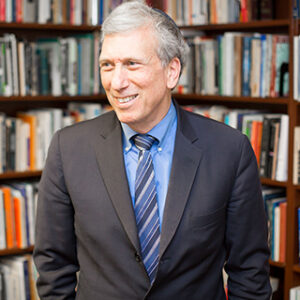
A People Dwelling Apart
Jun 19, 2013 By Arnold M. Eisen | Commentary | Balak
Balak’s mix of poetry, narrative, and prophecy raises questions about Israel’s status as “a people dwelling apart” that are still with us today—questions that, in my view, make Balak one of the most troubling portions in the entire Torah.
Read More
“To Life. . .to Peace”—Answers to the Terrors of the Night
Jun 19, 2013 By Samuel Barth | Commentary
Anomaly invites interpretation. There is a clear pattern to the texts surrounding the Shema’; a pattern that is consistent in the morning and the evening. Two blessings precede the biblical Shema’, one concerned with the natural cycles of light and darkness, and the second exploring the Torah as vehicle for divine love. Following the Shema’, the theme turns to redemption—recalling slavery and liberation, ending with praise to God, “Ga’al Yisrael” (Redeemer of Israel). In the morning we move directly from the blessing of redemption to begin our core prayer, the ‘Amidah.
Read More
The Strength of the Jewish People
Jun 19, 2013 By Matthew Berkowitz | Commentary | Balak
The opening of this week’s parashah centers around the desire of Balak, the king of Moav, to curse the Israelites as they make their way toward the Land of Israel.
Read More
Evening . . . Mixtures and Beauty
Jun 12, 2013 By Samuel Barth | Commentary
The rhythm of light and darkness is deeply embedded in our humanity. Even if we do not know the precise time (in hours and minutes), we are conscious of the cycle of day and night. The onset of night, as evening falls, is often associated with some sense of foreboding, and the dawning of each new day holds hope and promise. Light is associated in many sources with good, with hope, even with messianic redemption: “a sun of righteousness . . . and healing” (Malachi 4:2). Our liturgy speaks of the transition between day and night, and uses the phrase “uma’avir yom umeivi laila” (God causes the transition from day to night). Using a verb that suggests an unfolding process, rather than an abrupt disjunction, reflects the natural flow of dusk, sunset, and night.
Read More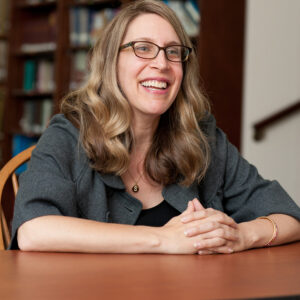
Miriam’s Legacy of Leadership
Jun 12, 2013 By Shira D. Epstein | Commentary | Hukkat
If you were asked to rapidly rattle off the top three iconic biblical leaders, which would you name? There is a high probability that Moses would appear on the list or, possibly, Aaron or Abraham. Even if valued, Miriam most likely would not make the cut.
Read More
No Single Solution
Jun 12, 2013 By Matthew Berkowitz | Commentary | Hukkat
At its essence, Parashat Hukkat brims with questions and mystery.
Read More
Subversive Prayer . . . Necessary Trouble
Jun 5, 2013 By Samuel Barth | Commentary
Read More“Prayer is meaningless unless it is subversive, unless it seeks to overthrow and to ruin the pyramids of callousness, hatred, opportunism, falsehood. The liturgical movement must become a revolutionary movement, seeking to overthrow the forces that continue to destroy the promise, the hope, and the vision.”[1]
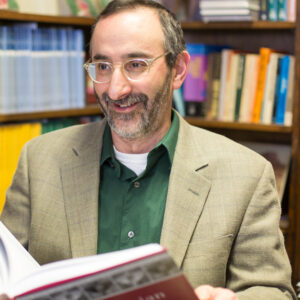
Where Does Holiness Come From?
Jun 5, 2013 By Benjamin D. Sommer | Commentary | Korah
Parashat Korah can be challenging for a modern Jew. There is a good guy in this parashah—it’s Moses—and there is a bad guy—Korah. Modern readers, however, often find themselves sympathizing with the bad guy.
Read More
Thoughtfulness and Lovingkindness in the Face of Violence
Jun 5, 2013 By Matthew Berkowitz | Commentary | Korah
This week’s Torah portion, Parashat Korah, is notorious for the infamous uprising against Moses.
Read More
“Get in Trouble.” Commencement Address by US Congressman John R. Lewis
May 29, 2013
The inspirational commencement address was given by US Congressman John R. Lewis at the 119th Commencement Exercises of The Jewish Theological Seminary
Read More
Harshness—Us and Them
May 29, 2013 By Samuel Barth | Commentary
In the preliminary service (Siddur Sim Shalom: A Prayerbook for Shabbat, 66), there is a short paragraph remarkably written in the first person singular—using “I” rather than “we.” In the Talmud (BT Berakhot 16b), there are a number of personal prayers of the Sages, the prayers that they would say at the end of the ‘Amidah. This text is attributed to Rabbi Yehudah HaNasi and is inserted at this point in the service because it is similar in theme to the previous paragraph. There is a telling, and sometimes uncomfortable, phrase that begins very innocently, “tatzileini hayom . . . me’azei panim” (save me this day from those with “hard faces” [from the arrogant]). This is a reasonable hope and a fine, if unremarkable, prayer; it would be good to pass a day (or even longer) without encountering others who are arrogant. But that is not the end of the sentence. The prayer of R’ Yehudah continues, “ume’azut panim” (and from my own “hard face” [my own arrogance]).
Read More


SUBSCRIBE TO TORAH FROM JTS
Our regular commentaries and videos are a great way to stay intellectually and spiritually engaged with Jewish thought and wisdom.