

Search Results
Back to JTS Torah Online's Main page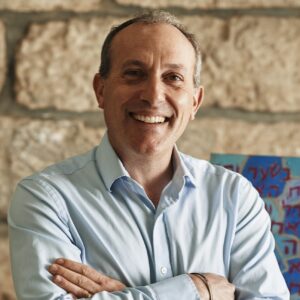
Finding Direction to Move Forward with God
May 23, 2014 By Matthew Berkowitz | Commentary | Bemidbar
This Shabbat opens the fourth book of Torah known as Sefer Bemidbar, the book of Numbers.
Read More
MK Dr. Ruth Calderon’s JTS Commencement Address 2014
May 22, 2014
MK Dr. Ruth Calderon gives the 2014 JTS Commencement Address.
Read More

What The Rabbis Of The Talmud Learned From Naomi And Ruth
May 21, 2014 By Judith Hauptman | Short Video | Shavuot
Read More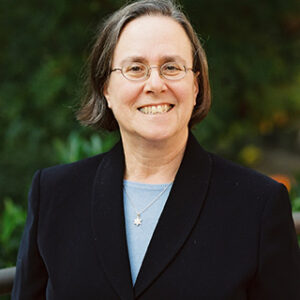
A Deer In The Sheepfold: A Conversion Tale
May 21, 2014 By Anne Lapidus Lerner | Short Video | Shavuot
Read More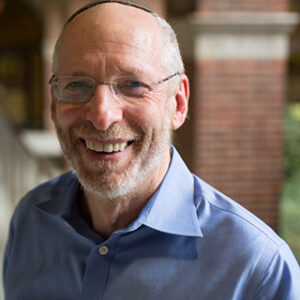
Who Are You? A Question For All Of Us
May 21, 2014 By Eliezer B. Diamond z”l | Short Video | Shavuot
Read More
Mah Nishtanah . . . A Seder for Yom Ha’atzma’ut
May 16, 2014 By Samuel Barth | Commentary | Yom Hazikaron-Yom Ha'atzma'ut
In recent weeks, Medinat Israel (the State of Israel) was celebrated by citizens, residents, and the worldwide Jewish community with an array of observances for Yom Ha’atzma’ut (Israel Independence Day). In synagogues of the Conservative/Masorti Movement, morning minyan included the Hallel prayer and a special Torah reading, affirming the understanding that the establishment of Israel is not merely an item in the political history of the mid-20th century, but a vital step in the spiritual story of our people and, perhaps, the world. The “Prayer for the State of Israel,” included in the Shabbat morning service in almost all synagogues, speaks of Israel as “reishit tzemichat ge’ulateinu” (the beginning of the flowering of our redemption).“Redemption,” here, must be understood as the Messianic Era of universal peace and understanding.
Read More
Walking Together with God
May 16, 2014 By Daniel Nevins | Commentary | Behukkotai
I saw a strange thing on my walk to minyan the other morning.
Read More
Between Heaven and Earth
May 16, 2014 By Matthew Berkowitz | Commentary | Behukkotai
Fertility of humans and of the land is the essence of divine blessing.
Read More
Jews Around the World: India and Its Jewish Community
May 14, 2014 By Library of the Jewish Theological Seminary | Public Event audio
Presented by Peter A. Geffen, Founder and Executive Director, KIVUNIM and Graduates of KIVUNIM.
Read More
Eisen on Covenant at the Rabbinical Assembly
May 12, 2014 By Arnold M. Eisen | Public Event video | Short Video
Read More
Peacemaking and the Quest for Holiness
May 9, 2014 By Arnold M. Eisen | Commentary | Behar
The book of Leviticus could not be clearer on the point that extraordinary action is called for as part of the Israelite’s calling to be “holy unto the Lord your God.”
Read More
Shemitah, Freedom, and Covenant in the Face of Assimilation
May 9, 2014 By Matthew Berkowitz | Commentary | Behar
Parashat Behar opens with the commandment to observe the sabbatical cycle (for six years, one may plant crops and work the land and then, in the seventh year, the land must rest—what is known in halakhic terms as shenat shemitah, “the year of release”); shemitah or “release” is observed today in the Land of Israel.
Read More
Slivers of Memory (Yom Ha-sho’ah V’-ha-gevurah)
May 2, 2014 By Samuel Barth | Commentary | Yom Hashoah
Several decades ago, many ceremonies commemorating the Shoah attempted to tell the entirety of the story, with numbers that defied comprehension and broad-sweeping trends of history that submerged the experience of individuals in the story of a world run amok. In more recent years, I have observed that the experience and testimonies of individuals have become more prominent, perhaps serving as holographic slivers that represent the wider context. As survivors of the Holocaust are fewer in number each year, we turn to the writings, art, songs, and recordings born out of those years.
Read More
Call Them by Their Names
May 2, 2014 By Joel Alter | Commentary | Emor
When I’m at a hotel over Shabbat, I have a set Friday afternoon ritual.
Read More
Pride, Power, and Corruption in the Name of God
May 2, 2014 By Matthew Berkowitz | Commentary | Emor
In the wake of religious fundamentalism that plagues our world today, why aren’t religious leaders vocal in their opposition to bloodshed and corruption in the name of God?
Read More
Yom Hasho’ah: Documents From the JTS Library and Songs by Johanna Spector
Apr 28, 2014 By Library of the Jewish Theological Seminary | Public Event audio | Yom Hashoah
Dr. Johanna Spector (1915–2008), who taught Ethnomusicology at JTS, was a Holocaust survivor who documented Jewish music from around the world. This special Holocaust Memorial Day commemoration will highlight her life and work, as well as The JTS Library’s Johanna Spector Archives and Holocaust-related materials.
Read More
Shema’ (Part 1)—What We Know and What We Don’t
Apr 25, 2014 By Samuel Barth | Commentary
Ask almost any group of Jews to identify the most important Jewish “prayer” of all, and at the top of the list will almost certainly be the Shema’. Technically, it is not a prayer, for it is not addressed to God, but to the community of Israel. But that is a technical quibble, so (for now) let it pass. Traditionally, we say the Shema’ twice each day within the formal liturgy, and also just before going to sleep.
Read More


SUBSCRIBE TO TORAH FROM JTS
Our regular commentaries and videos are a great way to stay intellectually and spiritually engaged with Jewish thought and wisdom.