

Search Results
Back to JTS Torah Online's Main page
Politics as a Jewish Vocation
May 18, 2018 By Arnold M. Eisen | Commentary | Bemidbar
The book of Bemidbar, which aims to help its readers navigate the chaotic wilderness in which the Children of Israel have always lived and wandered, deals more directly than any other book of the Torah with what the great sociologist Max Weber called “Politics as a Vocation.”
Read More
The Theology of Meteorology
May 11, 2018 By Daniel Nevins | Commentary | Behar | Behukkotai
Imagine if your weather app displayed not images of sun and clouds, but icons of good and evil, like this: ☺ ☹. Each city might have a virtue index—with the weather forecast tracking not the jet stream but morality, indicated by a friendly or fierce face. City X has been charitable, so they can expect light rains followed by sunny skies, but City Y has seen an uptick in violent crime, so it is in for a drought or hurricane. Such a system sounds absurd, and yet it is basically what the Torah presents as a theology of weather.
Read More
A History of Holiness
May 11, 2018 By Alan Mittleman | Commentary
The term “holy” (kodesh as a noun or kadosh as an adjective) appears frequently in the Bible. The more abstract idea of holiness (kedushah) appears in rabbinic literature. We use holiness-language in everyday speech in English, as well as words such as “sacred.” But do we know what we mean when we use these terms?
Read More
Who Belongs?
May 4, 2018 By Rachel Rosenthal | Commentary | Emor
Who is the Other? This question, which is asked more and more often in our world, is not often easy to answer. Can one choose to be part of a community? Are people who were once outsiders ever fully welcomed as insiders? In Judaism, these questions are especially important. While Judaism has categories to define and even praise non-Jews, opting into the Jewish community is not simple. However, the Talmud tells us that once someone converts to Judaism, we are supposed to treat them as any other Jew. Unfortunately, this is a mission in which many communities fail.
Read More
Sustaining the Popularity of Pirkei Avot
May 4, 2018 By JTS Alumni | Commentary
By Rabbi Martin S. Cohen (RS ’78, GS ’82)
Given its age and the many places it diverges from modern sensitivities, it’s amazing just how popular Pirkei Avot has remained—and, indeed, it would be more than fair to say that no part of our rabbinic heritage has launched more sermons or divrei torah.
Read More
Overcoming Sleep
May 3, 2018 By Jeremy Tabick | Short Video | Shavuot
Why should we stay up all night on Shavuot?
featuring Leora Perkins (RS ’19)
Read More
How to Be Holy
Apr 27, 2018 By Raymond Scheindlin | Commentary | Aharei Mot | Kedoshim
This week, we read two parashiyot from Leviticus: Aharei Mot and Kedoshim. Taken together, they cover five clearly defined topics. Aharei Mot deals with the rituals of the high priest on Yom Kippur; regulations governing the slaughter of animals for food and sacrifice; and the prohibition of various sexual relations, especially incest. This last subject is resumed at the end of Kedoshim. Between the two discussions of sexual relations is the famous Chapter 19, which opens Kedoshim.
Read More
Waking Lions
Apr 24, 2018 By Library of the Jewish Theological Seminary | Public Event audio
Important next-generation Israeli author Ayelet Gundar-Goshen’s gripping novel narrates the aftermath of an Israeli neurosurgeon’s accidental killing of an Eritrean migrant. Newly translated from Hebrew, this tightly crafted story is as timely as it is riveting.
Read More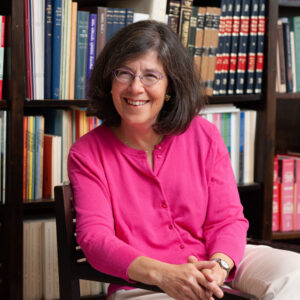
It Passes and We Stay
Apr 20, 2018 By Jan Uhrbach | Commentary | Metzora | Tazria
A Light exists in Spring
Not present on the Year
At any other period—
When March is scarcely here
The double parashiyot of Tazria and Metzora are devoted in their entireties to the Biblical notion of tumah, usually translated as “impurity.” In them, we learn three of the major sources of tumah: childbirth (Lev. 12); a condition known as tzara’at, which can manifest on skin, clothing, or the walls of one’s house (Lev. 13–14); and bodily secretions (Lev. 15). The two other primary sources of tumah are touching or carrying the carcasses of certain animals (Lev. 11) and contact with a human corpse (Num. 19).
Read More
A Radical Rebbe
Apr 20, 2018 By JTS Alumni | Commentary
By Dr. Morris M. Faierstein (GS ’75)
Rabbi Menahem Mendel of Kotsk (1787–1859) is one of the most interesting and challenging figures of Hasidism in the nineteenth century. His search for truth and battles against falsehood and spiritual compromise are the subject of many legends. Though he was irascible and demanding, he inspired the loyalty of disciples who went on to become the dominant leaders of Hasidism in Poland from the middle of the nineteenth century until the destruction of Polish Jewry in the Holocaust.
Read More
Is it Time to Rethink the Israel-Diaspora Relationship?
Apr 19, 2018 By Arnold M. Eisen | Public Event video | Video Lecture | Yom Hazikaron-Yom Ha'atzma'ut
A provocative discussion with Chancellor Arnold M. Eisen and Dr. Hillel Ben Sasson about how Israel and Diaspora Jewry influence each other—and how we can develop a new vision for working together.
Read More

Art, Artists, and Activism
Apr 16, 2018 By The Jewish Theological Seminary | Public Event video
Mandy Patinkin and Kathryn Grody in conversation with Ruth W. Messinger: What are the most responsible and effective ways for actors, singers, directors, and other artists to use the power of their public platforms on behalf of social causes?
Read More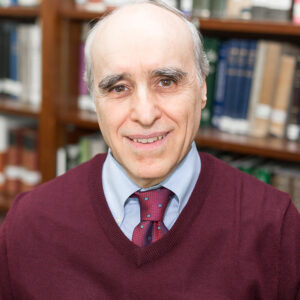
Six Takes on a Leader’s Attributes
Apr 13, 2018 By Walter Herzberg | Commentary | Shemini
In chapter eight of Leviticus, Moses is essentially serving as temporary kohen gadol, high priest, during the dedication of the Mishkan, the Tabernacle. On the eighth day, according to Rashi, Aaron and his sons are officially inaugurated into the priesthood. Moses transfers the position to his brother Aaron, who along with his descendants will officially serve as priests and high priest.
Read More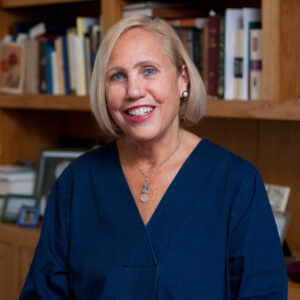
What Can Jewish Music Do?
Apr 13, 2018 By Nancy Abramson | Commentary
Read MoreMusic allows us to navigate through the loudness, to find the silence. Music organizes the loud sounds so that we can recognize the power of the quiet, acting as an intermediary between God’s loud, external “persona” and the quiet, holy, inner being where truth is found. Music hangs in the subtle balance between sound and silence. It is music that tunes up our beings, that tunes up the entire world, to allow for an interchange between the soft, inner and the loud, outer manifestations of truth.
Supreme Court Cases and Jewish Values
Apr 10, 2018 By The Jewish Theological Seminary | Public Event video
Seth P. Waxman, former Solicitor General of the United States and leading Supreme Court advocate, discusses three high-profile, momentous cases are currently before the US Supreme Court.
Read More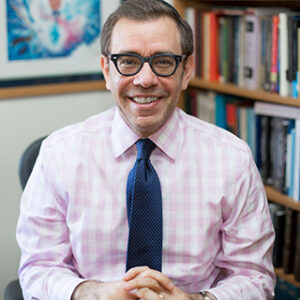
Freedom through Torah
Apr 5, 2018 By David Hoffman | Commentary | Pesah
“The tablets were God’s work, and the writing was God’s writing, incised upon the tablets” (Exod. 32:17). Do not read, “incised,” (harut), rather [read] “freedom” (herut)—for no person is truly free except the one who labors in Torah. (Mishnah Avot 6:2)
Freedom in biblical and rabbinic Judaism is a highly complex idea. Consider the mishnah above. At first glance one might think the law, the Ten Commandments carved on the two tablets, would be limiting, constraining human freedom. Counterintuitively, the Sages argue that true freedom only comes from an engagement with Torah! How might “laboring in Torah” and living a life according to the demands of the Torah induce freedom?
Read More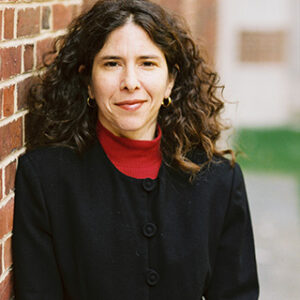
The Pogrom that Endured
Apr 5, 2018 By Barbara Mann | Commentary
The sun shone, the blossom bloomed, and the slaughterer slaughtered.
The image of the slaughterer in springtime is an indelible part of the DNA of twentieth-century Jewish experience, juxtaposing as it does the casual brutality of history with the most mundane of natural events. Its source is Bialik’s epic poem about the Kishinev pogrom of 1903. Despite the many words written about the events of that April—personal testimony, journalistic reportage, memorial texts, poetry, and even a Broadway play (The Chosen People by Evgenii Chiriko)—the warp and woof of this particular incident simply won’t let us alone.
Read More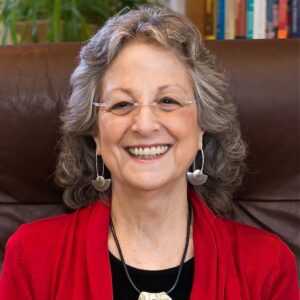
The Challenges of Change
Mar 30, 2018 By Mona Fishbane | Commentary | Pesah
I love Pesah, the holiday of intergenerational narrative. When we used to host the seder, our parents, siblings, and young children would join us at the table as we passed on and renewed the tradition each year. My husband’s puppet show was a favorite—he would spin a story from his vivid imagination—including, in one memorable year, how the bad guys stuffed Matzah into the Omphalos, the center of the world, causing havoc and chaos, and how Moshe had to get it unstuck and open the pathways. Sesame Street meets Kabbalah.
Read More
Jews Behaving Badly
Mar 30, 2018 By JTS Alumni | Commentary
By Dr. Edward Portnoy (GS ’08)
As a graduate student, I logged many, many hours in the old JTS Library (which has a special place in my heart) reading the seminal texts of Jewish life and history. I hunkered down next to my most beloved Jewish texts, Yiddish periodicals. While Yiddish newspapers and magazines may not be considered among traditional Jewish texts, they comprise an incredibly rich resource for the study of Jewish life from the 1860s through the 1930s.
Read More


SUBSCRIBE TO TORAH FROM JTS
Our regular commentaries and videos are a great way to stay intellectually and spiritually engaged with Jewish thought and wisdom.