

Search Results
Back to JTS Torah Online's Main page
We Refuse to Be Enemies
Oct 26, 2021 By Library of the Jewish Theological Seminary | Public Event video
Authors Sabeeha Rehman and Walter Ruby talk about their book, We Refuse to Be Enemies, a manifesto that offers experience and guidance on the rise of intolerance, bigotry, and white nationalism in the United States.
Read More
The Jewish Middle Class in an Age of Social Justice
Oct 25, 2021 By Nancy Sinkoff | Public Event video | Video Lecture
his session will explore the historian Lucy S. Dawidowicz’s challenging essay, “The Business of American Jews: Notes on a Work in Progress” (1992), which called for a reassessment of Jewish economic social mobility as a positive value in Jewish life.
Read More
Even God Makes Time for Leisure: Rabbinic Narratives About God’s Work, Play, and Rest Schedule
Oct 11, 2021 By Sarit Kattan Gribetz | Public Event video | Video Lecture
Genesis 2:2-3 announces that, after working hard to create the world and humanity over the course of six days, God took a day off to celebrate the Sabbath. Other passages in the Bible build upon God’s day of rest to mandate that all created beings rest, and that heads of households ensure that everyone under their control be allowed to rest on the seventh day. Divine time, we learn, alternates between periods of creative work and deliberate rest. But what does God’s work entail, how does God manage divine time, does God make time for leisure, and does God have a schedule?
Read More
Six Days Shall You Labor: Shabbat and the Meaning of Work
Oct 4, 2021 By David C. Kraemer | Public Event video | Video Lecture
Shabbat, a day on which “work” is forbidden, also offers a commentary on work—on its place in our lives, its importance, and its limitations. Notably, the rabbinic Sabbath—that is, the “traditional” Sabbath—offers a perspective that differs from that of the Torah, both original and unique. Join Dr. David Kraemer to explore biblical and rabbinic views of the Sabbath as commentaries on the significance of work.
Read More
Traveling to Babylon—For Good
Aug 23, 2021 By David C. Kraemer | Public Event video | Video Lecture
The first time Jews traveled to Babylon, it was part of a great exile. But when the rabbis returned to Babylon many centuries later, joining a now “native” Jewish community there, they found themselves very much at home. Some did indeed claim Babylon as home, while others traveled back and forth between Babylon and Palestine as rabbinic messengers to ensure that the teachings of each were available to the other. Two confident centers of Jewish life developed, not unlike modern New York and Jerusalem. In this session, Dr. David Kraemer explores the legacy of those rabbis and how their work continues to impact Jewish life today.
Read More
A Journey Without End—
The Explusion From Spain and the Age of Perpetual Jewish Migration
Aug 16, 2021 By Jonathan Ray | Public Event video | Video Lecture
In the summer of 1492, the Jews of Spain were expelled from their homeland by royal decree. The dispossessed embarked on a series of journeys in search of new homelands – a process that would last generations and transform Sephardic society and culture.
Read More
Work-Life Balance in Ancient Times:
Why the Rabbis Left Their Homes to Study Torah
Aug 9, 2021 By Rachel Rosenthal | Public Event video | Video Lecture
We often think of questions about how to balance work and family as modern ones. However, a series of stories in Ketubot show that people have been struggling with these issues for hundreds of years. In these stories, the rabbis leave home to learn Torah, and often return to domestic chaos. Dr. Rachel Rosenthal explores these stories to better understand how the rabbis understood their obligations to Torah, to themselves, and to their families.
Read More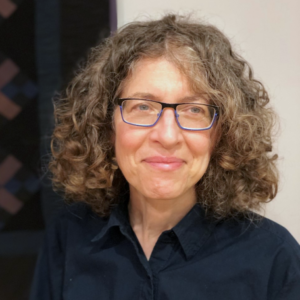
The Early Modern Travel Pass:
Controlling the Plague and Jewish Mobility in 16th Century Tuscany
Aug 2, 2021 By Stefanie B. Siegmund | Public Event video | Video Lecture
In the wake of the Black Death, governments in the Italian states began to enlarge their departments of health and sanitation in an effort to control the plague. Over time they experimented by banning travel to and from suspect regions and quarantining merchants’ goods. Italian Jews, heavily invested in local and regional commerce, were among the merchants affected, attracting the attention of the authorities.
Read More
The Spectacular Story Of S. Ansky’s
The Dybbuk and How it Transformed American Jewish Theatre
Jul 26, 2021 By Edna Nahshon | Public Event video | Video Lecture
Since its premiere in 1920 The Dybbuk has been revived countless times in both Jewish and non-Jewish languages and inspired a substantial corpus of works in various media: it was famously filmed in Yiddish 1936 in Warsaw, and to this day has fired the imagination of artists and writers around the globe. Join Dr. Edna Nahshon to discuss this unique play and its various interpretations, focusing on its two foundational productions and the 1936 Polish Yiddish film.
Read More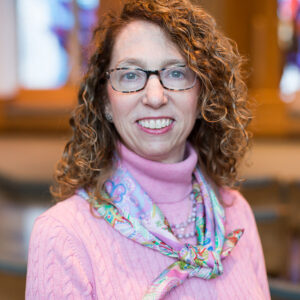
Finding Hijar: A Scholar’s Quest to Uncover the History of Her Jewish Community Through the Journey of Its Books
Jul 19, 2021 By Marjorie Lehman | Public Event video | Video Lecture
With Dr. Marjorie Lehman and Dr. Lucia Conte Aguilar of Universitat Pompeu Fabra
Read More
“The Catastrophist”: A Theatre Talkback
Jul 15, 2021 By The Jewish Theological Seminary | Public Event video
Watch the recording of our conversation with the team behind the acclaimed virtual drama “The Catastrophist,” a stirring meditation on scientific discovery, Judaism, family, life, and loss.
Read More
Flight, Return, and Emigration:
The Wanderings of a Yiddish Writer During and After the Holocaust
Jul 12, 2021 By David Fishman | Public Event video | Video Lecture
The Yiddish poet Chaim Grade fled his native city of Vilna, known to Jews as “the Jerusalem of Lithuania”, in late June 1941, as the Germans invaded the city. He spent the next four years as a refugee in the Soviet Union, homeless and malnourished. When Grade returned to Vilna in 1945, he found the city in ruins – and learned from survivors of the Vilna ghetto that his wife, mother, friends and colleagues had been murdered by the Nazis. We will follow his journey of exile and redemption through selections from his works.
Read More
Backstage Pass: Ben, Jonah, and Henry Platt in Conversation with Abigail Pogrebin
Jun 29, 2021 By The Jewish Theological Seminary | Public Event video
Watch the recording of our conversation with Ben, Jonah, and Henry Platt as they discuss their professional achievements and aspirations as well as how their Jewish experiences and involvements have influenced their careers. The annual Henry N. and Selma S. Rapaport Memorial Lecture.
Read More
Judah Halevi: Poet and Pilgrim
Jun 28, 2021 By Raymond Scheindlin | Public Event video | Video Lecture
In the summer of 1141, Judah Halevi, a distinguished doctor, poet, and religious thinker sailed from his homeland, Spain, for the Holy Land, leaving behind his family, his medical practice, and his position as a distinguished leader of the Jewish community. Although little is known of his life before the pilgrimage, we can trace his journey in detail thanks to letters preserved in the Cairo Geniza. More importantly, we can follow Halevi’s inner religious journey through the stirring poems that he composed in anticipation of and during the voyage. In this session with Dr. Raymond Scheindlin, we will touch on both the external and internal journeys by drawing on the letters and the poems, all in translations by Dr. Scheindlin.
Read More
Preparing for the Final Journey:
The Tahara Ritual and its Significance
Jun 21, 2021 By Eliezer B. Diamond z”l | Public Event video | Video Lecture
The period between death and burial is understood in Jewish tradition as a moment of transition in which the deceased is suspended between this world and the next. Join Rabbi Eliezer Diamond to study the ritual known as Taharah, which prepares the body of the deceased for burial. It will show us that Jewish tradition assumes the continued existence of our individual identities even after death. The Taharah ritual, through word and action, radically transforms our understanding of the body of the deceased as we prepare it for the journey to the next world.
Read More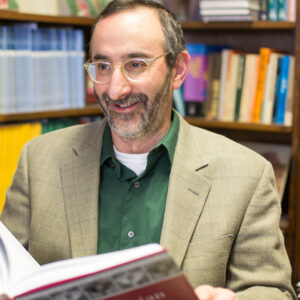
Home and Exile, Center and Periphery: Ambivalent Journeys in the Torah
Jun 14, 2021 By Benjamin D. Sommer | Public Event video | Video Lecture
The theme of the journey—to home, and from home—plays a prominent role in the Torah. But repeatedly, these stories force us to wonder what is home and what is exile. Join Dr. Benjamin Sommer to read narratives from Genesis and Exodus that present a tangled-up view of center and periphery. This persistent ambivalence about the nature of a journey carries weighty implications for biblical understandings of God as nearby but hard to grasp, and about authority and autonomy in religious Judaism.
Read More
Jewish Bible Translations: Personalities, Passions, Politics, Progress
Jun 9, 2021 By Library of the Jewish Theological Seminary | Public Event video
Author Leonard J. Greenspoon discussed his book, Jewish Bible Translations: Personalities, Passions, Politics, Progress, in which he highlights distinctive features of Jewish Bible translations and offers new insights regarding their shared characteristics and their limitations.
Read More
“If I forget Thee, O Jerusalem”: The Idea of the Retun to Zion in Jewish History
Jun 7, 2021 By Shuly Rubin Schwartz | Public Event video | Video Lecture
Chancellor Shuly Rubin Schwartz explores the implications of living in a state of longing, how Jews attempted to reconcile the dream of return with the reality of Jewish exile, and how this dream was adapted and transformed with the emergence of modern Zionism and a thriving Jewish diaspora.
Read More
These are the Developments of the Human
May 26, 2021 By Library of the Jewish Theological Seminary | Public Event video
Ethan Daniel Davidson discussed his book, These are the Developments of the Human, a compilation of wisdom and insights that he captured over years of various study partnerships of Jewish text with rabbis and other learners from across the world.
Read More
Crushing the Red Flowers
May 13, 2021 By Library of the Jewish Theological Seminary | Public Event video
Author Jennifer Voigt Kaplan discussed her book, Crushing the Red Flowers, which tells the story of how two ordinary boys cope under the extraordinary circumstances of Kristallnacht.
Read More


SUBSCRIBE TO TORAH FROM JTS
Our regular commentaries and videos are a great way to stay intellectually and spiritually engaged with Jewish thought and wisdom.