Images from the 5786 Reader
Posted on
These images were selected from The Library of JTS by Rabbi Marcus Mordecai Schwartz, Henry R. And Miriam Ripps Schnitzer Librarian for Special Collections of the JTS Library.
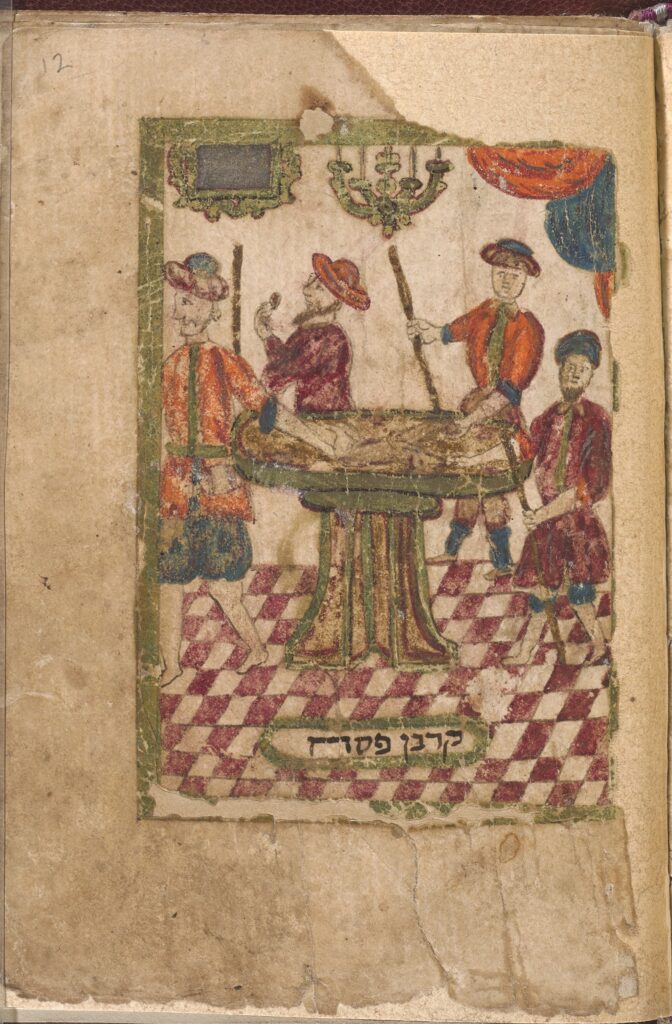
MS 8236 (Mahzor Korfu, 1709) includes a miniature labeled “Korban Pesah.” Four figures stand around a table bearing a roasted lamb. The scene is set indoors, with tiled floor, chandelier, and contemporary dress. The image does not attempt historical reconstruction; it places the sacrifice in the present tense of ritual memory.
Rabbinic literature distinguishes between Pesah Mitzrayim—the first Passover in Egypt, marked by blood on the doorposts and haste—and Pesah Dorot, the Passover observed in later generations in Jerusalem (Mishnah Pesahim 9). This miniature collapses that distinction. It recalls the original act, yet frames it as an enduring obligation. The sacrifice belongs to Egypt in origin, but to every generation in command.
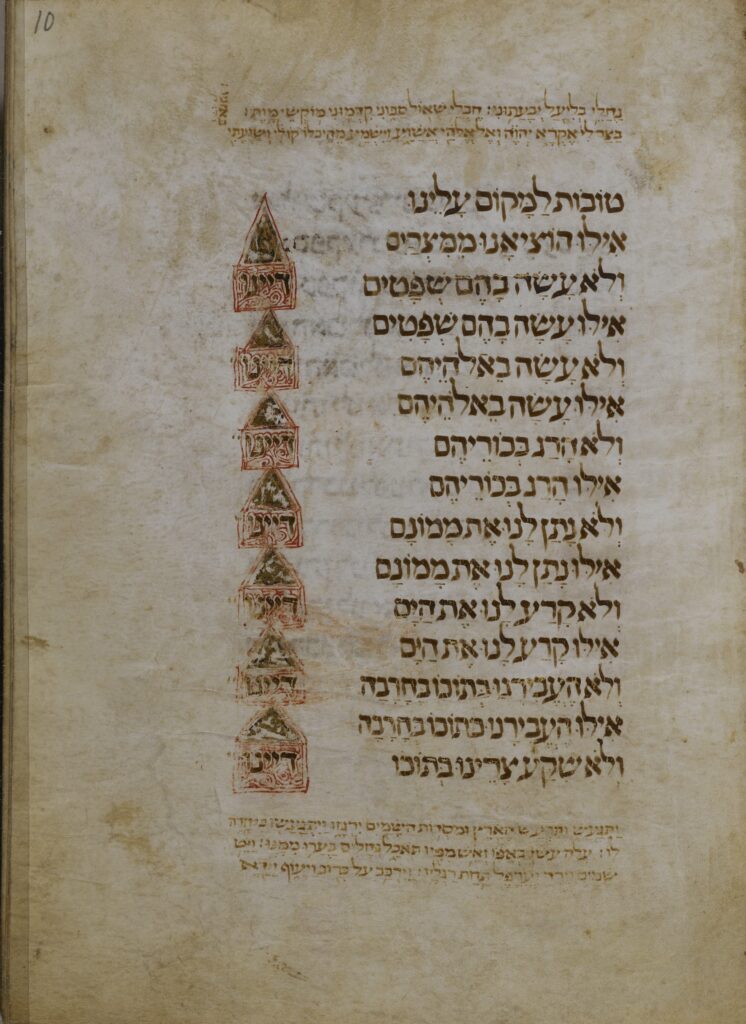
MS 4366 (the Schloss–London Siddur), a 14th-century Sephardic manuscript from Spain, sets Dayenu in a narrow vertical column. Each clause אילו. . .ולא . . . דיינוstands on its own line. The eye climbs the page as the voice moves through the litany. The design is not incidental. Iberian manuscripts often list refrains in this stepped form so that repetition becomes visible, as well as audible. The layout belongs to a Spanish graphic tradition that treats liturgical sequence as structure to be seen not only heard.
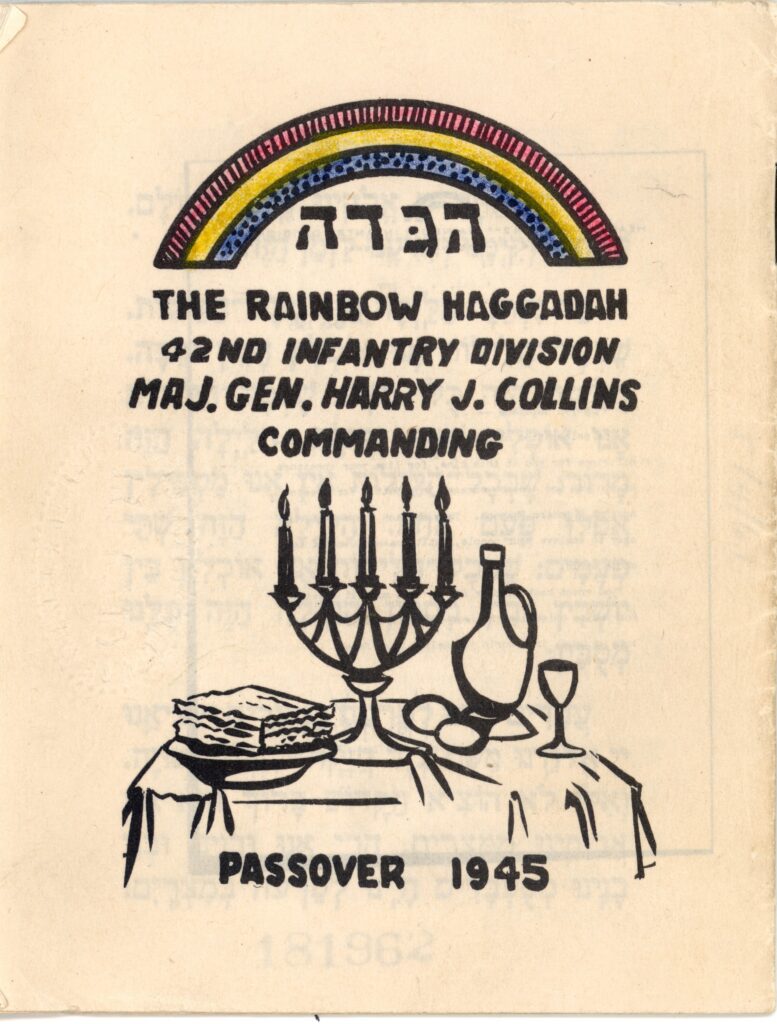
Printed in Dahn, Germany, in 1945, The Rainbow Haggadah was prepared by the US Army’s 42nd Infantry Division. A hand-colored rainbow stands over the Hebrew word Haggadah. Below it sit the plain signs of the table: matzah, wine, cups, a menorah. That spring, in a shattered Germany, Jewish soldiers held the seder with survivors of the camps, their first Passover after liberation. The words of the Exodus were not distant history; they were read in the presence of men and women who had just come out of bondage.
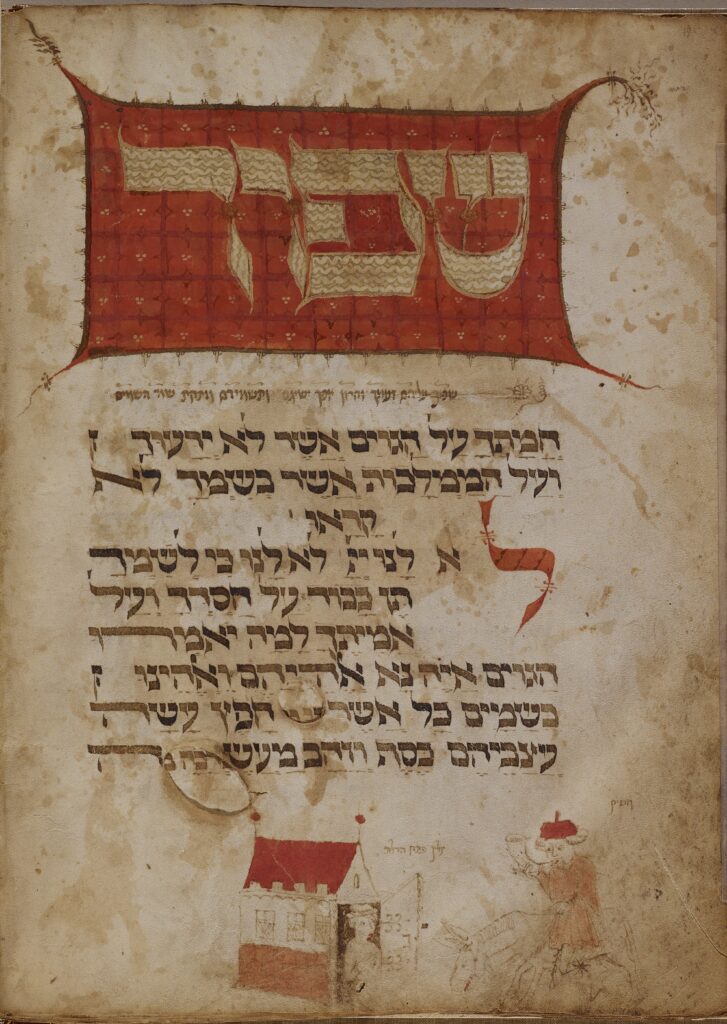
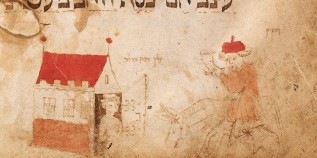
MS 4481, copied and illustrated by Joel ben Simeon in Germany around 1445, pairs Shefoch ḥamatkha—“Pour out Your wrath upon the nations that do not know You.” (Ps. 79:6; 69:25)—with a scene of Elijah riding a donkey and sounding a shofar. The verses call for divine judgment on persecuting powers. Elijah, rabbinic herald of the Messiah, signals imminent redemption; the donkey recalls Zechariah 9:9. The shofar, instrument of revelation and ingathering (Isa. 27:13), shifts the focus from vengeance to covenantal restoration, integrating eschatological hope into the Passover liturgy.