Practitioner, Learner, Leader
Benjamin Mann’s growth mindset opened the door to doctoral study and research, which gave him the chance to explore the impact of inclusion in a Jewish day school for all members of the school community, not only those with diverse learning needs.
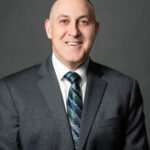
“You should be in the Executive Doctoral Program,” Benjamin Mann remembers hearing years ago from a representative of The William Davidson School of Jewish Education. His three children were in elementary and middle school, and he had just started running the middle school at Solomon Schechter Jewish Day School in Manhattan. It hardly seemed the time for him to take on that kind of commitment.
At the same time, though, Mann was thinking about his career trajectory. He had two MA degrees—one in interdisciplinary studies at JTS and one from Teachers College in learning disabilities. He had completed the Day School Leadership Training Institute (DSLTI) for new and aspiring heads of school. As a practitioner, he had not thought much about research but had always been passionate about the idea of inclusion of those with special learning needs. He maintained a personal “growth mindset” and knew that he always wanted to be learning. Mann also suspected that the Executive Doctoral Program would give him to chance to do his job even better.
The flexible format and generous funding enabled Mann to begin the program in 2012. He was able to immerse himself in the four-day in-person intensives each semester and could even walk up to JTS. “Working at the same time as I returned to graduate work was very fulfilling. My school was like my own personal laboratory,” he said.
“I had read just about every dissertation about Jewish day schools during my coursework, and the area of inclusion and special education was barely touched,” Mann said. “I never considered undertaking research to solve a ‘big problem,’ but when I realized there was a gap in what had been studied, I became more convinced that this was something I wanted to do and that it could have a beneficial impact.”
Inclusion, the topic of his dissertation, had been a focus for Mann throughout his career, and after teaching Jewish studies for a few years at the Solomon Schechter Day School of Bergen County, he became director of special services there. “Disability advocates think of inclusion as a ‘civil right,’ Mann said. Mann sees access to Jewish texts and learning as a birthright that should not be denied to those with a learning disability. “I believe that Jewish learning enriches the lives of Jews, and as educators, we need to be sure all Jews have those opportunities,” he said. “We also know that for Jewish life to be sustained into the future, we need everyone to play an active role, including those who might happen to learn differently.”
Mann’s research was a qualitative case study of one Jewish day school and how the inclusion of students with special needs was understood by various members of the school community. “I learned how being inclusive was integrated across a school’s self-perception,” Mann said. “This touched all aspects of the school, beyond the classroom and academics.”
As Mann became head of school at Schechter Manhattan, his time was even more stretched. “Writing a dissertation is like climbing Mt. Everest,” he said, and support from Davidson faculty helped him each step of the way. With Aryeh Davidson, Mann recalled, he learned in havruta about the halakhot (Jewish laws) of disability. Jeffrey Kress provided tactical help as well as thought-partnership that helped Mann hone his own thinking.
In 2021, Mann transitioned from Schechter Manhattan to the Jewish Federation of Greater Metrowest New Jersey, where he is currently chief planning officer. During the summer before taking on his new position, Mann was able to write and complete his dissertation. “After working in Jewish day schools for 24 consecutive years, it was a great opportunity for me to focus my mind away from the busyness of running a school.”
In his current position, Mann works with lay leaders to invest the funds and enact the mission of the federation. He directly oversees federation’s investments in education, social services, and global Jewry. “Federation itself is a kind of inclusion model,” said Mann. “We are a big tent that is wholly devoted to strengthening the Jewish future.” That metaphor builds from the same vision of inclusivity that Mann promoted as a practitioner and researched at Davidson.
Mann maintains a connection to Davidson and last year became an adjunct member of the faculty, teaching an online, asynchronous course for MA students on Jewish nonprofit leadership. He loves being in dialogue with those pursuing careers in Jewish education. “There is so much research about leadership, and Dr. Ray Levi created this course with a fantastic syllabus and resources,” he said. “I bring the point of view of a practitioner to my class, whether as a day school or federation professional.”
One important lesson that Mann conveys to the students in his class and those he supervises at work is at the core of his decision to pursue the EdD. “Good leaders have to have a growth mindset,” Mann said. “Completing my doctorate gave me an enormous sense of accomplishment and confidence as I face whatever new challenges come my way.”
Mann believes that communities need to give leaders time to grow and learn, to activate their individual growth mindset. “Working for the Jewish future is enormously challenging, whether as a head of school, teacher, agency professional, or pastoral leader,” said Mann. “Making the room and space to grow is an invaluable gift.”