And You Shall Teach Them Unto Your Children
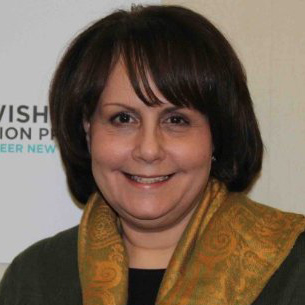
Shellie Dickstein
V’shinantam L’vaneha—And you shall teach them unto your children. Our tradition teaches that Jewish parents should transmit Judaism to their children, but what do we really understand about how the majority of progressive Jewish parents of young children see that role today?
With this question in mind, the Jewish Education Project, the central agency for Jewish education serving New York City, Long Island, and Westchester, wanted to understand how parents make decisions to participate in activities with their youngest children. With the burgeoning of secular early enrichment classes, such as parent-child music classes for children ages 0–2, we wanted to understand what parents value about these programs, how they perceive Jewish early enrichment experiences, and what goes into their decisions to join both. In spring 2016, the Jewish Education Project, with funding from UJA-Federation of New York, conducted a scan of Jewish and secular early enrichment programs across New York. We also conducted a series of focus groups with parents of children ages 0–2 in Long Island and Manhattan. All the parents had participated in secular enrichment programs (such as Music Together, Gymboree, Music for Aardvarks, etc.) and were raising their children to identify as Jews, but most were not connected to any Jewish institution or organization. This study revealed several insights into how they see their role as Jewish parents and about their decision to participate in, and their understanding, of Jewish engagement and learning at this earliest stage.
First, it is clear from our research that parents believe that enrolling their children in secular early enrichment programs is an integral part of being a good parent. The decision to participate is not debated. The only decisions to be made are about budget and the logistics of where and when to participate. However, when we asked about participating in similar types of Jewish programs, we received very different responses that often indicated more angst:
“Right now I do these classes by myself with my daughter, but if it were something like this [Jewish class], I would make my husband come with us. It would be a family class with the three of us.”
“My husband’s biggest fear from all of these classes would be that he would go and he would be judged. Or people would only speak about keeping kosher at home or their Shabbat dinners and we don’t do that. I think everyone in the room probably, or I will speak for myself, gets judged enough as parent. To bring a religion into it, that can be super stressful.”
“I kind of want to learn and I’ve realized I haven’t been the greatest Jew, but just don’t make me do it. I want to—just don’t force me.”
This is in part good news as parents see Jewish programs as a family affair. However, we see that parents today often fear that they or their spouse will be judged. Parents today are inundated with parenting advice from multiple sources: friends, family, Facebook, parenting blogs, and hundreds of websites, causing much insecurity. Offering them a safe haven from all judgment is essential.
Many parents also expressed that though they understood the benefits of secular programs—making their children happy and teaching them new skills—they didn’t see the clear value of Jewish content in programs for their young children. In addition, when they spoke about exposing their children to Jewish life, it was mostly in terms of imagining traditional Jewish learning that happens in more formal settings outside the home, such as early childhood centers, and at a later stage, such as in Hebrew school. Some did understand an enculturation process that can happen early within the family, but most expressed Judaism as something that is only accessible once it can be understood or talked about:
“I think it comes out as a cultural thing in family get-togethers. Kids are like sponges, so even though they don’t really pick it up, they do on some level. I try to keep it as a joy instead of a strict religious thing because then it starts to feel like a burden. It doesn’t really have much significance other than we’re just enjoying family life. When they get older of course I’m definitely going to talk to them about it. I’m not going to stress over it.”
“It doesn’t seem like it would be for small children though. Although we do want to expose our small children it seems it could be more targeted towards three and above where they can actually participate in some small way. I know that four- year-olds would really love this.”
“My daughter is only one and I plan on raising her Jewish and she will go to Hebrew school. But at this age I don’t think she’s old enough to understand and I don’t think under three years old they really are. Maybe next year I’ll feel different when she is two but at this age I don’t. But at one-and-a-half, I don’t really see the need yet. But I will once she’s older, of course.”
Our study suggests several findings that are important to keep in mind when understanding a parent’s role in making decisions to join Jewish experiences:
1) It carries emotional weight: it affects family dynamics and decisions, perhaps due to the fear of being judged and the perceived commitment associated with formal learning that parents associate with Jewish programs.
2) Most parents in this study want to expose their children to cultural elements of Judaism, not necessarily the more religious or ritualistic elements.
3) Parents explained that while Judaism isn’t always at the top of their minds at this life stage, they do think about it—but mostly related to the future.
4) Since their children are so young, and perhaps because parents did not have similar Jewish experiences when they were the same age, it is sometimes impossible for parents to understand or articulate a clear benefit from engaging in Jewish activities right now. They do understand how secular aspects of early enrichment experiences are valuable for their youngest children, but not Jewish ones.
Ultimately, parents want to see their children happy and developing the physical, emotional, and social skills that they need to thrive. As a result, those of us trying to engage families at this stage struggle to find the right formula for Jewish content. Listening to the voices of parents gives us important guidelines to consider. The most important: being sure to offer and articulate clear benefits of Jewish programs that resonate with the life skills that families perceive are important for their children and themselves. If we can provide happiness and skill development while parents and children are engaged in the earliest Jewish early childhood experiences based on any of our cultural elements—song, art, cooking, movement or dance—perhaps this will finally inspire V’shinantam L’vaneha (and you shall teach them unto your children).
Shellie Dickstein is managing director of Early Childhood and Family Engagement for the Jewish Education Project. Shellie leads a team to facilitate networks and change initiatives that spark and spread innovative approaches and new models in early childhood education and early family engagement. She has facilitated workshops and seminars on family education and engagement nationally and internationally and as adjunct faculty for HUC-JIR in New York. Shellie has written and contributed to various articles, blogs and publications on Jewish family education, including Jewish Family Education: A Casebook for the Twenty-First Century, published by Torah Aurah.