


Biblical Original Intent
Feb 12, 2010 By David Hoffman | Commentary | Mishpatim
Does the text of the Torah really mean what I am claiming it means or am I reading too much into it? Am I pushing my own agenda and value system on words that intend something else? What are the larger religious values that animate certain laws of the Torah? How does my own value system influence my reading of Torah?
Read More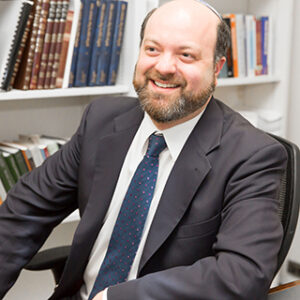
Awakening to the Divine Radiance
Feb 6, 2010 By Eitan Fishbane | Commentary | Yitro
This Shabbat we read the most pivotal narrative in all of scripture: the revelation of God to the people of Israel at Mount Sinai, the reception of the Torah as the divine word transmitted through Moses. From this moment forth, everything changes. The people enter into a covenantal relationship with God; they accept the life of mitzvot as their responsibility and the obligation of their descendents. At the heart of this narrative is the transmission of the Ten Commandments (or the Ten Statements [aseret ha-dibbrot]), the core principles understood by later Jewish tradition to be the root and foundation of all the mitzvot, the fabric of Jewish religious life.
Read More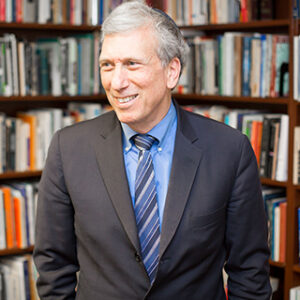
Innovation and Tradition
Jan 30, 2010 By Arnold M. Eisen | Commentary | Beshallah
I’d like to suggest that from the first words of this week’s portion to the last, we find lessons of direct relevance to issues of revelation and commandment, faith and covenant that have been on the minds of thoughtful Jews for centuries and remain matters of concern today.
Read More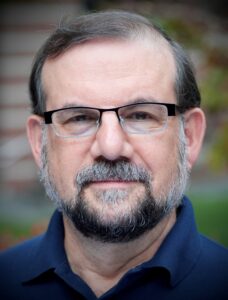
Realpolitik and the Exodus
Jan 23, 2010 By Burton L. Visotzky | Commentary | Bo
This devar Torah is about religion, politics, and war. We are a country currently fighting two foreign wars (Iraq and Afghanistan) and a war on terror at home and abroad. My intention is not to tilt Republican or Democrat; rather, the point of these words of Torah is to reflect on what it means to be Jewish under these circumstances. Or to ask in the classic rabbinic formulation: what can this week’s Torah portion teach us?
Read More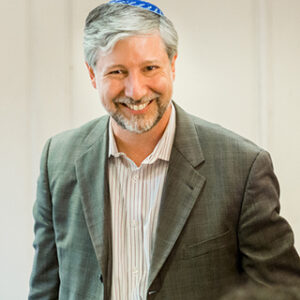
Israel’s Self-Emancipation
Jan 16, 2010 By Daniel Nevins | Commentary | Va'era
There is a lot of action in Parashat Va-era, but not much of it directly involves the people of Israel. Their role is primarily to witness the increasingly violent confrontation between Moses and Pharaoh. Given last week’s negative response of the Israelite elders to Moses and Aaron, this passivity is quite understandable. His early experience with Israel has demoralized Moses, for he objects to God’s renewed command this week with bitter words: “In fact, even the Israelites haven’t listened to me, so how will Pharaoh ever heed me, and I have impeded speech!” (6:12).
Read More
Updating Our Mindset
Jan 9, 2010 By Marc Wolf | Commentary | Shemot
The conclusion of Genesis and the beginning of the book of Exodus coincide this year with not only the end of a secular year, but the winding down of a decade. Of all its nicknames shopped around during the last days of December (the Ohs, Noughties, Aughts, or, as Slate Magazine put it, the Uh-Ohs), “the digital decade” is the one that I find most fitting. The past ten years have brought us blogging, Googling, YouTubing, tweeting on Twitter, and updating our Facebook statuses. Each progressive step (if we really want to call it progress) has brought new meaning to here and now. What these technologies have demonstrated is that we have a virtual obsession with being current—with letting people know exactly what we are thinking, doing, or experiencing.
Read More
Living a Poetic Existence
Jan 2, 2010 By Andrew Shugerman | Commentary | Text Study | Vayehi
For many—if not most—of us, death arouses great anxiety. Much of our emotionality regarding the end of life comes from the way that death changes how we perceive ourselves. This midrash about Jacob’s deathbed scene presents ancient rabbinic wisdom about mortality based on insights from key passages in the Hebrew Bible.
Read More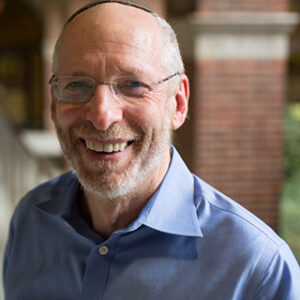
The Painful Truth
Dec 25, 2009 By Eliezer B. Diamond z”l | Commentary | Vayiggash
Sometimes the midrash takes up a difficult verse and offers an interpretation that is even more opaque. This week’s Torah portion contains an example of this. We are told that initially Jacob refused to believe the brothers when they told him that Joseph was still among the living. However, “when they recounted all that Joseph had said to them, and when he saw the wagons that Joseph had sent to transport him, the spirit of their father Jacob revived” (Gen. 45:27).
Read More
From Darkness into Light
Dec 19, 2009 By David Hoffman | Commentary | Miketz | Hanukkah
We Jews know that stories are not simple things. As a people, we tell tales that place us in the drama of world history and connect us with a common past and a shared future. Our national stories challenge us as individuals and as a community; they provide us with contexts to work out moral dilemmas, and help us reflect collectively on what it means to live life well.
Read More
The Challenge of Living Torah
Dec 11, 2009 By Arnold M. Eisen | Commentary | Vayeshev
I don’t think Jews are playing out a tale for which God wrote the plotline many centuries ago. Sometimes, however, the correspondence between archetypal biblical narrative and contemporary Jewish situation is remarkable. Consider today’s parashah as a case in point.
Read More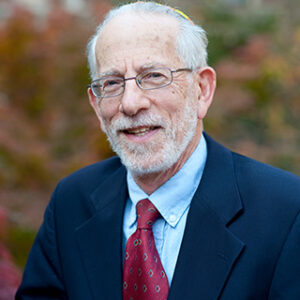
Multiple Beginnings
Dec 5, 2009 By David Marcus | Commentary | Vayishlah
Attentive readers may note that our Parashat Va-yishlah does not start at the beginning of its chapter (Genesis 32), rather it starts four verses down with the words “va-yishlah Yaakov malachim lefanav” (Now Jacob sent messengers ahead of him). The actual chapter starts with the words “vayashkem Lavan babboqer” (Early in the morning Laban arose) (see the enumeration in Etz Hayim), and some printed Hebrew editions, such as the Koren Tanakh before 1992, and English Bibles, such as the King James Version and the New Revised Standard Translation, start the chapter with the next verse, “veYaakov halach ledarko” (Now Jacob went on his way). From these three beginnings we see that there are various ways of starting the story of Jacob’s meeting with Esau, the story with which our parashah commences.
Read More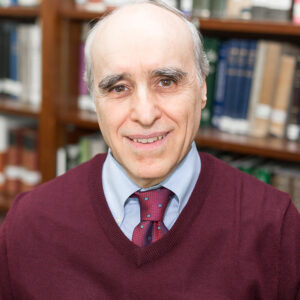
How to Read a Text
Nov 28, 2009 By Walter Herzberg | Commentary | Vayetzei
Michael Fishbane’s book Sacred Attunement: A Jewish Theology is a scholarly work that I find compelling, especially in those instances where the author places emphasis on experiencing the act of biblical interpretation, which “is understood to foster diverse modes of attention to textual details, which in turn cultivate correlative forms of attention to the world, and divine reality.” In other words, paying close attention to the details in the Torah is the path to deriving meaning from the Torah.
Read More
A Conversation on Creation and Evolution
Nov 17, 2009 By The Jewish Theological Seminary | Public Event video
One of the most hotly debated contradictions between the Bible and current scientific knowledge is creationism and Darwin’s theory of evolution. In this program, two leading philosophers, Lenn Goodman and Philip Kitcher, address this perceived conflict.
Read More
Athiests and the Torah
Nov 14, 2009 By Marc Wolf | Commentary | Hayyei Sarah
Oh, if the atheists read the Torah! During this week’s parashah, we encounter a text that could have been fodder for the atheist argument against prayer. Shortly before his death, Abraham calls his senior servant for one last assignment. The servant is to return to Abraham’s homeland to find a fitting wife for Isaac, and, after swearing that Abraham’s bidding will be done, he sets off.
Read More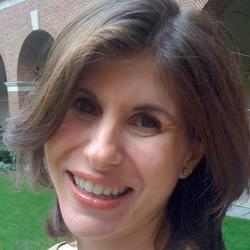
Sitting in God’s Presence
Nov 6, 2009 By Abigail Treu | Commentary | Text Study | Vayera
What do we find ourselves doing when God’s Presence suddenly appears to us?
Read More
Connecting to an Ancient Text
Oct 31, 2009 By Daniel Nevins | Commentary | Lekh Lekha
A wondrous quality of Torah study is that you can link the parashah to nearly any time, place, or subject. This puzzle is enjoyed by rabbis every week—how can I connect the ancient text to our contemporary context? I embrace this challenge, yet sometimes it makes me wonder: how much are we gleaning from the text, and how much are we interpolating?
Read More
Abraham the Wanderer
Oct 31, 2009 By Andrew Shugerman | Commentary | Text Study | Lekh Lekha
What inspires one to leave home, to embrace mystery, to seek insight into the nature of our world?
Read More
Topics in Talmud: Kashrut
Oct 25, 2009 By David C. Kraemer | Text Study | Video Lecture
The Essential Talmud: 10 Talmudic Topics Every Jew Should Know.
Read More
Topics in Talmud: Shabbat
Oct 25, 2009 By David C. Kraemer | Text Study | Video Lecture
The Essential Talmud: 10 Talmudic Topics Every Jew Should Know.
Read More
Topics in Talmud: Bar and Bat Mitzvah
Oct 25, 2009 By David C. Kraemer | Text Study | Video Lecture
Read More


SUBSCRIBE TO TORAH FROM JTS
Our regular commentaries and videos are a great way to stay intellectually and spiritually engaged with Jewish thought and wisdom.