
Explore JTS’s Online Torah

We invite you to search our vast collection of today’s most compelling Jewish conversations, teaching, and resources, including weekly Torah commentaries, online lectures, curricula for community use, and more.

Use the search bar and filters to find what inspires you.

Read weekly Torah commentaries

Read weekly Torah commentaries

Reflections on the Torah reading cycle

Learn more

Holiday Learning and Resources

Holiday Learning and Resources

Commentaries and more on the themes, texts, and liturgy of the holidays.

Learn more

Join online classes

Join online classes

Live series with JTS teachers

Learn more

Listen to JTS podcasts

Listen to JTS podcasts

Learn on the go

Learn more
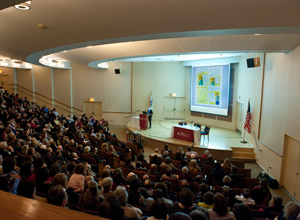
Watch lecture recordings

Watch lecture recordings

Videos of public events

Learn more

Nusah & Cantillation

Nusah & Cantillation

The tunes for Shabbat, festival, and high holiday services and Torah readings

Learn more


Featured

Freedom through Torah

Freedom through Torah

Apr 3, 2026 By David Hoffman | Commentary | Pesah

Freedom in biblical and rabbinic Judaism is a highly complex idea. Consider the mishnah above. At first glance one might think the law, the Ten Commandments carved on the two tablets, would be limiting, constraining human freedom. Counterintuitively, the Sages argue that true freedom only comes from an engagement with Torah! How might “laboring in Torah” and living a life according to the demands of the Torah induce freedom?

Read More
Elijah—and Santa Claus?!

Elijah—and Santa Claus?!

Mar 27, 2026 By Robert Harris | Commentary | Shabbat Hagadol

I am certain that I am not the first to point out the similarities between the figures of Elijah the Prophet and Santa Claus…at least in the way those figures have been popularly imagined. Put simply, folklore posits that each of these figures visits individual homes on a religious holiday (Elijah—that old shikkur!—sneaks in to […]

Read More
From Anxiety to Action: Telling the Story of the World We Want

From Anxiety to Action: Telling the Story of the World We Want

Mar 23, 2026

At the heart of Passover is a question that feels urgent today: how do we move forward when the future feels uncertain and frightening? This session explores the Crossing of the Sea through midrash and contemporary thought, treating imagination as a muscle that must be strengthened in times of crisis. As we conclude Seasons of Responsibility, we’ll shift focus from individual anxiety to collective responsibility, inviting participants to consider how shared storytelling, community, and action help bring the world we long for into being.

Read More
A Covenant of Salt

A Covenant of Salt

Mar 20, 2026 By Tim Daniel Bernard | Commentary | Vayikra

Covenant is a central concept in Judaism. The Torah and later tradition make clear that the people Israel have a special relationship with God, and Jews have acquired the epithet “the chosen people” (though Jewish particularism need not preclude other peoples having their own unique relationships with God). Rabbi David Hartman, z”l, titled his exposition of Jewish theology A Living Covenant. Rabbi David Wolpe, in a speech at JTS, proposed highlighting the mainstream ideological approach of Conservative Judaism by rebranding it as “Covenantal Judaism.”

Read More
The Give and Take of Strength

The Give and Take of Strength

Mar 13, 2026 By Eliezer B. Diamond z”l | Commentary | Pekudei | Shabbat Hahodesh | Vayak-hel

Rituals of closure are common in both the secular and religious realms. An example of the first is the sounding of retreat and the lowering of the flag marking the end of the official duty day on military installations. An instance of the second is the siyyum, a liturgical ritual and festive meal that is occasioned by the completion of the study of a Talmudic tractate. Closure rituals relate not only to the past but to the future as well. On the one hand, the temporal demarcation of a past event facilitates the emergence of its distinct identity, internal coherence, and significance, thereby providing insight, understanding, and, at times, a sense of accomplishment. At the same time, by declaring an end, a closure ritual creates space in which one can—and must—begin anew; the past is to be neither prison nor refuge.

Read More

SUBSCRIBE TO TORAH FROM JTS

Our regular commentaries and videos are a great way to stay intellectually and spiritually engaged with Jewish thought and wisdom.