Our faculty and teachers bring the depth and breadth of JTS learning directly to you through a rich collection of contemporary Jewish content, including everything from weekly parashah commentaries to marquee lecture recordings. JTS’s extensive online Torah resources reflect today’s most compelling conversations, research, and teaching from leaders in Jewish study—all available for learners around the world to explore and enjoy.
Torah Commentary
Find reflections on the weekly parashah, translations of Torah portions, and archived commentaries.
Learn MoreHoliday Commentary
Explore our collection of contemporary insights on the Jewish holidays.
Learn MoreSound Bytes of Torah
Watch short videos from JTS teachers offering highly accessible reflections on the Jewish holidays.
Learn MorePublic Programs
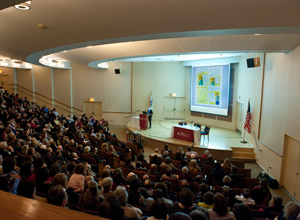
Access video recordings of high-profile guest speakers.
Learn MoreWorks from Chancellor Eisen
Find commentaries from one of the world's foremost authorities on American Judaism.
Learn MoreDifferent Perspectives
Delve into the weekly parashah through art, music, and nontraditional texts.
Learn MoreCourses and Curricula
Learn about complete study programs for rabbis and educators to use with learning groups.
Learn MorePrayer
Discover resources for enhancing prayer, including recordings, written commentaries, and more.
Learn MoreInterreligious Resources
Explore video recordings and written pieces on interreligious themes.
Learn MoreFeatured
Limbs
Gavriella Bernat-Kunin (LC ’17)
Limbs (2017)
Sharpie, colored pencil, and acrylic on plexiglass
Are trees of the field human to withdraw before you into the besieged city? (Deut. 20:19)Learn More
The King’s Torah and the Torah’s King
This week’s Torah portion focuses on a wide array of topics, but underlying virtually everything we can see a thematic coherence well reflected in the parashah’s name (“judges”). The sidrah contains one of the most famous lines in the entire Bible, tzedek, tzedek tirdof: “Justice, justice shall you pursue” (Deut. 16:20). And throughout the parashah we see the Torah outlining various aspects of the pursuit of justice.
Learn MoreTo Know or Not to Know
The centralization of cultic worship is one of the major themes in the book of Deuteronomy. However, the place of that worship, the Temple, is described as “the place that God will choose,” with no mention of where that place is to exist. This week’s parashah, parashat Re’eh, introduces the theme that once in the Land of Israel, the Israelites are to worship their God in “hamakom asher yivhar Hashem” (the place that God will choose). This vague phraseology, which only alludes to a specific place but does not specify where that place is, is repeated 21 times throughout the book of Deuteronomy, with 16 of those occurrences in our parashah alone.
Learn MoreLicensed to Kill (Kosher Animals)
In Deut. 12:20–25, explicit permission is given for the slaughter and consumption of meat outside of the sacrificial system. The passage includes the phrase “as I have instructed you” (v. 21), and the Talmud identifies these words as the source of the various prescriptions for kosher slaughter (shehitah) (BT Hullin 28a).
Learn More