

Search Results
Back to JTS Torah Online's Main page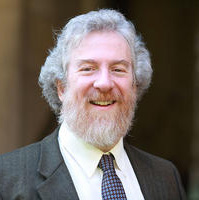
“Fill Our Eyes with Light . . . Cause Our Heart to Cling” (Part 2)
Feb 13, 2013 By Samuel Barth | Commentary
Last week we looked at the phrase “ha’er eyenynu” (Fill our eyes with the light of Your Torah), and now let us look more closely at the continuation of the same sentence: “vedabek libeinu bemitzvotekha” (and make our hearts cleave to Your mitzvot) [Siddur Sim Shalom Daily, 32].
Read More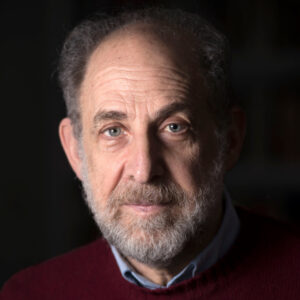
God Helps Those Who Help Themselves
Feb 12, 2013 By Raymond Scheindlin | Commentary | Purim
How is it possible to tell a story of redemption without even once mentioning the name of God?
Read More
Little Purim
Feb 12, 2013 By The Jewish Theological Seminary | Podcast or Radio Program | Purim
A 1951 episode of “The Eternal Light” radio program about a boy and his violin on Purim.
Read More
Purim: The Triumph of Understanding Over Hatred
Feb 12, 2013 By The Jewish Theological Seminary | Podcast or Radio Program | Purim
Taken from the archives of “The Eternal Light” radio program, this 1954 commentary on Purim is delivered by Murray Bellow, a noted civic leader of the time.
Read More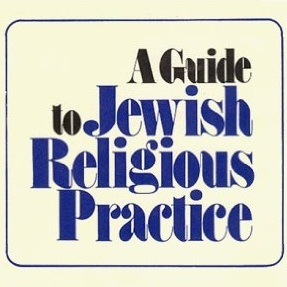
The Laws of Passover
Feb 11, 2013 By Isaac Klein | Pesah
From: A Guide to Jewish Religious Practice
Read More
The Laws of Purim
Feb 11, 2013 By Isaac Klein | Purim
From: A Guide to Jewish Religiious Practice
Read More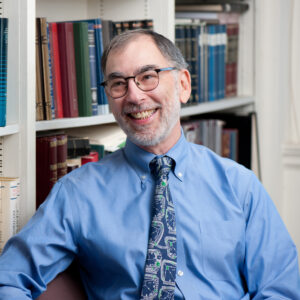
“Truthiness” in the Bible
Feb 7, 2013 By Robert Harris | Video Lecture
What the Bible Means, What it Meant, and Why the Difference Matters: A recorded live stream lunch and learn

Taking Time to Be There
Feb 6, 2013 By Lisa Gelber | Commentary | Mishpatim
Moses needs time to immerse himself in the law and his relationship with God. He needs to experience what it meant to climb this mountain, literally and figuratively. If he didn’t yet know that, God did.
Read More
“Fill Our Eyes With Light . . . Cause Our Hearts to Cling” (Part 1)
Feb 5, 2013 By Samuel Barth | Commentary
Phrases in the siddur are filled with echoes of earlier texts and give birth to newer metaphors and meanings. The blessing immediately before the Shema’ in every morning service contains the phrase “ha’er eyneinu beToratekha vedabek libeinu bemitzvotekha” (Fill our eyes with the light of Your Torah, and make our hearts cleave to Your mitzvot.) [Siddur Sim Shalom, 32.]
Read More
The Curious Case of the Slave Who Refuses Freedom
Feb 5, 2013 By Matthew Berkowitz | Commentary | Mishpatim
Coming on the heels of the Revelation at Sinai, Parashat Mishpatim opens with laws concerning slaves.
Read More
Finding God in the Darkness
Feb 5, 2013 By Abigail Treu | Commentary | Short Video | Va'era
A video Torah commentary.
Read More
How They Knocked the Devil Out of Uncle Ezra
Feb 5, 2013 By The Jewish Theological Seminary | Podcast or Radio Program
What happens when a child is too smart for their own good? Find out in this humorous 1949 broadcast of The Eternal Light radio program.
Read More
Warfare in the 21st Century: 5 Questions with General Norton A. Schwartz
Feb 4, 2013
Has the fundamental nature of war changed? Should Jewish values play in how and when we engage in conflict? General Norton A. Schwartz discusses this regarding warfare in the 21st century.
Read More
Blessings
Jan 30, 2013 By Samuel Barth | Commentary
The famous Priestly Blessing (Num. 6: 24–26) is an ambiguous text in our liturgy that appears in various guises. It is presented as a selection for study from the Written Torah each morning (Siddur Sim Shalom for Weekdays, 5), and is chanted by the leader of the service at the end of the ‘Amidah (43). The text presents the Torah verses as a memory:
Read More
How We Believe in God
Jan 30, 2013 By Eliezer B. Diamond z”l | Commentary | Yitro
The Mishnah and the two Talmuds mostly address details of Jewish observance; they rarely discuss the purpose of individual commandments, nor how the mitzvot mesh to create an integrated religious ethos.
Read More
Decimation and Affirmation: A Tale of Two Non-Israelites
Jan 30, 2013 By Matthew Berkowitz | Commentary | Beshallah
The opening of this week’s Torah reading, Parashat Yitro, stands in stark contrast to the conclusion of last week’s parashah, Beshallah.
Read More
Memory on Trial: Evaluating Eyewitness Identification Evidence In The 21st Century
Jan 23, 2013 By The Jewish Theological Seminary | Public Event video
Eyewitness identification can have an enormous impact on the outcome of a trial. But how trustworthy is such testimony? And, if inaccurate, could it result in a miscarriage of justice? How should the courts proceed?
Kol haneshamah tehallel Yah! (All that has breath shall praise God!)
Jan 23, 2013 By Samuel Barth | Commentary
This is the final verse of Psalm 150—the culmination of the book of Psalms. Every day our set liturgy includes the final six psalms (145 through 150), and, to my personal sorrow, the pacing of the so-called “preliminary service” generally allows a couple of minutes (at most) for a rushed recitation of these classic and profound poetic texts. Fortunately, in many communities—at least on Shabbat, and even on weekdays—a little more time is allowed for Psalm 150. We find a glorious array of musical interpretations of the text that exemplify the diverse approaches to religious music of contemporary Jewish life. Some examples will be found at the end of this essay.
Read More
“He Taught Him a Tree” (?!)
Jan 23, 2013 By Robert Harris | Commentary | Beshallah
This week’s parashah contains some of the most memorable narratives in the entire Torah: the splitting of the Reed Sea, the miracle of the manna, the battle with Amalek. In the midst of all these narratives comes a pithily told “little tale.”
Read More
Fear to Fortitude
Jan 23, 2013 By Matthew Berkowitz | Commentary | Beshallah
As the Israelites march toward the Reed Sea, Pharaoh has a notorious change of heart.
Read More


SUBSCRIBE TO TORAH FROM JTS
Our regular commentaries and videos are a great way to stay intellectually and spiritually engaged with Jewish thought and wisdom.