

Search Results
Back to JTS Torah Online's Main page
The Holiness of Immigration Reform
May 6, 2006 By JTS Alumni | Commentary | Aharei Mot | Kedoshim
By Rabbi Felipe Goodman
One of the most beautiful yet most difficult to understand statements made by God in the entire Torah is contained in the opening verses of Parashat Kedoshim: “K’doshim tihyu ki kadosh Ani Adonai Eloheihem [You shall be holy, for I, The Lord your God, am holy].” In a sense, this is one of the things that we as humans expect God to demand from us. To read the opening words of Parashat K’doshim produces no great shock or crisis in faith; on the contrary, it immediately makes us proud to know that God expects more from us than what we usually expect from ourselves.
Read More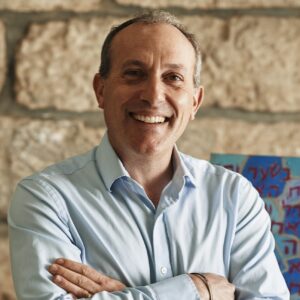
Whose Land?
May 6, 2006 By Matthew Berkowitz | Commentary | Kedoshim | Shavuot
Over the past few weeks, immigration and the protection of foreign workers have taken center stage on the American political scene. Far from being a distant, abstract philosophical conversation, the issue is one that the Jewish community has wrestled with throughout its many years of wandering. Indeed, this is a topic that touches the heart and soul of our people.
Read More
Refining God’s Creation
Apr 29, 2006 By Matthew Berkowitz | Commentary | Metzora | Tazria
Too often our perception of God’s creations and works assumes a sense of completion and perfection. We tend to place an inordinate share of responsibility on the shoulders of God, as it were — arguing that God’s involvement in creation necessarily implies wholeness. Our parashah this week, Tazri·a-Metzora, however demonstrate otherwise; humans are commanded to complete creation and enter into partnership with God. This lesson is evident from the opening of Parashat Tazri·a, which teaches, “On the eighth day, the flesh of [a newborn male’s] foreskin will be circumcised” (Leviticus 12:3). Why does God make a deliberate choice to create boys uncircumcised? What does this act teach us about the significance of brit milah — both for the particular act of circumcision and more generally, regarding the essence of Judaism?
Read More
Like a Gazelle Crying for Water
Apr 29, 2006 By JTS Alumni | Commentary | Metzora | Tazria
By Rabbi Aubrey L. Glazer
The gazelle is always in motion skipping through the mountains if she is not getting pierced by Thorn bushes. Surely she doesn’t feel it. Let’s say it another way. Already. She cannot delay.
—Ayelet Solomon, Aphorisms on the Persistence of the Gazelle (2004)
To give birth or to be given birth — that is the question! At the heart of this week’s Levitical regulations concerning the new mother is a highly legal section of Torah that seems less concerned with the new mother’s experience of birth than with how to conceptualize, order, and contain it through law.
Read More
Seeing God in Loss
Apr 22, 2006 By Matthew Berkowitz | Commentary | Shemini
Loss strikes each one of us at different points in our lives.
Read More
Moses, the Charismatic Leader
Apr 15, 2006 By Marc Wolf | Commentary | Pesah
It would have been sufficient. The refrain of dayenu that reverberated through seders around the world still rings in my ears.
Read More
Pesah: The Chesed Holiday
Apr 8, 2006 By Matthew Berkowitz | Commentary | Shabbat Hagadol
Next week marks the beginning of Passover; with this annual celebration, Jews gather to celebrate the birth of the Israelite nation.
Read More
The Meaning of Pesah
Apr 8, 2006 By Matthew Berkowitz | Commentary | Pesah
Next week marks the beginning of Passover; with this annual celebration, Jews gather to celebrate the birth of the Israelite nation.
Read More
A House of Prayer for All Peoples
Apr 1, 2006 By Matthew Berkowitz | Commentary | Vayikra | Pesah
Creative tension is ever present in the poles found within Judaism. We are drawn to the balance between keva and kavannah, that which is fixed and that which is spontaneous; Hassidim fervently debate the Mitnagdim over the line between spirituality and intellectualism; and we are constantly in search of the golden mean between halakhah (law) and aggadah (lore). Another pair of opposites embedded within Judaism is the constant tension between particularity and universality. To what extent should a Jew be zealous in the particular observance of Jewish identity? Or is Torah better understood as a Jewish lens into universal experience?
Read More
Two Kinds of Community
Mar 25, 2006 By Matthew Berkowitz | Commentary | Vayak-hel
Community is the heart of the Jewish people. To nurture a sense of holiness within our synagogues, it is critical to work toward strengthening a vision of communal responsibility. This notion is emphasized in the opening of this week’s Torah reading, Parashat Va–yakhel: “Moses assembled the community of the children of Israel, saying to them, ‘These are the obligations that God commanded to do them'” (Exodus 35:1). Not only does the general opening of the reading focus on community, but more significantly, the very word with which the parashah begins, vayaqhel, contains the Hebrew root qof–hey–lamed (meaning “community”) — for this is not simply the act of assembling, but it is gathering together a community. What will be the nature of the community we build?
Read More
A Plurality of Voices
Mar 25, 2006 By Matthew Berkowitz | Commentary | Vayak-hel
Community is the heart of the Jewish people. To nurture a sense of holiness within our synagogues, it is critical to work toward strengthening a vision of communal responsibility. This notion is emphasized in the opening of this week’s Torah reading, Parashat Va–yakhel: “Moses assembled the community of the children of Israel, saying to them, ‘These are the obligations that God commanded to do them'” (Exodus 35:1). Not only does the general opening of the reading focus on community, but more significantly, the very word with which the parashah begins, vayaqhel, contains the Hebrew root qof–hey–lamed (meaning “community”) — for this is not simply the act of assembling, but it is gathering together a community. What will be the nature of the community we build?
Read More
A Radiant Face
Mar 18, 2006 By Matthew Berkowitz | Commentary | Ki Tissa
Coverings, especially of the face, are the theme of the hour in the Jewish calendar. The opening of this week began with our celebration of Purim. At the core of the holiday is the notion of hiddenness. God never explicitly appears in the entire ten chapters of the megillah; and the holiday is celebrated through festive costumes in which we mask, or cover, our true selves. This notion of covering continues thematically in this week’s Torah reading, Parashat Ki Tissa.
Read MoreWhat We Are Asked to Remember
Mar 11, 2006 By Yehoshua Aizenberg | Commentary | Shabbat Zakhor | Tetzavveh
By Rabbi Yehoshua Aizenberg
Two Sabbaths ago, we celebrated Shabbat Shekalim, the first of four special Sabbaths preceding Pesah. This coming Shabbat, Shabbat Zachor, always comes right before the Purim celebration.
Read More
Why God Needs a Dwelling Place
Mar 4, 2006 By Robert Harris | Commentary | Terumah
Recent portions of the Torah have dealt with the arrival of the Israelites at Mount Sinai; the great theophany of God, in which God spoke the Ten Words, or Decalogue; the revelation of the Book of the Covenant, containing the first extended legal section of the Torah; and the covenantal ceremony sealing the everlasting special relationship between God and the people of Israel (Exodus 19–24).
Read More
Within Us
Mar 4, 2006 By Matthew Berkowitz | Commentary | Terumah
Parashat Terumah is concerned with the building of the mishkan or Tabernacle, the portable sanctuary that accompanied the Israelites on their desert journey. The parashah opens with an appeal by God and Moses to the entire community of Israelites; all are encouraged to participate voluntarily to the building of this sacred space. Plans are detailed, appurtenances are described extensively, and later the construction begins. Exodus 25:8 declares, “And let them make me a sanctuary and I will dwell in their midst.” Given the connotations of a mikdash, sanctuary, we might assume that God’s presence would dwell in this space. The second half of the verse surprises us, however, stressing God’s dwelling not in a specific physical place but amidst the people.
Read More
The Lesson of Egypt
Feb 25, 2006 By David Marcus | Commentary | Mishpatim
Last week’s parashah contained a magnificent description of the revelation at Mt. Sinai.
Read More
The Ear that Heard
Feb 25, 2006 By Matthew Berkowitz | Commentary | Mishpatim
Parashat Mishpatim opens appropriately with laws concerning slavery. Having achieved their freedom after 400 years of bondage, the Israelites are instructed regarding the laws concerning Hebrew slaves. Why is Torah so quick to speak of these particular mitzvot at the outset of the Israelite journey? All too often, freed slaves are quick to become the oppressor. And Torah is consistently vigilant vis–à–vis this danger. The Israelites are encouraged to remember their experience and recount it to future generations; yet, at the same time, they must remember their status as strangers.
Read More
Three Mitzvot to Live By
Feb 18, 2006 By David Rose | Commentary | Yitro
We are each a product of the stories that we carry within us.
Read More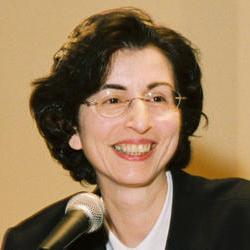
Reinvigorating Conservative Judaism
Feb 11, 2006 By Susan Grossman | Commentary | Beshallah
The Talmud recounts a story told by Rabbi Joshua Ben Hananiah who, while on a journey, met a young boy sitting at a crossroad.
Read More
Memory
Jan 28, 2006 By Matthew Berkowitz | Commentary | Va'era
Parashat Va’era opens with a stirring pronouncement by God. In Exodus 6:2-6, God declares to Moses, “I am the Lord. I appeared to Abraham, Isaac, and Jacob as El Shaddai, but I did not make Myself known to them by My name Adonai. I also established my covenant with them, to give them the Land of Canaan, the land in which they lived as sojourners. I have now heard the moaning of the Israelites because the Egyptians are holding them in bondage, and I have remembered my covenant. Say, therefore, to the Israelite people: ‘I am the Lord. I will free you from the labors of the Egyptians and deliver you from their bondage'” No longer will God be a silent spectator in the Egyptian drama.
Read More


SUBSCRIBE TO TORAH FROM JTS
Our regular commentaries and videos are a great way to stay intellectually and spiritually engaged with Jewish thought and wisdom.